
18 When Jared had lived 162 years, he fathered Enoch.
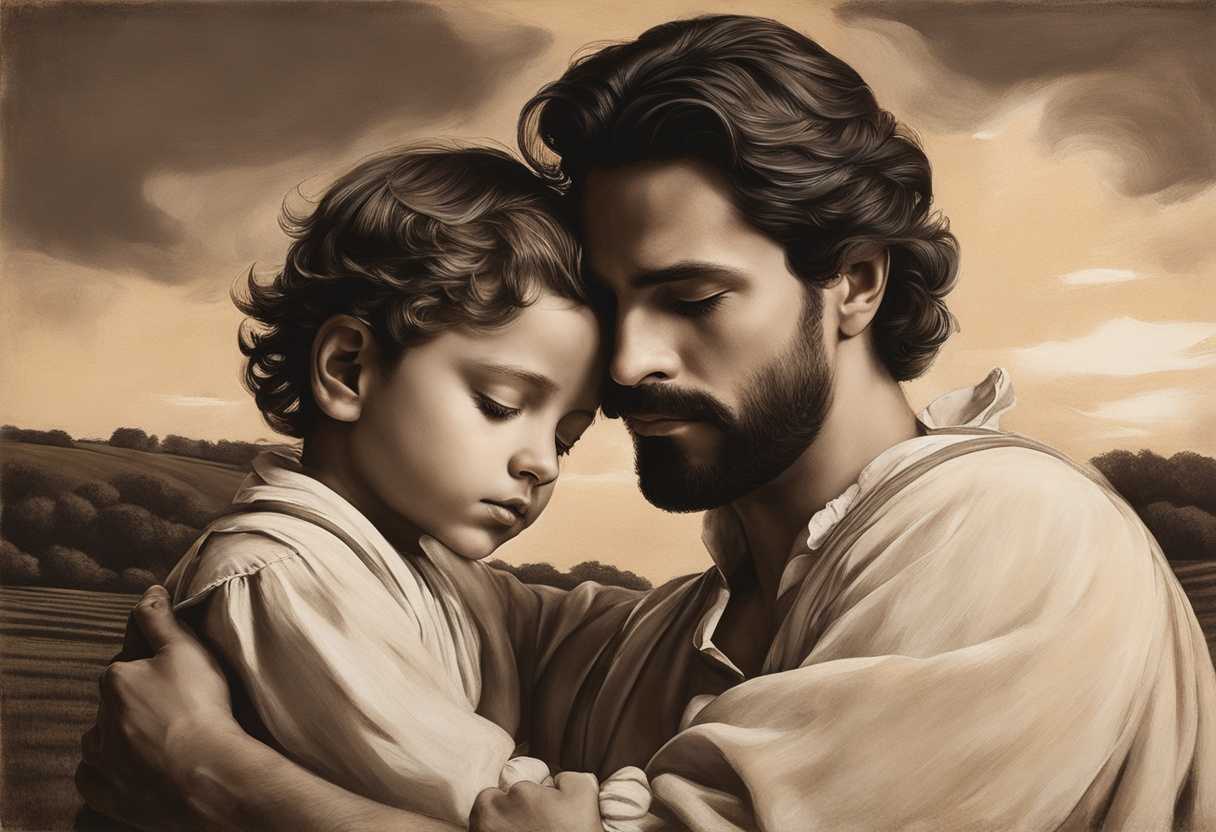
Setting the Scene for Genesis 5:18
In Genesis chapter 5, we find ourselves in the midst of a genealogy that traces the descendants of Adam. The scene is set in a humble dwelling made of clay and wood, with the warm glow of oil lamps illuminating the room. The air is filled with the scent of bread baking in the oven, and the crackling sound of a fire in the hearth provides a comforting background noise.
Sitting around a rough-hewn table are several figures, including Methuselah, the son of Enoch, who is known for being the longest-lived person in the Bible. Also present is his son Lamech, along with other family members who have gathered to share a meal and recount the stories of their ancestors. The flickering light casts shadows on their weathered faces, highlighting the lines of wisdom and experience etched into their features.
As they pass around a scroll containing the family history, each person takes turns reading aloud the names and ages of their forefathers, connecting themselves to a lineage that stretches back to the first man, Adam. The room is filled with a sense of reverence and awe as they reflect on the passage of time and the faithfulness of God throughout the generations.
What is Genesis 5:18 about?
Imagine living for nearly a millennium—962 years! It’s incomprehensible to us, right? This verse from the Bible is talking about Jared, who lived an exceptionally long life. But beyond just stating a number, this verse also carries a deeper meaning. Ancient people highly valued genealogy because it represented a connection to one’s roots and ancestors. Jared’s long life and his fathering of Enoch symbolize the passing down of lineage, wisdom, and blessings from one generation to the next. It highlights the importance of family ties and the continuation of legacy.
Reflecting on this verse, we can ponder the significance of our own family histories and the impact they have on who we are today. How have our ancestors shaped our beliefs, values, and identities? What kind of legacy are we building for future generations? We can gain a deeper appreciation for the interconnectedness of our lives with those who came before us and those who will come after us by considering these questions.
Understanding what Genesis 5:18 really means
Introduction and Context
Let’s set the stage by understanding that Genesis 5:18 is part of a genealogical record that traces the lineage from Adam to Noah. These genealogies may seem like mere historical records, but they often contain profound insights into God’s plan and human history. The lineage of Jared, one of the patriarchs, in Genesis 5:18 connects larger theological themes that resonate throughout Scripture.
Phrase Breakdown and Meaning
The verse introduces Jared, who lived for several years before becoming a father and ultimately played a significant role in the lineage leading to Noah. This isn’t just about tracking ages; it’s a testament to the longevity and faithfulness embedded in the biblical narrative. The name “Jared” is particularly significant; it translates to “descent,” likely indicating the deepening corruption of humankind leading up to the flood, a harrowing descent that necessitated divine intervention.
Connecting with Other Scriptures
We can better comprehend the meaning when we link Jared’s mention to other parts of the Bible. For instance, Luke 3:37 reiterates Jared’s place in the lineage of Jesus, providing continuity and emphasizing the faithfulness of God in preserving the line through which salvation would come. 1 Chronicles 1:2 also mentions Jared in tracing genealogy, underlining the importance of these genealogies in recounting God’s redemptive history.
Relevance Today and Reflection
Why does this matter for modern readers? Today, we wrestle with questions of identity, legacy, and the consequences of our actions. The genealogical accounts in Genesis remind us that we are part of a larger narrative. Our actions and faith practices contribute to the heritage we pass on. Just as Jared’s life had significance in the divine story, so do our lives amid God’s greater plan. A family who cherishes their lineage gathers every year to recount stories of their ancestors, sharing tales of resilience and faith. One year, they decide to document these stories for future generations. Similarly, the Bible’s genealogies serve as a spiritual family history, reminding us of our roots. Reflect on this: What kind of spiritual legacy are we building for those who come after us?
Detailed Meaning of Key Phrases
“Jared lived” – These words emphasize the duration and quality of Jared’s life. It’s not just about existing; it’s about living a life embedded in God’s timeline. Let’s ask ourselves: How are we contributing to the spiritual lineage we leave behind as we reflect on this verse and its broader implications? Are our lives marked by faithfulness and purpose? We can live with greater intentionality and faith by understanding our place in God’s timeline, just as Jared did.
How can we cultivate a righteous family legacy?
To cultivate a righteous family legacy, one must carry on the values and teachings of righteousness from one generation to the next. This involves instilling a strong moral compass, practicing kindness and compassion, and living a life in accordance with ethical principles. We can serve as role models for our children and grandchildren by demonstrating these attributes in our own lives, inspiring them to follow in our footsteps and carry on the legacy of righteousness.
Furthermore, creating a supportive and nurturing family environment is essential in fostering a righteous family legacy. Open communication, mutual respect, and a spirit of cooperation are key components in building strong family relationships. We can create a foundation that will endure for generations to come by fostering a sense of unity and togetherness within the family unit. A strong foundation of faith and spirituality ultimately builds a righteous family legacy. We can ensure that the values of righteousness and virtue are passed down through the generations by nurturing a deep connection to one’s faith and instilling a reverence for God in our children and grandchildren. Through prayer, reflection, and a commitment to living a life in service to others, we can cultivate a family legacy that reflects the divine virtues of love, compassion, and integrity.
Application
Look at Enoch’s life in Genesis 5:18. Think about how he walked hand in hand with God. Today, this could mean weaving faith into your busy schedule, like a crucial meeting or a family dinner. Are you ready to truly commit and live a life that pleases God, just like Enoch?

Reverend Michael Johnson is an experienced Church Minister with a profound expertise in spirituality and guidance. With a serene presence and a compassionate heart, he has faithfully served his congregation for over 20 years, leading them on a spiritual journey towards inner peace and enlightenment. Reverend Johnson’s extensive knowledge of religious philosophies and profound understanding of human nature have made him a trusted confidant and mentor to many, as he seamlessly weaves his profound wisdom into life teachings. Reverend Johnson’s calming demeanor and empathetic nature continue to uplift and heal souls, nurturing a sense of unity and tranquility within his community.