
14 Since therefore the children share in flesh and blood, he himself likewise partook of the same things, that through death he might destroy the one who has the power of death, that is, the devil,
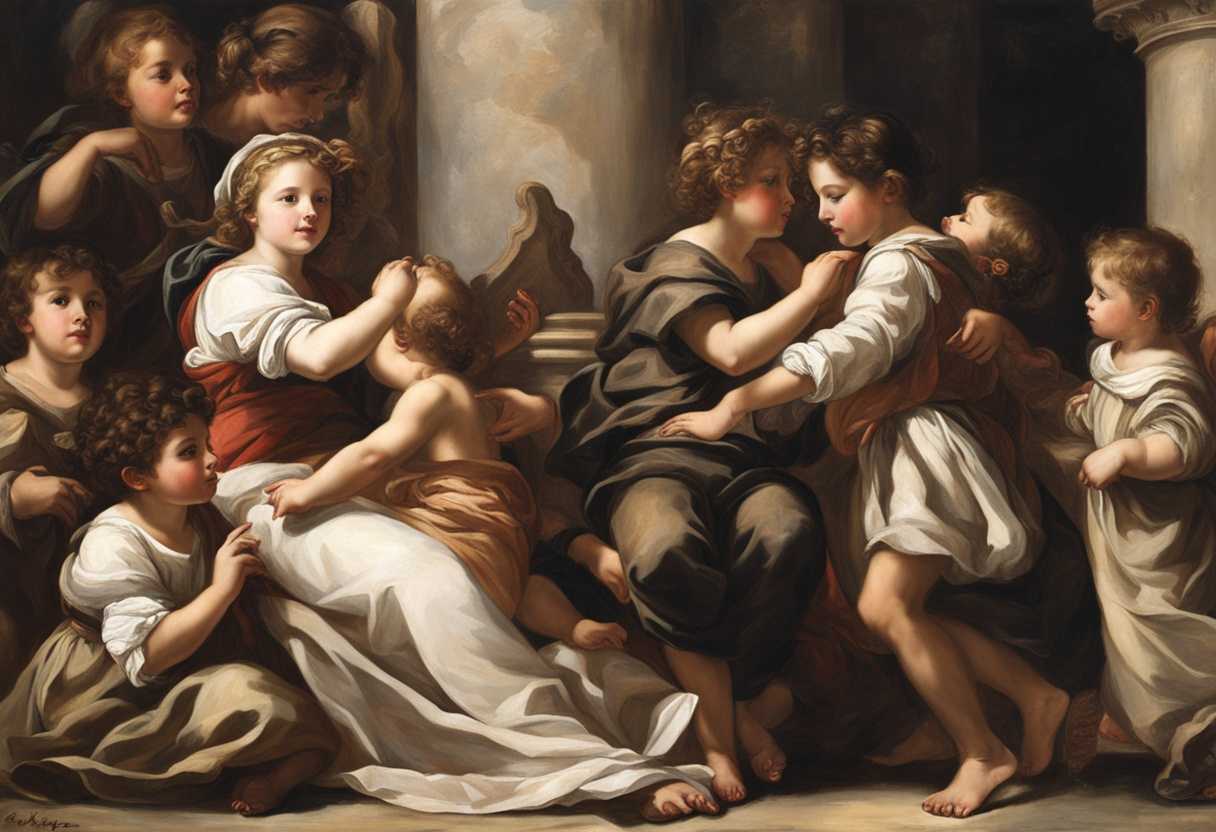
Setting the Scene for Hebrews 2:14
The scene in Hebrews chapter 2 is set in the heavenly realm, where the author is discussing the incarnation of Jesus Christ. The author describes how Jesus, the Son of God, took on human flesh and blood to become like His brothers and sisters in every way. The purpose of this act was to defeat the power of death and the devil, and to free those who were held in slavery by the fear of death.
In this scene, we see Jesus, the central figure, making the ultimate sacrifice by taking on human form to save humanity. Surrounding Him are angels and heavenly beings, witnessing this profound act of love and redemption. The atmosphere is one of awe and reverence as the heavenly hosts marvel at the humility and love displayed by the Son of God in becoming a man to bring salvation to mankind.
The scene is a powerful reminder of the depth of God’s love for His creation and the lengths to which He was willing to go to reconcile humanity to Himself. It serves as a poignant moment in the biblical narrative, highlighting the significance of Jesus’ incarnation and the victory He achieved over sin and death through His sacrificial death on the cross.
What is Hebrews 2:14 about?
This verse from the book of Hebrews is a powerful reminder of the central message of the Christian faith. It highlights the incarnation of Jesus Christ, His decision to take on human form to bring salvation to humanity. Jesus was able to experience all aspects of human life, including suffering and death, by becoming human. Through His death and resurrection, Jesus conquered the power of death, offering eternal life to those who believe in Him. The verse emphasizes that Jesus came to free us from the grip of fear. The fear of death is a universal human experience, but through Jesus, believers are assured that death is not the end but a gateway to eternal life. Jesus offers us comfort and peace by destroying the power of death, knowing that we have a Savior who has overcome the ultimate enemy. This verse speaks to the transformative power of Jesus’ sacrifice and His ability to bring freedom from fear and assurance of hope to all who believe in Him.
Reflect on the profound message of this verse. How does the idea of Jesus becoming human to destroy the power of death impact your understanding of salvation and eternal life? How does the promise of freedom from fear through Christ’s sacrifice bring you comfort and reassurance in your own life? Let these words remind you of the profound love and power of Jesus Christ, who came to earth to bring us hope, redemption, and eternal life.
Understanding what Hebrews 2:14 really means
Commentary Structure:
- Introduction: Context and Overview
- Key Phrases and Their Meanings
- Connection to Other Biblical Passages
- Relevance to Modern Life
- Anecdotal Illustration
- Reflection and Conclusion
Commentary:
Introduction: Context and Overview
Hebrews 2:14 is a powerful verse that speaks to the incarnation and the purpose of Christ’s coming. The verse addresses the reason why Jesus took on human flesh and highlights the victory over death that He achieved. Understanding this verse requires us to consider the broader context of the Book of Hebrews, which emphasizes the superiority of Christ and His role as our High Priest.
Key Phrases and Their Meanings
The phrase “shared in their humanity” is profound. It signifies that Jesus, though divine, chose to become fully human. This act was essential because, without becoming human, He could not effectively represent humanity or bear its sins. The next phrase, “so that by his death,” points directly to the purpose of His incarnation—His sacrificial death. Finally, “he might break the power of him who holds the power of death—that is, the devil” reveals the ultimate victory Christ achieved. Jesus defeated the devil’s hold over death and freed humanity from its bondage by dying and resurrecting.
Connection to Other Biblical Passages
This verse ties closely with 1 Corinthians 15:54-57, where Paul speaks about the victory over death and the sting of sin being removed. It also resonates with John 1:14, which discusses the Word becoming flesh and dwelling among us. These connections reinforce the idea that Jesus’ incarnation and His triumph over death are central themes throughout the New Testament.
Relevance to Modern Life
Why does this ancient text matter to us today? This verse offers profound hope in a world where fear and uncertainty about death are prevalent. It assures us that death is not the end and that through Jesus, we have eternal life. It also reminds us that evil does not have the final say. This message is particularly comforting in times of personal or global crises, where death and suffering seem overwhelming. Sarah is the young woman in the anecdote. She was diagnosed with a terminal illness and felt paralyzed by the fear of death. However, upon reading Hebrews 2:14, she found solace in knowing that Jesus had already conquered death. Her perspective shifted from despair to hope, and she began to live her remaining days with a sense of peace and purpose, sharing her faith with those around her. Sarah’s story exemplifies how this verse can transform our understanding of life and death.
Reflection and Conclusion
Hebrews 2:14 invites us to reflect deeply on the significance of Jesus’ humanity and His victory over death. It challenges us to live with the confidence that comes from knowing that death has been defeated and that eternal life awaits us. Let’s also consider how we can share this message of hope with others who may be struggling with fear and uncertainty as we internalize this truth. How does knowing that Jesus shared in our humanity and conquered death change your perspective on life’s challenges?
What does it mean to be set free from death?
To be set free from death, as mentioned in Hebrews 2:14, means that believers are no longer under the power and fear of death. Jesus Christ, through His death and resurrection, conquered death and its control over humanity. This freedom from death is a central aspect of the Christian faith, offering believers hope and assurance of eternal life beyond physical death.
This freedom from death also signifies the victory over the ultimate consequence of sin. Death entered the world through sin, but through Jesus’ sacrifice, believers are set free from the bondage of sin and its penalty. Believers can live with confidence, knowing that they have defeated death and that eternal life awaits them in the presence of God.
Being set free from death in this context also means that believers have a new perspective on life and death. While physical death is a reality, it is not the end for those who have placed their faith in Christ. Instead of fearing death, believers can face it with peace and confidence, knowing that it is a doorway to eternal life in the presence of God.
Application
Look at the sacrifices you make daily for your job and family. Reflect on Hebrews 2:14 and consider the ultimate sacrifice Jesus made for you. His death and resurrection shattered the chains holding you back. Now, you have the power to live fearlessly and share that freedom with others. Will you take a bold step to spread this life-changing message?

Reverend Michael Johnson is an experienced Church Minister with a profound expertise in spirituality and guidance. With a serene presence and a compassionate heart, he has faithfully served his congregation for over 20 years, leading them on a spiritual journey towards inner peace and enlightenment. Reverend Johnson’s extensive knowledge of religious philosophies and profound understanding of human nature have made him a trusted confidant and mentor to many, as he seamlessly weaves his profound wisdom into life teachings. Reverend Johnson’s calming demeanor and empathetic nature continue to uplift and heal souls, nurturing a sense of unity and tranquility within his community.