
Hebrews 5:1 is about the qualifications and responsibilities of high priests as mediators between God and humanity, emphasizing their need to be compassionate and understanding towards those they serve.
1 For every high priest chosen from among men is appointed to act on behalf of men in relation to God, to offer gifts and sacrifices for sins.
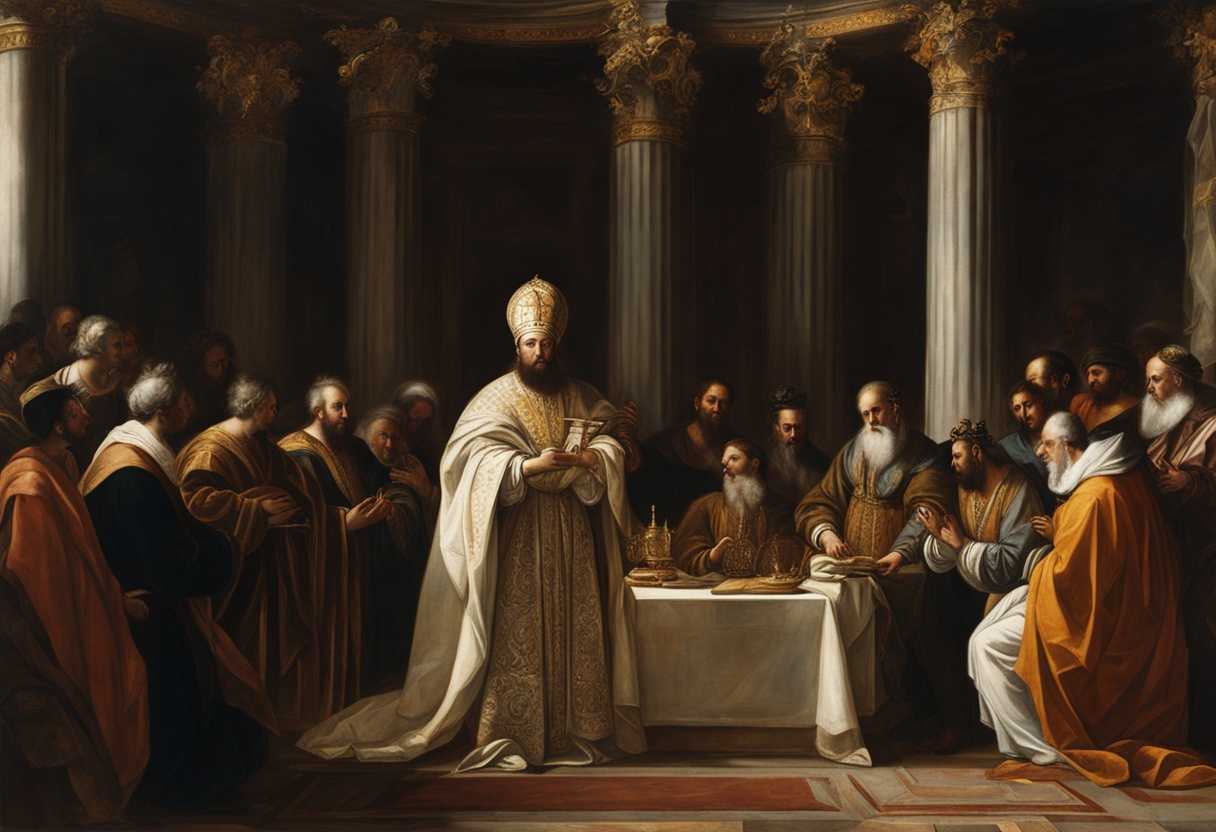
Setting the Scene for Hebrews 5:1
In Hebrews chapter 5, the scene is set in the temple in Jerusalem during the time of the early Christian church. The author of Hebrews is addressing a group of Jewish Christians who are familiar with the practices and traditions of the Jewish faith. The setting is solemn and reverent, with the smell of incense lingering in the air and the sound of prayers being offered up to God.
Among those present are the high priest, Levites, and other priests who are responsible for offering sacrifices and performing rituals in the temple. The Jewish Christians in the audience are likely converts from Judaism who are grappling with the transition from the old covenant to the new covenant in Christ. The author of Hebrews uses this setting to explain the role of the high priest in the Old Testament and how Jesus Christ fulfills that role as the ultimate high priest in the new covenant.
As the author delves into the significance of Jesus’ priesthood and his sacrifice for the sins of humanity, the audience is captivated by the parallels drawn between the rituals of the old covenant and the fulfillment of those rituals in Christ. The scene is one of deep reflection and contemplation as the Jewish Christians come to a deeper understanding of the connection between their faith heritage and the new life they have in Christ.
What is Hebrews 5:1 about?
The verse in Hebrews 5:1 highlights the important role of high priests in representing the people in matters related to God. High priests in ancient times served as intermediaries between the people and God, offering sacrifices, prayers, and interceding on behalf of the community. They were chosen to fulfill this sacred duty, acting as a bridge between humans and the divine.
Reflect on the significance of having a designated individual who could stand in the gap for the people before God. The high priests would require responsibility, humility, and dedication to faithfully carry out their duties. How does this concept of representation speak to the idea of community and solidarity among believers, knowing that someone is advocating for them in spiritual matters? Think about how the verse relates to contemporary times as you ponder it. Who are the modern-day equivalents of high priests in our communities, serving as mentors, guides, and spiritual leaders? How can we embody the spirit of representation and intercession in our own lives, advocating for others, and being a voice for the voiceless in matters related to God and justice?
Understanding what Hebrews 5:1 really means
Hebrews 5:1 delves into the crucial aspects of the high priest’s role, shedding light on the significance of empathy and representation before God. This verse serves as a cornerstone for comprehending the priesthood of Jesus Christ and its profound implications for all believers. In the broader context of the Bible, Leviticus 16:32-34 elucidates the duties of the high priest in the Old Testament, particularly on the Day of Atonement, underscoring the necessity of a mediator between humanity and the divine. Hebrews 4:15 further reinforces the idea by highlighting Jesus as our high priest, capable of empathizing with our weaknesses as He faced temptations yet remained sinless. Additionally, 1 Peter 2:9 proclaims believers as a royal priesthood, extending the priestly role to all Christians in a spiritual sense.
The relevance of Hebrews 5:1 resonates deeply with people today, offering solace in a world where many grapple with feelings of isolation and misunderstanding. The notion of a high priest who comprehends human frailties provides immense comfort. In contemporary society, where inadequacy and guilt often plague individuals, the assurance that Jesus intercedes for us and comprehends our struggles can bring profound relief and encouragement. Consider the story of Sarah, a young woman overwhelmed by her burdens and failures, feeling disconnected from God’s understanding. Upon discovering Jesus as her empathetic high priest, Sarah finds renewed hope and strength to confront her challenges.
Key phrases in Hebrews 5:1 offer detailed insights into the nature of the high priestly role. The term “Every high priest” signifies the universal application of the priestly function, encompassing all who serve in this capacity, including Jesus. “Chosen from among men” underscores the humanity of the high priest, emphasizing his ability to relate to the people he represents. Moreover, “Appointed to act on behalf of men in relation to God” underscores the intermediary role of the high priest, bridging the gap between humanity and the divine realm. Lastly, “To offer gifts and sacrifices for sins” highlights the primary duty of the high priest, which Jesus impeccably fulfilled through His ultimate sacrifice.
Hebrews 5:1 serves as a poignant reminder of Jesus’ compassionate and empathetic nature as our high priest. This verse encourages believers to approach God confidently, knowing that Jesus comprehends our struggles and advocates on our behalf. It also beckons us to embrace our identity as a royal priesthood, tasked with representing God to the world and interceding for others. In essence, Hebrews 5:1 beckons us to reflect on the profound implications of Jesus’ high priesthood and the comfort it brings to those who seek solace and understanding in their journey of faith.
How can we be more compassionate towards sinners?
We can show more compassion towards sinners by recognizing our own weaknesses and shortcomings. Understanding that we are all imperfect beings in need of grace can help cultivate empathy and kindness towards those who have strayed. We can extend a spirit of gentleness and understanding to others who may have stumbled along the way by seeing ourselves as fellow travelers on the journey of faith.
It is important to approach sinners with humility and without judgment. Rather than condemning or criticizing them, we can offer a listening ear, a helping hand, and a message of hope. Showing compassion involves reaching out with love and forgiveness, just as we hope to receive these gifts when we ourselves falter. We can create a safe space for sinners to seek healing, reconciliation, and restoration by embodying a spirit of kindness and compassion. Jesus Christ demonstrated boundless love and mercy towards those who were considered outcasts and sinners in society, ultimately showing the importance of being more compassionate towards sinners. We can be a light of grace and redemption in a world that often thrives on judgment and condemnation by reflecting Christ’s compassion in our interactions with others.
Application
Let’s embody the essence of Hebrews 5:1 in our daily lives by showing empathy and understanding to those who seek our support. Just as we balance the demands of work and family, let’s also balance offering sacrifices with compassion towards others. Let’s be the guiding light for those in dark moments, approaching them with gentleness and empathy. Will you join in this journey of kindness and support, making a difference in the lives of those around you?

Reverend Michael Johnson is an experienced Church Minister with a profound expertise in spirituality and guidance. With a serene presence and a compassionate heart, he has faithfully served his congregation for over 20 years, leading them on a spiritual journey towards inner peace and enlightenment. Reverend Johnson’s extensive knowledge of religious philosophies and profound understanding of human nature have made him a trusted confidant and mentor to many, as he seamlessly weaves his profound wisdom into life teachings. Reverend Johnson’s calming demeanor and empathetic nature continue to uplift and heal souls, nurturing a sense of unity and tranquility within his community.