
Hosea 10:3-4 is about the people’s acknowledgment of their spiritual desolation and the futility of their worship, highlighting their empty promises and reliance on false idols, which ultimately leads to their social and moral decay.
3 For now they will say: “We have no king, for we do not fear the Lord; and a king—what could he do for us?”
4 They utter mere words; with empty oaths they make covenants; so judgment springs up like poisonous weeds in the furrows of the field.
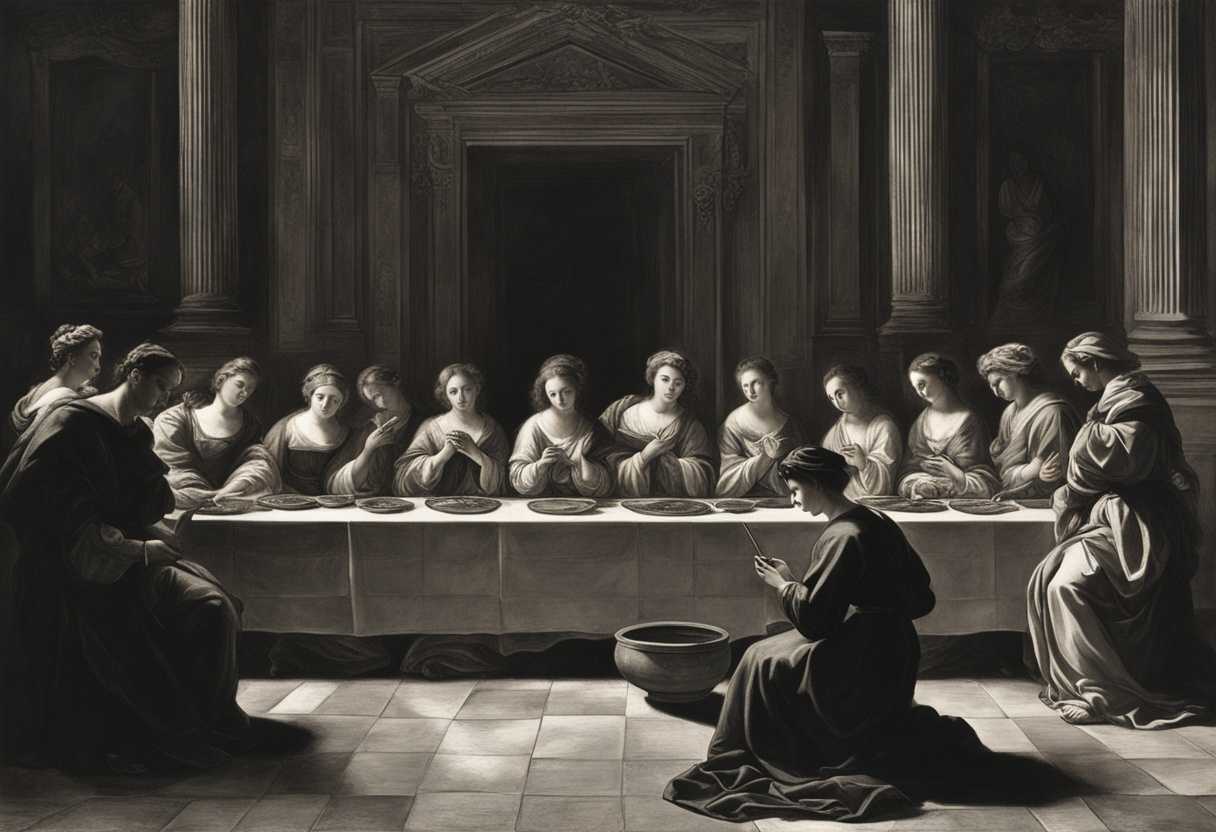
Setting the Scene for Hosea 10:3-4
In a time of great turmoil and moral decay, the land of Israel lay in disarray. The people, once devoted to their covenant with God, had turned to idolatry and false worship, seeking solace in the very things that led them astray. The air was thick with the scent of burnt offerings, but these sacrifices were hollow, devoid of true repentance. In the heart of this chaos stood the prophet Hosea, a man chosen by God to deliver a poignant message to a wayward nation. He had witnessed the decline of his people, their hearts hardened against the truth, and he felt the weight of their impending judgment pressing down upon him.
As Hosea walked through the streets of Samaria, he encountered a group of elders gathered at the city gate, their faces etched with concern and confusion. They were discussing the recent calamities that had befallen the land—droughts, famine, and the encroaching threat of foreign armies. Among them was a man named Jehoiakim, a once-respected leader who had succumbed to the allure of Baal worship, and his friend Eliab, who still clung to the remnants of faith in the God of Israel. Hosea approached them, his heart heavy with the burden of God’s message, knowing that their hearts were far from the truth. He could see the flicker of hope in Eliab’s eyes, a longing for restoration, while Jehoiakim’s gaze was clouded with doubt and fear.
The surroundings were a stark contrast to the vibrant life that once filled the land. The fields, once lush and green, now lay parched under the relentless sun, a reflection of the spiritual barrenness that had taken root in the hearts of the people. The sound of children playing had faded, replaced by the whispers of despair and the cries of the hungry. As Hosea stood before the elders, he spoke of the consequences of their actions, urging them to turn back to God and abandon their empty rituals. He reminded them that their reliance on false gods would lead only to desolation, and he called them to seek the Lord with sincerity, for only then could they hope for healing and restoration. The scene was one of urgency, a pivotal moment where the fate of a nation hung in the balance, and Hosea’s voice echoed the call to repentance that could still change their course.
What is Hosea 10:3-4 about?
A poignant critique of Israelite society during a time of spiritual decline is found in Hosea 10:3-4. The verse illustrates Israel’s insincerity in their worship practices, pointing out how they engage in empty rituals and offer shallow promises to God. It raises a crucial question: How often do we find ourselves going through the motions in our own spiritual lives? The Israelites had turned to false idols and superficial expressions of faith, believing that these would suffice in their relationship with the Divine. This is an invitation for us to reflect on our own lives—are there aspects where we, too, might be giving lip service rather than engaging authentically with our beliefs? The reference to “false idols” serves as a powerful reminder of the distractions and attachments we may have in our own lives. What do we allow to take priority over our relationship with God? The Israelites had turned to these idols for security and validation, thinking they could find comfort in something that was ultimately unfulfilling. We might carry similar burdens, seeking assurance in worldly things that provide only temporary satisfaction. How can we cultivate sincerity and depth in our worship as we grapple with the human tendency to waver in faith? Hosea’s words challenge us to shift our focus toward a more genuine relationship with God, urging us to question not just our actions but the intent and spirit behind them. Hosea 10:3-4 ultimately calls us to examine our hearts and the authenticity of our commitments. It’s not merely about what we present outwardly, but about the true state of our faith and our willingness to turn away from distractions. Are we prepared to address the areas in our lives where we may be falling short and to seek a deeper, more meaningful connection with the Divine? This verse serves as a critical wake-up call, inviting us to return to a place of genuine worship that reflects our true devotion and understanding of what it means to follow God wholeheartedly.
Understanding what Hosea 10:3-4 really means
In Hosea 10:3-4, we encounter a powerful message from the prophet Hosea, who speaks to a nation grappling with moral decay and spiritual unfaithfulness. The context is crucial; Israel has turned away from God, seeking human leadership and making hollow promises. This passage serves as a stark reminder of the consequences of such actions, urging us to reflect on our own commitments and the sincerity of our faith.
The phrase “We have no king” encapsulates a profound sense of loss. It signifies not just a political vacuum but a spiritual one as well. The people of Israel have rejected God as their sovereign, opting instead for the unreliable guidance of human authority. This rejection leads to chaos and confusion. Have we, in our own lives, ever placed our trust in fleeting human systems rather than in divine wisdom? This question invites us to consider where we seek direction and leadership.
Next, Hosea highlights the insincerity of the people with the statement, “They make promises, take oaths, and make agreements.” This reflects a troubling reality: their words lack true commitment. In a world where promises are often broken, this resonates deeply. Integrity in our relationships and commitments is essential. How often do we find ourselves making promises we don’t intend to keep? This passage challenges us to examine the weight of our words and the sincerity behind them.
The metaphor of “judgment springs up like poisonous weeds” paints a vivid picture of the consequences of sin. Just as weeds can quickly overrun a garden, so too can the repercussions of unfaithfulness manifest in our lives. This idea is echoed in Galatians 6:7, which reminds us that we will reap what we sow. Are we sowing seeds of integrity and faithfulness, or are we allowing weeds of insincerity to take root in our lives? This reflection is vital for our spiritual growth.
In today’s context, the message of Hosea is particularly relevant. Many people feel disillusioned by political systems and societal norms that fail to uphold integrity. The emptiness of promises made by leaders can leave us feeling lost and uncertain. Hosea’s words call us to reflect on our own commitments. Are we contributing to a culture of broken promises, or are we striving for authenticity in our relationships?
Consider a personal experience where a friend failed to follow through on a promise. Initially, it felt disappointing, but over time, it revealed deeper issues in their life. This experience underscores the importance of reliability and the impact of broken promises. Just as in Hosea, our words and commitments shape our connections with others and with God.
In conclusion, Hosea 10:3-4 serves as a poignant reminder of the importance of sincerity in our faith and relationships. It challenges us to examine our lives for areas where we may be making empty promises or relying on human authority instead of seeking God’s guidance. As we strive for integrity, we can cultivate a deeper relationship with God and those around us. Let us commit to being people of our word, reflecting the faithfulness of God in all that we do.
What false commitments am I relying on instead of God?
Superficial promises or temporary alliances that offer immediate relief but lack true substance can be tempting to rely on in times of uncertainty or distress. These false commitments might include trust in financial stability, social status, or relationships that are more transactional than genuine. Such dependencies can distract us from seeking deeper fulfillment and guidance, leading to a cycle of disappointment when these foundations inevitably fail to deliver lasting security.
Additionally, political ideologies or social movements may become modern substitutes for divine reliance. Individuals may find themselves placing their hope in the effectiveness of systems or parties, believing that these entities will bring about change or redemption. When these hopes do not materialize or when the systems reveal their flaws, it highlights the futility of looking outward for support instead of turning inward for spiritual strength and reliance. A deeper mistrust of divine providence often underlies the issue ultimately. Many seek to control their circumstances through human means, forgetting that true peace and assurance come from a relationship founded on faith. Recognizing these false commitments enables us to realign our priorities, fostering a more profound trust in something that transcends the temporal and imperfect elements of life. Embracing a faithful reliance on spiritual truths can offer the stability and hope that false commitments can never provide.
Application
Imagine your workday—are you just clocking in and out, or are you truly passionate about what you do? In the same way, let’s not just go through the motions of faith and community. It’s time to dig deep, connect sincerely with your beliefs, and forge real relationships with the people around you. Don’t let your spiritual life feel like a boring job. Embrace the challenge of authenticity and let your faith shine through. Are you ready to transform your routine into a meaningful journey today?

Reverend Michael Johnson is an experienced Church Minister with a profound expertise in spirituality and guidance. With a serene presence and a compassionate heart, he has faithfully served his congregation for over 20 years, leading them on a spiritual journey towards inner peace and enlightenment. Reverend Johnson’s extensive knowledge of religious philosophies and profound understanding of human nature have made him a trusted confidant and mentor to many, as he seamlessly weaves his profound wisdom into life teachings. Reverend Johnson’s calming demeanor and empathetic nature continue to uplift and heal souls, nurturing a sense of unity and tranquility within his community.