
Isaiah 2:3-4 is about a future vision of peace and harmony where all nations will come together to learn from God and put aside their weapons to strive for justice and reconciliation.
3 And many peoples shall come, and say: “Come, let us go up to the mountain of the Lord, to the house of the God of Jacob, that he may teach us his ways and that we may walk in his paths.”
4 He shall judge between the nations, and shall decide disputes for many peoples; and they shall beat their swords into plowshares, and their spears into pruning hooks; nation shall not lift up sword against nation, neither shall they learn war anymore.
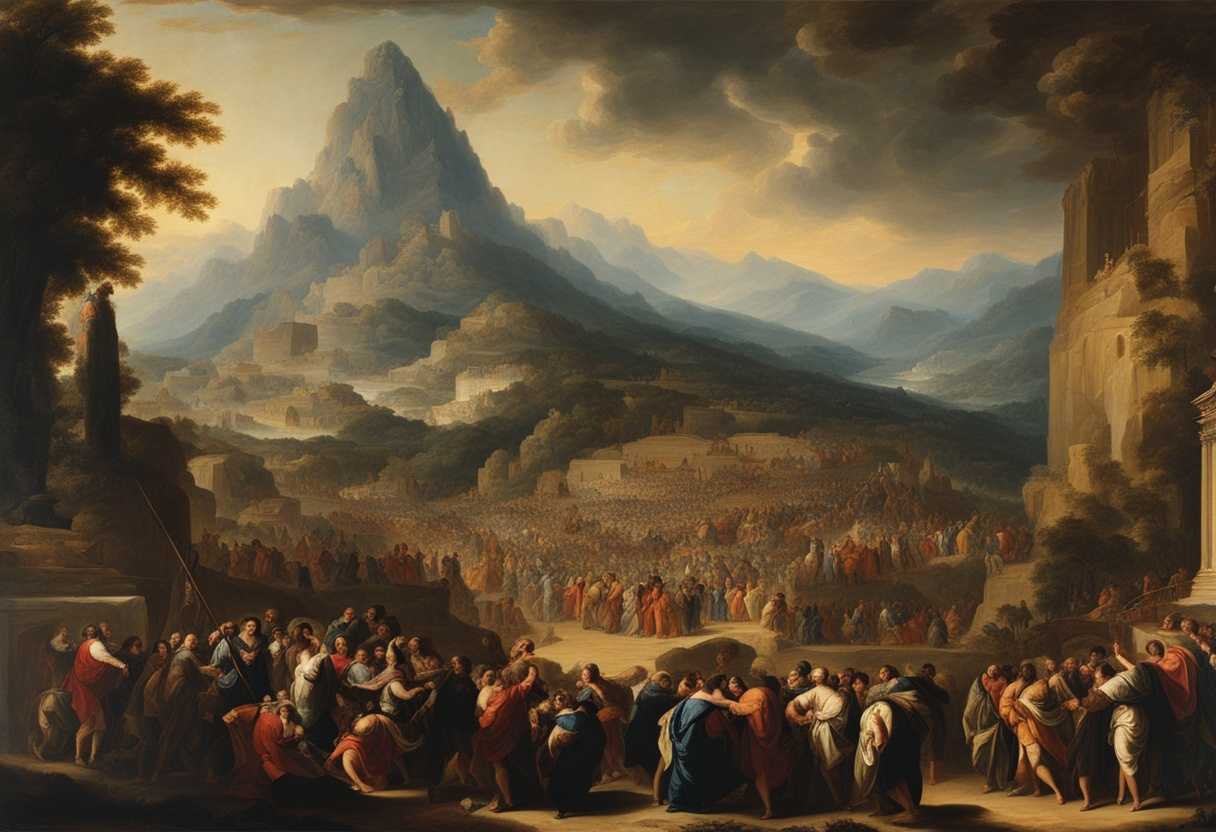
Setting the Scene for Isaiah 2:3-4
In Isaiah chapter 2, we find a powerful and prophetic scene unfolding. The setting is the mountain of the Lord, a place of great significance and holiness in the biblical narrative. People from all nations are streaming towards this mountain, drawn by a deep spiritual longing and a desire to seek the wisdom and guidance of the Lord.
Among the crowd are individuals from diverse backgrounds and cultures, united in their quest for divine truth and understanding. There are men and women, young and old, rich and poor, all coming together in a remarkable display of unity and harmony. They have heard of the teachings and prophecies of Isaiah, and they are eager to witness the fulfillment of these words with their own eyes.
As they gather on the mountain of the Lord, a sense of peace and reverence fills the air. The surroundings are awe-inspiring, with majestic mountains towering in the distance and a gentle breeze carrying the scent of wildflowers. The people are filled with anticipation as they wait for the Lord to impart His wisdom and establish His reign of peace and justice. It is a moment of great significance, a glimpse of the divine plan unfolding before their very eyes.
What is Isaiah 2:3-4 about?
Divine guidance and knowledge lead to global harmony and reconciliation among nations in Isaiah 2:3-4. This verse encourages us to reflect on the transformative power of God’s teachings and the potential they hold to bring about unity and peace in a world plagued by conflict and division. It serves as a reminder of the profound impact that living according to God’s principles can have on our interactions with others and the societies we inhabit.
Imagine a world where nations no longer engage in warfare and hostility, but instead come together in peaceful coexistence, bound by a shared commitment to justice and righteousness. Isaiah 2:3-4 invites us to envision a future where the guiding light of God’s wisdom illuminates our paths and paves the way for reconciliation and understanding among all peoples. It challenges us to consider how we can actively contribute to the realization of this vision by embodying the values of compassion, tolerance, and cooperation in our own lives and interactions with others. Let us strive for a world where unity and peace prevail, inspired by this verse, and work towards making this vision a reality in our communities and beyond.
Understanding what Isaiah 2:3-4 really means
Isaiah 2:3-4 paints a vivid picture of a future where nations gather in unity to seek the wisdom and guidance of the Lord. The imagery of ascending to the “mountain of the Lord” signifies a collective movement towards divine revelation and spiritual enlightenment. It symbolizes a shared commitment to living according to God’s principles and teachings, as expressed in the desire to learn His ways and walk in His paths. This vision encapsulates the transformative power of God’s word, inspiring individuals and communities to embrace peace and harmony.
The striking imagery of turning weapons of war into tools of productivity and peace in Isaiah 2:3-4 speaks volumes about the profound shift from conflict to cooperation. The vision of nations no longer engaging in warfare but redirecting their efforts towards constructive endeavors resonates deeply in a world plagued by violence and discord. It challenges us to reconsider the ways in which we utilize our resources and energies, urging us to strive for reconciliation and unity instead of perpetuating strife.
Drawing parallels with other biblical passages such as Micah 4:1-3 and Psalm 46:9 reinforces the overarching theme of divine intervention bringing about peace and the cessation of hostilities. The teachings of Jesus in Matthew 5:9 further emphasize the importance of peacemaking and reconciliation, aligning with the vision presented in Isaiah. These interconnected passages weave a narrative of hope, urging us to actively pursue peace and embody the principles of love, compassion, and understanding in our interactions with others.
In a world marred by conflicts and divisions, the timeless message of Isaiah 2:3-4 offers a beacon of hope and a roadmap towards reconciliation and unity. It challenges us to reflect on our roles as individuals and communities in fostering peace and understanding. The call to seek divine wisdom and walk in God’s paths transcends time and culture, reminding us of the enduring relevance of living according to His principles in a world in need of healing and restoration.
Consider a community that exemplifies the transformative power of embracing peace and reconciliation. Through intentional efforts to bridge divides, foster dialogue, and promote understanding, this community experienced a remarkable shift towards harmony and cooperation. Their journey mirrors the vision in Isaiah 2:3-4, illustrating how seeking divine guidance and committing to peace can lead to tangible and positive change. This anecdote serves as a poignant reminder of the potential for transformation when individuals and communities align their actions with the principles of love, forgiveness, and unity.
Isaiah 2:3-4 beckons us to envision a world where swords are turned into plowshares, where nations no longer engage in warfare but strive for peace. It challenges us to actively participate in the realization of this vision by embodying the values of reconciliation, compassion, and justice in our daily lives. As we contemplate the profound implications of this prophetic passage, may we be inspired to be agents of peace and catalysts for change in a world yearning for healing and unity.
How can we learn to walk in God’s ways?
We can learn to walk in God’s ways by seeking His guidance through studying His word, the Bible. Through regular reading and meditating on the scriptures, we gain insight into God’s character, His will, and how He desires us to live. The Bible provides us with a roadmap for righteous living and shows us the path that God wants us to follow. We can learn to walk in God’s ways by seeking a personal and intimate relationship with Him through prayer and fellowship with other believers, in addition to studying the Bible. We can communicate with God, seek His guidance, and ask for His help in navigating life’s challenges by spending time in prayer. Fellowship with other believers allows us to learn from and be encouraged by those who are also seeking to walk in God’s ways, providing us with support and accountability in our journey of faith.
Lastly, by surrendering our will to God’s and allowing the Holy Spirit to work in our lives, we can be transformed from the inside out. We will gradually grow in our ability to walk in His ways and become more like Christ as we submit to God’s leading and strive to align our thoughts, words, and actions with His will.
Application
Let’s embody the spirit of peace and unity as we delve into Isaiah 2:3-4. Let’s stand together and work towards fostering harmony and empathy in our circles, becoming ambassadors of peace in the midst of chaos. Will you rise to the occasion with me, planting seeds of understanding and love in a world longing for tranquility and cooperation?

Reverend Michael Johnson is an experienced Church Minister with a profound expertise in spirituality and guidance. With a serene presence and a compassionate heart, he has faithfully served his congregation for over 20 years, leading them on a spiritual journey towards inner peace and enlightenment. Reverend Johnson’s extensive knowledge of religious philosophies and profound understanding of human nature have made him a trusted confidant and mentor to many, as he seamlessly weaves his profound wisdom into life teachings. Reverend Johnson’s calming demeanor and empathetic nature continue to uplift and heal souls, nurturing a sense of unity and tranquility within his community.