
Isaiah 45:13 is about God empowering Cyrus, a pagan ruler, to subdue nations in order to pave the way for the release of the Israelites from captivity and fulfill His divine plan.
13 I have stirred him up in righteousness, and I will make all his ways level; he shall build my city and set my exiles free, not for price or reward,” says the Lord of hosts.
Setting the Scene for Isaiah 45:13
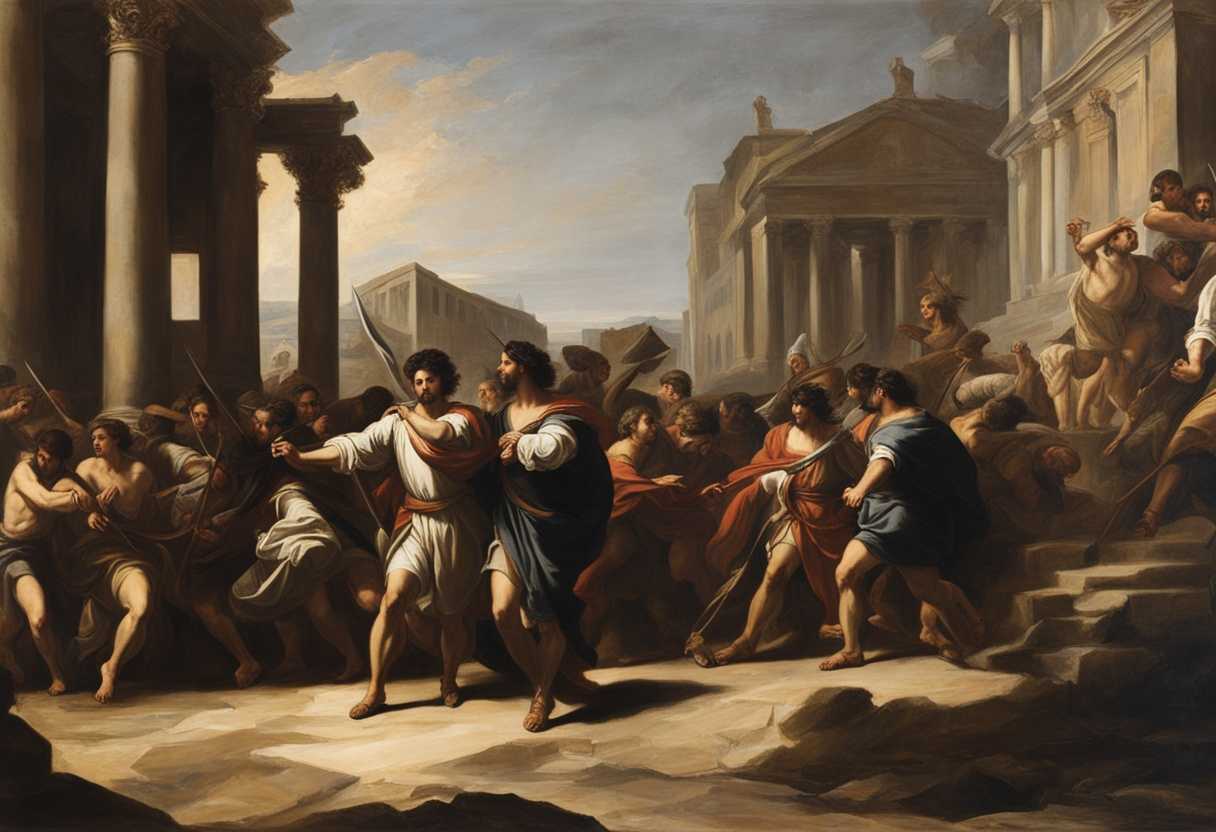
In Isaiah chapter 45, we find a scene set in the grand court of King Cyrus of Persia. The room is adorned with opulent tapestries and intricate Persian rugs, with golden candelabras casting a warm glow over the assembly. King Cyrus, a powerful and imposing figure, sits on his throne, surrounded by his courtiers and advisors. Among them is the prophet Isaiah, who has been called to deliver a message from the Lord to the king.
As Isaiah stands before King Cyrus, he speaks with authority and conviction, proclaiming the words of the Lord. The king listens intently, his eyes fixed on the prophet as he delivers a message of divine favor and guidance. The atmosphere in the court is tense yet reverent, as everyone present senses the weight of the moment. King Cyrus, known for his tolerance and respect for different faiths, is moved by Isaiah’s words and decides to heed the message from the Lord.
The scene captures a pivotal moment in history, where the will of God intersects with the actions of a powerful ruler. Through Isaiah’s prophecy, King Cyrus is called to fulfill his role in God’s plan, demonstrating the sovereignty and wisdom of the Almighty. The encounter between the prophet and the king serves as a reminder of how God can work through even the most unlikely individuals to accomplish His purposes.
What is Isaiah 45:13 about?
God’s sovereignty and His ability to work through unexpected means to accomplish His purposes are powerfully demonstrated in Isaiah 45:13. God reveals His plan to use Cyrus, a pagan ruler, to rebuild Jerusalem and set the captives free in this verse. This serves as a profound reminder that God’s plans are not limited by human expectations or worldly constraints.
Imagine the awe-inspiring way in which God can intersect the lives of even those who do not know or worship Him, shaping world events to accomplish His divine plan. The story of Cyrus serves as a testament to God’s unfathomable wisdom and His ability to use anyone – even someone outside of His chosen people – as an instrument of His will. It challenges us to reflect on how God might be working in ways we cannot comprehend to bring about His purposes in our lives and in the world at large. We are encouraged to trust in God’s sovereign control over all situations as we contemplate this verse, even when it may seem counterintuitive or beyond our understanding. It prompts us to have faith that God can use any circumstance, no matter how unlikely, to bring about redemption, restoration, and freedom. We are reminded that God’s ways are higher than our ways, and His plans are ultimately for our good and His glory, just as Cyrus was an unexpected but effective tool in God’s hands.
Understanding what Isaiah 45:13 really means
In Isaiah 45:13, we find a profound prophecy where God declares His intentions for Cyrus, the Persian king, whom He has chosen to carry out His divine plans for Israel. This verse serves as a reminder of God’s sovereignty and His remarkable ability to use individuals, even those who may not seem obvious choices, to accomplish His righteous purposes. The phrase “I have raised him up in righteousness” emphasizes that God’s selection of Cyrus is not arbitrary but based on a foundation of justice and moral correctness. It showcases God’s commitment to executing His plans in a manner that upholds His righteous standards.
“I will direct all his ways” highlights the active involvement of God in guiding Cyrus, ensuring that every step aligns with God’s will. This assurance of God’s guidance extends beyond Cyrus to all individuals, reminding us that God is intimately involved in directing the paths of those who seek to follow Him. The mention of Cyrus building God’s city and releasing the captives underscores God’s role in deliverance and restoration. It signifies not only physical rebuilding but also spiritual renewal, reflecting God’s compassion and faithfulness towards His people.
Drawing parallels with related biblical passages such as Ezra 1:1-2, Proverbs 21:1, and Romans 8:28 further solidifies the concept of God’s sovereignty and His ability to work through human agents to accomplish His purposes. These passages provide additional layers of understanding and reinforce the overarching theme of God’s providential care and guidance. They serve as a testament to the consistency of God’s character throughout the Old and New Testaments, showcasing His unwavering commitment to His people.
In today’s tumultuous world, the message of Isaiah 45:13 remains relevant and comforting. It reminds believers of the unchanging nature of God’s sovereignty amidst uncertainty and chaos. By understanding and internalizing the truth of God’s control over all things, individuals can find peace and assurance in the knowledge that God is actively working for the good of those who love Him. Just as God used Cyrus for His purposes, He can use anyone, regardless of background or circumstances, to fulfill His divine plan.
Reflecting on personal experiences or anecdotes where God’s hand was evident in seemingly chaotic situations can serve as a powerful illustration of God’s sovereignty in action. These stories can demonstrate how God orchestrates events for a greater good, even when the path forward may seem unclear or challenging. By recognizing God’s hand in the twists and turns of life, individuals can find encouragement to trust in His plan, knowing that He is always working behind the scenes for their ultimate good.
In conclusion, Isaiah 45:13 encapsulates essential truths about God’s sovereignty, His righteous purposes, and His active involvement in directing the paths of individuals. It serves as a beacon of hope and assurance for believers, reminding them to trust in God’s guidance even when circumstances appear uncertain. As we meditate on this verse and its implications for our lives, may we find comfort in the unwavering faithfulness of our God, who continues to work all things together for the good of those who love Him.
How can God use us to accomplish His plans?
God uses Cyrus, a pagan king, to accomplish His plans and purposes in this verse. This demonstrates that God can use anyone, even those who do not know or acknowledge Him, to bring about His will. Similarly, in our own lives, God can use us to fulfill His purposes and advance His kingdom, regardless of our background or circumstances.
We should be open and surrendered to God’s leading, willing to be vessels for His work. This requires humility, obedience, and faithfulness as we allow God to direct our steps and use us as He sees fit. We can be instruments in His hands to bring about His plans and bring glory to His name by aligning our will with God’s and seeking His guidance through prayer and His Word.
Application
Reflect on Isaiah 45:13. Realize how God uses you for His plan, like a CEO leading a company. Let this verse be your compass, guiding you to your purpose. It’s time to step up, to be the leader in your divine mission. Will you rise to the challenge God has set for you?

Reverend Michael Johnson is an experienced Church Minister with a profound expertise in spirituality and guidance. With a serene presence and a compassionate heart, he has faithfully served his congregation for over 20 years, leading them on a spiritual journey towards inner peace and enlightenment. Reverend Johnson’s extensive knowledge of religious philosophies and profound understanding of human nature have made him a trusted confidant and mentor to many, as he seamlessly weaves his profound wisdom into life teachings. Reverend Johnson’s calming demeanor and empathetic nature continue to uplift and heal souls, nurturing a sense of unity and tranquility within his community.