
Isaiah 7:11-14 is about the prophecy of the virgin birth of Jesus Christ, foretelling the arrival of Immanuel, a sign of God’s presence and salvation for humanity.
11 “Ask a sign of the Lord your God; let it be deep as Sheol or high as heaven.”
12 But Ahaz said, “I will not ask, and I will not put the Lord to the test.”
13 And he said, “Hear then, O house of David! Is it too little for you to weary men, that you weary my God also?
14 Therefore the Lord himself will give you a sign. Behold, the virgin shall conceive and bear a son, and shall call his name Immanuel.
Setting the Scene for Isaiah 7:11-14
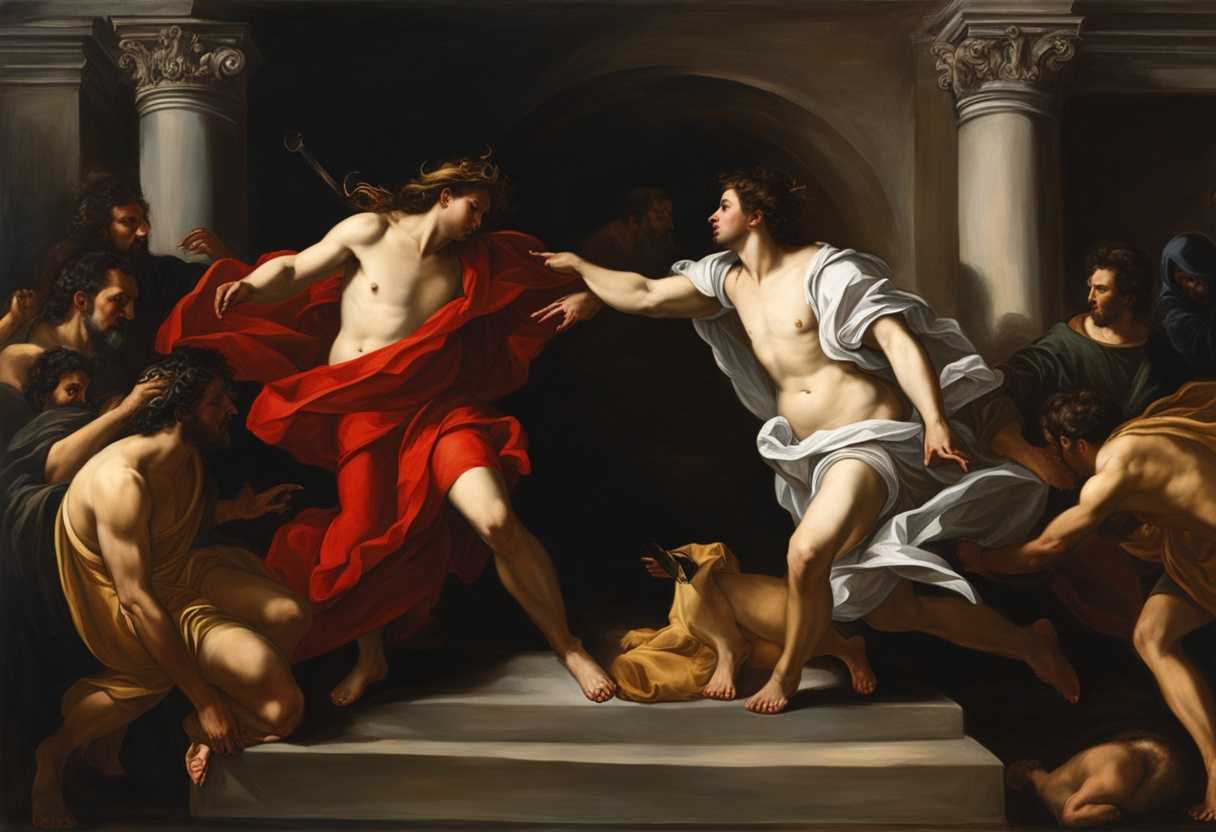
In Isaiah chapter 7, we find the prophet Isaiah standing in the courtyard of King Ahaz’s palace in Jerusalem. The scene is tense as the kingdom of Judah is under threat from the northern kingdom of Israel and Syria. Ahaz is feeling overwhelmed by the situation and is struggling to trust in God’s protection. Isaiah, a trusted advisor to the king, has been sent by the Lord to deliver a message of reassurance and a sign of God’s faithfulness.
Surrounded by royal advisors and court officials, King Ahaz listens intently as Isaiah speaks with authority and conviction. The atmosphere is charged with anticipation as Isaiah delivers the famous prophecy of a virgin conceiving and giving birth to a son, a sign of God’s ultimate deliverance and salvation for His people. The courtyard is filled with the sounds of murmuring voices and the rustling of robes as the weight of the prophecy sinks in.
As the sunlight filters through the columns of the palace, casting long shadows on the ground, the gravity of the moment is palpable. The faithlessness of the king contrasts sharply with the unwavering faith of the prophet, setting the stage for a pivotal moment in the history of Judah. The scene is a powerful reminder of God’s sovereignty and His faithfulness to His promises, even in the midst of uncertainty and fear.
What is Isaiah 7:11-14 about?
The prophecy of the virgin birth of Jesus Christ is foretold in this verse from the Book of Isaiah. This significant prediction holds deep theological and symbolic meaning in the Christian faith. It speaks to the miraculous nature of the birth of Jesus, as he is to be born of a virgin, Mary, without the involvement of a human father. This divine conception highlights the supernatural and transcendent nature of Jesus’ birth, emphasizing his status as the Son of God.
Have you ever stopped to consider the profound implications of this prophecy? The virgin birth of Jesus signifies his unique and divine origins, setting him apart from all other figures in history. It underscores the fulfillment of God’s plan for salvation, as Jesus is born into the world to bring hope, redemption, and eternal life to all who believe in him. The prophecy of the virgin birth serves as a powerful reminder of God’s sovereignty and his unfailing faithfulness to fulfill his promises. It invites us to reflect on the miraculous nature of Jesus’ birth and to marvel at the extraordinary ways in which God works in the world to bring about his divine purposes.
Understanding what Isaiah 7:11-14 really means
In Isaiah 7:11-14, we find a poignant moment in the midst of political turmoil in the Kingdom of Judah. King Ahaz is facing threats from neighboring nations, prompting God to send the prophet Isaiah to reassure him and offer a sign of divine protection and faithfulness. The passage begins with the command for Ahaz to ask the Lord for a sign, emphasizing God’s willingness to provide assurance in the deepest depths or highest heights, showcasing His omnipotence and readiness to respond to our needs.
However, Ahaz’s response, “I will not ask; I will not put the Lord to the test,” reveals a lack of faith or false humility. His reluctance to trust in God’s power and promises serves as a cautionary tale for us today, reminding us of the importance of wholehearted faith and reliance on God in times of uncertainty. The prophecy that follows, “The virgin will conceive and give birth to a son, and will call him Immanuel,” holds profound significance as it foretells the birth of Jesus Christ, who embodies the concept of “God with us,” highlighting God’s plan for salvation and His intimate presence among His people.
This prophecy finds fulfillment in the New Testament, as seen in passages like Matthew 1:22-23 and Luke 1:26-35, which directly reference Isaiah 7:14 in connection to the birth of Jesus. John 1:14 further reinforces the idea of “Immanuel” by stating, “The Word became flesh and made his dwelling among us,” underscoring the reality of God’s presence among humanity. Today, the promise of “Immanuel” serves as a comforting reminder that God is always with us, especially during times of fear and uncertainty, just as He was with Ahaz in his distress.
Consider a person grappling with a life-altering decision or a challenging situation, feeling overwhelmed and unsure of the future. This passage encourages them to seek God’s guidance and trust in His presence, mirroring Isaiah’s counsel to Ahaz to rely on God’s promises. Isaiah 7:11-14 encapsulates the enduring truth of God’s faithfulness and His desire to be intimately involved in the lives of His people. It beckons us to trust in His unfailing promises and seek His guidance in all circumstances, reminding us that the prophecy of Immanuel is not merely a historical event but a living reality that offers hope and assurance even today.
Can we trust in God’s promises?
Yes, we can trust in God’s promises because He is faithful and His word is true. God assures a sign of His presence and protection in the midst of uncertainty and fear in the specific verse referenced. This promise serves as a reminder that God is always with us, guiding and watching over us in all circumstances.
Throughout the Bible, we see countless instances of God fulfilling His promises to His people. He has shown His faithfulness time and time again, never failing to keep His word. Therefore, we can have confidence in God’s promises, knowing that He will always be true to His word and fulfill what He has declared. We can find comfort and strength in God’s promises in times of doubt or difficulty, knowing that He is trustworthy and will never forsake us. His promises are a source of hope and encouragement, reminding us of His love, faithfulness, and sovereignty over all things.
Application
Reflect on the unwavering promise of God, just as He fulfilled ancient prophecies, He will fulfill His promises today for you. Have faith, act with courage, and obey His will. God stands beside you, guiding your path. Will you believe in His promises and step forward boldly in faith right now?

Reverend Michael Johnson is an experienced Church Minister with a profound expertise in spirituality and guidance. With a serene presence and a compassionate heart, he has faithfully served his congregation for over 20 years, leading them on a spiritual journey towards inner peace and enlightenment. Reverend Johnson’s extensive knowledge of religious philosophies and profound understanding of human nature have made him a trusted confidant and mentor to many, as he seamlessly weaves his profound wisdom into life teachings. Reverend Johnson’s calming demeanor and empathetic nature continue to uplift and heal souls, nurturing a sense of unity and tranquility within his community.