
James 2:1-12 is about the importance of showing no favoritism, treating all people with equal dignity and respect, and living out true faith through actions that reflect God’s mercy and love for all.
1 My brothers, show no partiality as you hold the faith in our Lord Jesus Christ, the Lord of glory.
2 For if a man wearing a gold ring and fine clothing comes into your assembly, and a poor man in shabby clothing also comes in,
3 and if you pay attention to the one who wears the fine clothing and say, “You sit here in a good place,” while you say to the poor man, “You stand over there,” or, “Sit down at my feet,”
4 have you not then made distinctions among yourselves and become judges with evil thoughts?
5 Listen, my beloved brothers, has not God chosen those who are poor in the world to be rich in faith and heirs of the kingdom, which he has promised to those who love him?
6 But you have dishonored the poor man. Are not the rich the ones who oppress you, and the ones who drag you into court?
7 Are they not the ones who blaspheme the honorable name by which you were called?
8 If you really fulfill the royal law according to the Scripture, “You shall love your neighbor as yourself,” you are doing well.
9 But if you show partiality, you are committing sin and are convicted by the law as transgressors.
10 For whoever keeps the whole law but fails in one point has become guilty of all of it.
11 For he who said, “Do not commit adultery,” also said, “Do not murder.” If you do not commit adultery but do murder, you have become a transgressor of the law.
12 So speak and so act as those who are to be judged under the law of liberty.
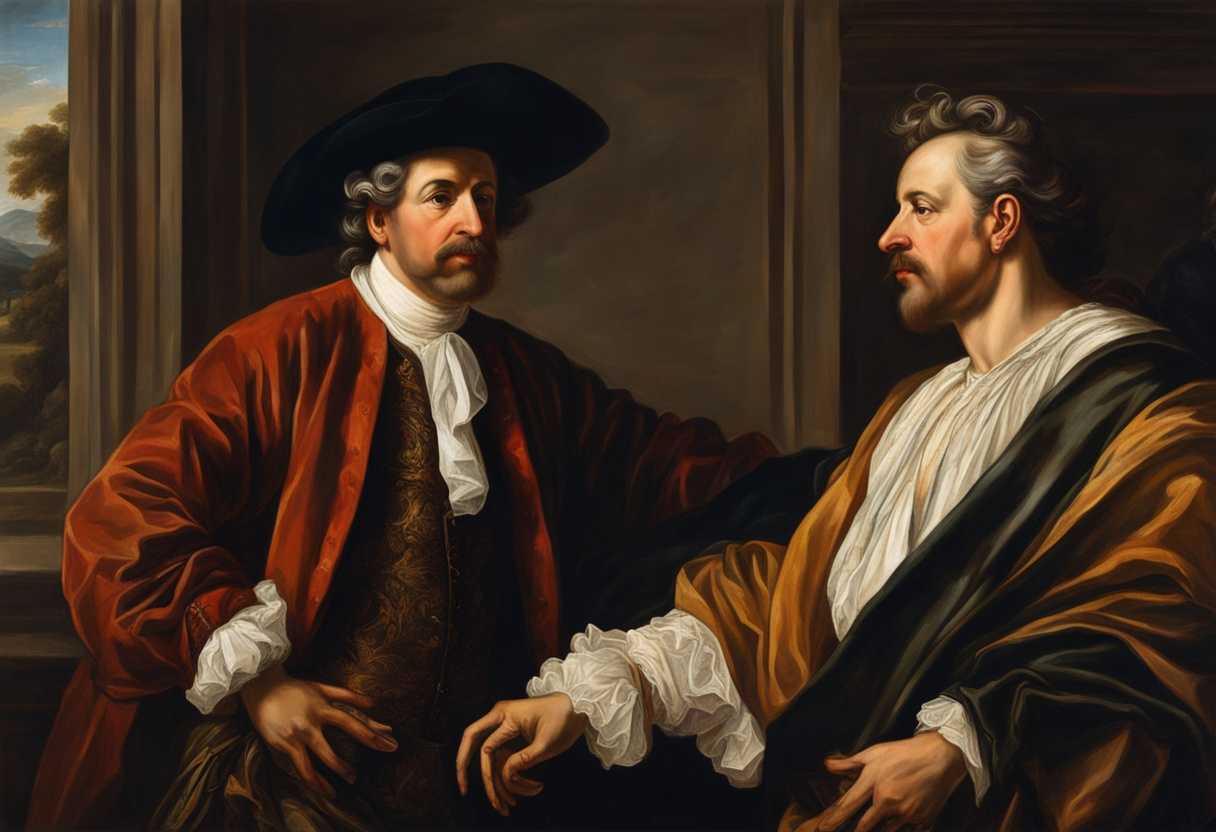
Setting the Scene for James 2:1-12
The scene in James chapter 2 opens in a grand meeting hall within a bustling city. The room is filled with a diverse group of people from various backgrounds and social statuses. At the center of the room, a group of wealthy individuals, adorned in fine clothing and jewelry, are engaged in conversation, their voices carrying above the rest. On the outskirts of the room, a more modestly dressed group of individuals, including widows, orphans, and the less fortunate, stand quietly, almost unnoticed by the affluent crowd.
Among the wealthy individuals is a man named Jacob, known for his lavish lifestyle and influential social circle. He had invited his friend, Sarah, a prominent businesswoman, to join him at the gathering. As they chat and laugh with the other wealthy attendees, their eyes briefly meet those of a poor man named Thomas, who stands alone in a corner, his worn clothes and tired expression a stark contrast to the opulence surrounding him. Unbeknownst to Jacob and Sarah, their actions and attitudes towards Thomas will soon be put to the test, as the message of James chapter 2 unfolds, challenging them to show true faith through their treatment of others, regardless of their social standing.
What is James 2:1-12 about?
Indeed, favoritism goes against the core principle of treating others with fairness and equality. When we show favoritism, we are essentially displaying a lack of empathy and understanding towards others. God’s command to love our neighbors as ourselves encompasses the idea of treating everyone with respect, kindness, and compassion, regardless of their background or circumstances. We are essentially disregarding the fundamental principle of love by showing favoritism and prioritizing our personal biases or preferences over treating others with the same love and respect we would want for ourselves.
Ask yourself, how would you feel if you were on the receiving end of favoritism? Wouldn’t you feel hurt, excluded, or undervalued? It is crucial to remember that every individual is deserving of love, kindness, and respect, regardless of any external factors. We actively contribute to a more harmonious and inclusive society by following God’s command to love others as ourselves and avoiding favoritism. We should actively challenge any biases or tendencies towards favoritism that may arise in our daily interactions.
Understanding what James 2:1-12 really means
James 2:1-12 delves into the issue of favoritism and partiality within the Christian community, stressing the significance of treating all individuals equally, irrespective of their social or economic standing. The passage sets the expectation that believers in Christ should mirror His impartial love and justice, cautioning against the temptation to judge and treat others based on outward appearances. It prompts introspection by questioning the reader’s biases and the moral implications of such discriminatory attitudes.
Drawing parallels with other biblical passages, such as Leviticus 19:15, which prohibits showing partiality, and Matthew 22:39, which commands loving one’s neighbor, reinforces the principle of treating others with equal respect and love. Galatians 3:28 further underscores the unity and equality of all believers in Christ, transcending societal divisions. These verses collectively emphasize the universal call to impartiality and love within the Christian faith.
The relevance of James 2:1-12 in contemporary society is striking, as discrimination and favoritism persist based on various factors like race and economic status. The passage serves as a poignant reminder for Christians to challenge societal norms that perpetuate inequality and to embody Christ’s love and justice in their interactions. It calls for a conscious effort to counteract biases and promote inclusivity in a world marred by division and prejudice.
Consider envisioning a scenario where a church grapples with favoritism, warmly welcoming a wealthy individual while neglecting a homeless attendee. Reflecting on James 2:1-12, the church leadership initiates changes to ensure equal treatment for all, launching ministries to support marginalized individuals and foster a culture of inclusivity. This transformation not only revitalizes the church community but also serves as a compelling testament to Christ’s all-encompassing love.
In conclusion, James 2:1-12 challenges believers to align their hearts and actions with the principles of equality and impartiality exemplified by Jesus. By embodying these values, Christians can cultivate communities that mirror the kingdom of God, where every individual is esteemed and cherished. The passage beckons believers to introspect, advocate for justice, and extend love without discrimination, fostering a culture of inclusivity and unity in a world yearning for acceptance and equity.
How can we show genuine love and impartiality?
One way to show genuine love and impartiality is by treating everyone with the same level of respect, kindness, and dignity, regardless of their social status or outward appearance. This means not showing favoritism or discrimination towards others based on their wealth, status, or any other external factors, but seeing each person as a valuable and beloved child of God. We can demonstrate genuine love and impartiality in our actions and attitudes towards others by recognizing the intrinsic worth and humanity in all individuals.
Another way to show genuine love and impartiality is by following the example of Jesus, who showed compassion and kindness to all people, regardless of their background or circumstances. We can cultivate a spirit of love and impartiality that reflects the heart of God by extending grace, forgiveness, and understanding to others. This requires humility, empathy, and a willingness to see beyond surface-level differences to the deeper needs and vulnerabilities that unite us as human beings. Aligning our hearts and actions with the values and principles of the Kingdom of God ultimately involves showing genuine love and impartiality. This includes practicing empathy, generosity, forgiveness, and mercy towards others, and actively seeking justice and equality for all. We can bear witness to the transformative power of God’s love and work towards building a more inclusive and compassionate community where all are valued and respected by striving to embody these qualities in our relationships and interactions with others.
Application
In our fast-paced world, where competition and comparison run rampant like deadlines and schedules, let us remember the beauty in treating all with kindness and equality. Like a well-oiled machine balancing various tasks, let us operate with the same fairness and respect towards all, not just those in our inner circle. Can we rise to the occasion, breaking the barriers of bias and elitism, to truly embody the love and acceptance that our beliefs preach? Will we take up this challenge to be the light in a world often clouded in darkness?

Reverend Michael Johnson is an experienced Church Minister with a profound expertise in spirituality and guidance. With a serene presence and a compassionate heart, he has faithfully served his congregation for over 20 years, leading them on a spiritual journey towards inner peace and enlightenment. Reverend Johnson’s extensive knowledge of religious philosophies and profound understanding of human nature have made him a trusted confidant and mentor to many, as he seamlessly weaves his profound wisdom into life teachings. Reverend Johnson’s calming demeanor and empathetic nature continue to uplift and heal souls, nurturing a sense of unity and tranquility within his community.