
Jeremiah 39:1-3 is about the fall of Jerusalem to the Babylonian king Nebuchadnezzar as a fulfillment of God’s judgement on the people of Judah for their disobedience and faithlessness.
1 In the ninth year of Zedekiah king of Judah, in the tenth month, Nebuchadnezzar king of Babylon and all his army came against Jerusalem and besieged it.
2 In the eleventh year of Zedekiah, in the fourth month, on the ninth day of the month, a breach was made in the city.
3 Then all the officials of the king of Babylon came and sat in the middle gate: Nergal-sar-ezer of Samgar, Nebu-sar-sekim the Rab-saris, Nergal-sar-ezer the Rab-mag, with all the rest of the officers of the king of Babylon.
Setting the Scene for Jeremiah 39:1-3
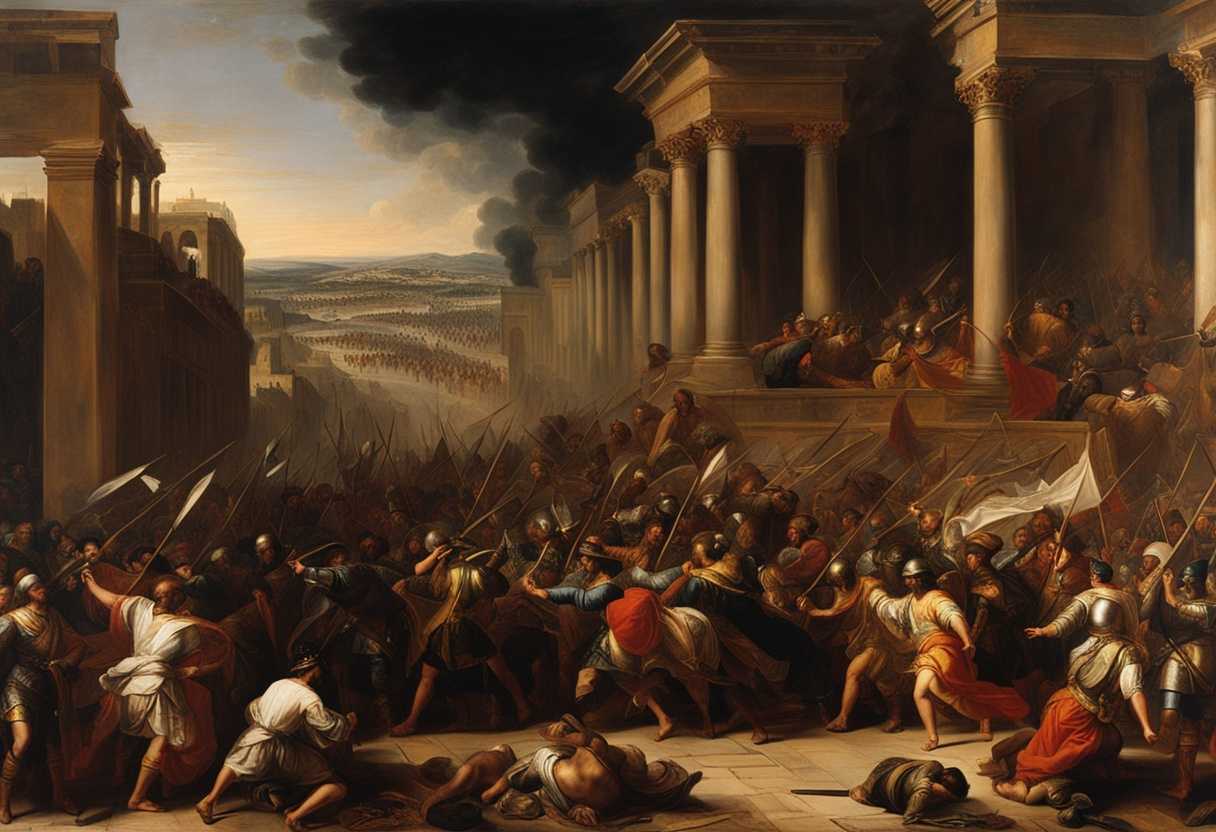
The scene in Jeremiah 39:1-3 takes place in the city of Jerusalem during the reign of King Zedekiah of Judah. The Babylonian army, led by King Nebuchadnezzar, has laid siege to the city due to Zedekiah’s rebellion against Babylonian rule. The siege has been long and brutal, resulting in a severe famine within the city walls.
In this particular moment, the Babylonian army breaches the walls of Jerusalem, causing chaos and panic among the inhabitants. King Zedekiah attempts to flee the city under the cover of darkness, accompanied by a few of his loyal officials and soldiers. However, they are intercepted by the Babylonian forces before they can escape, and Zedekiah is captured.
The surroundings are grim and war-torn, with the sounds of battle and destruction echoing through the city streets. The once majestic city of Jerusalem now lies in ruins, its walls breached and buildings destroyed. The scene is filled with the cries of the wounded and the defeated, as the Babylonian soldiers assert their dominance over the conquered city.
What is Jeremiah 39:1-3 about?
The once grand and fortified city of Jerusalem falls into the hands of the Babylonians in Jeremiah 39:1-3, a heartbreaking moment we witness. This event marks a pivotal moment in the history of ancient Israel, signifying the culmination of years of disobedience and disregard for God’s laws. Jerusalem, once a symbol of strength and divine protection, now lies conquered and in ruins, serving as a sobering reminder of the consequences of turning away from God. We may ponder on the themes of divine judgment, repentance, and the enduring consequences of sin as we contemplate the significance of this passage. How did the once prosperous city of Jerusalem come to this devastating fate? What lessons can we draw from this tragic event, both in terms of individual spiritual reflection and collective societal consequences? Through the fall of Jerusalem, we are reminded of the importance of remaining faithful to God’s commandments, humbling ourselves before Him, and seeking forgiveness and redemption in times of waywardness. Reflecting on the lessons of Jeremiah 39:1-3 with a sense of humility and introspection, let us acknowledge our own tendencies to stray from God’s path and the need for continual repentance and renewal of our hearts. May this passage serve as a poignant reminder of the consequences of sin and the importance of remaining steadfast in our faith, even in the face of adversity and temptation.
Understanding what Jeremiah 39:1-3 really means
The Book of Jeremiah, a prophetic text in the Old Testament, delves into the fall of Jerusalem, a pivotal event in Israel’s history. Jeremiah 39:1-3 vividly portrays the siege and capture of Jerusalem by Nebuchadnezzar, the Babylonian king, during the reign of King Zedekiah. The specific mention of dates and locations in the passage sets a historical backdrop, emphasizing the precision and gravity of the Babylonian invasion.
As we delve into the key phrases of the text, we encounter significant meanings that deepen our understanding of the events. The mention of Nebuchadnezzar’s arrival and the subsequent siege underscores the overwhelming force that Jerusalem faced. The breach in the city’s defenses marks a critical moment of defeat, symbolizing the city’s vulnerability and eventual downfall. The image of Babylonian officials sitting in the middle gate signifies the complete subjugation of Jerusalem, highlighting the shift in power and authority.
Related biblical passages such as 2 Kings 25:1-4, Lamentations 1:1-3, and Ezekiel 24:1-2 provide additional perspectives on the fall of Jerusalem, offering insights into the emotional, spiritual, and prophetic dimensions of this tragic event. These passages collectively paint a vivid picture of the devastation and despair that followed the city’s capture, underscoring the profound impact on the people of Jerusalem.
The relevance of Jerusalem’s fall extends beyond its historical context, serving as a poignant reminder of the consequences of straying from God’s path. Themes of judgment, repentance, and restoration resonate with contemporary spiritual journeys, prompting introspection and a renewed commitment to faithfulness. Just as Jerusalem faced the repercussions of disobedience, we are called to examine our own lives, seek reconciliation with God, and embrace the hope for renewal and restoration.
To illustrate the timeless lessons embedded in Jeremiah 39:1-3, consider a modern-day parable of a town that neglects its values and faces a calamity as a result. Through reflection and unity, the community rebuilds, drawing parallels to Jerusalem’s fall and the subsequent opportunity for spiritual revival. This anecdote underscores the enduring relevance of the biblical narrative, emphasizing the cyclical nature of human behavior and the enduring promise of redemption.
In conclusion, Jeremiah 39:1-3 stands as a poignant testament to the consequences of disobedience and the enduring hope for restoration through repentance and faith. By engaging with the historical and spiritual depths of this passage, we glean valuable insights for our own spiritual journeys, reminding us of the importance of heeding God’s warnings, seeking repentance, and trusting in His plan for renewal and hope.
How can we maintain faith in times of exile?
During times of exile, it can be challenging to maintain faith, but the verse reminds us that God is always present, even in the midst of trials. It teaches us to trust in His plan, knowing that He has not forsaken us. We can find strength and hope, even in challenging circumstances, by holding onto this belief. Remembering that God’s promises are unwavering is important in exile. Despite the difficulties we may face, we can find solace in the knowledge that God’s love and protection are constant. We can navigate through the exile with courage and perseverance by focusing on our faith and trusting in God’s faithfulness.
When we feel lost or disconnected during times of exile, it is essential to remember that God is ever-present and offers us comfort and guidance. We can maintain our spiritual grounding and find peace amidst the challenges of exile by staying connected to our faith through prayer, reflection, and seeking support from our community.
Application
Just like in our work and family life, being obedient to God’s commands is crucial for our well-being. Let’s take a moment to ponder on Jeremiah 39:1-3 and understand the consequences of disobedience. It’s time to reassess our choices and realign ourselves with God’s will. Are we ready to make the changes needed and wholeheartedly follow the path set by God?

Reverend Michael Johnson is an experienced Church Minister with a profound expertise in spirituality and guidance. With a serene presence and a compassionate heart, he has faithfully served his congregation for over 20 years, leading them on a spiritual journey towards inner peace and enlightenment. Reverend Johnson’s extensive knowledge of religious philosophies and profound understanding of human nature have made him a trusted confidant and mentor to many, as he seamlessly weaves his profound wisdom into life teachings. Reverend Johnson’s calming demeanor and empathetic nature continue to uplift and heal souls, nurturing a sense of unity and tranquility within his community.