
John 12:12-16 is about the fulfillment of Old Testament prophecies as Jesus enters Jerusalem in a humble manner, symbolizing his role as the long-awaited king and savior of humanity.
12 The next day the large crowd that had come to the feast heard that Jesus was coming to Jerusalem.
12 So they took branches of palm trees and went out to meet him, crying out, “Hosanna! Blessed is he who comes in the name of the Lord, even the King of Israel!”
14 And Jesus found a young donkey and sat on it, just as it is written,
15 “Fear not, daughter of Zion; behold, your king is coming, sitting on a donkey’s colt!”
16 His disciples did not understand these things at first, but when Jesus was glorified, then they remembered that these things had been written about him and had been done to him.
Setting the Scene for John 12:12-16
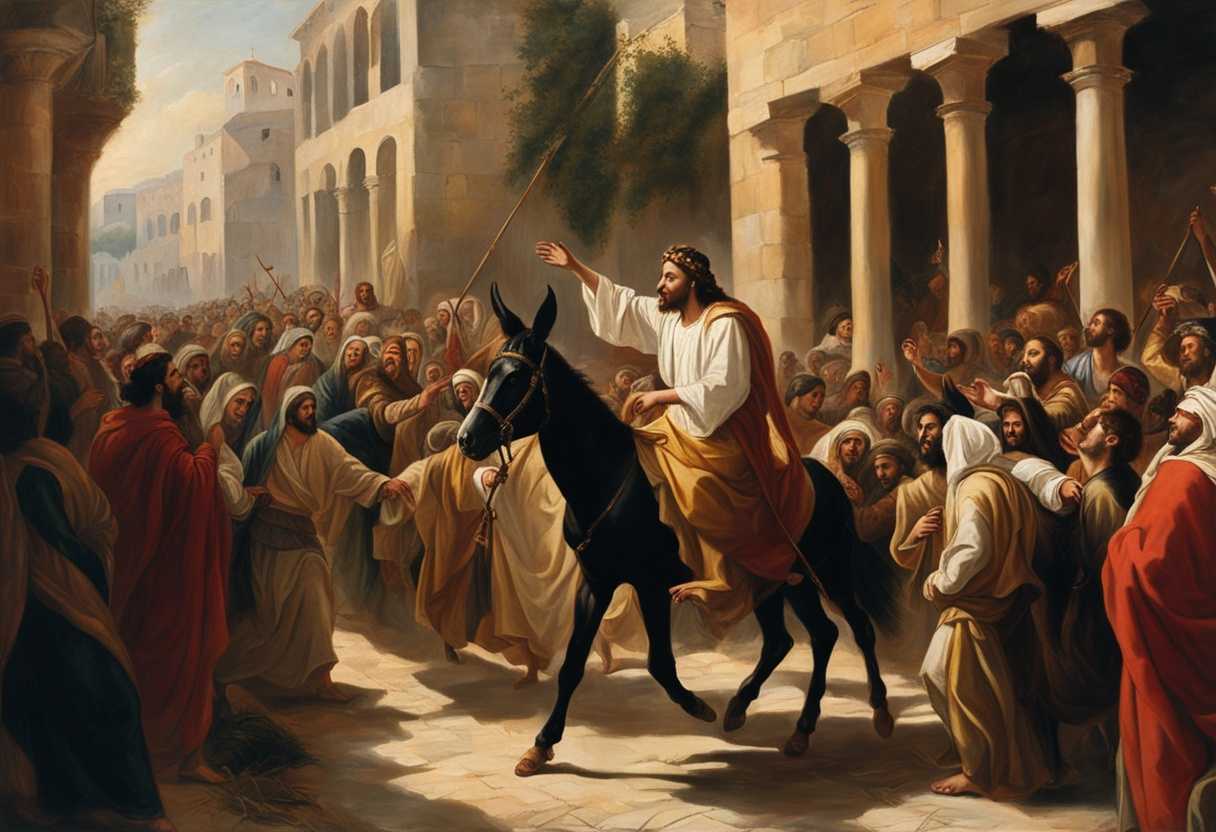
The scene described in John 12:12-16 takes place in Jerusalem during the time of Passover. Jesus, accompanied by his disciples, enters the city riding on a donkey, fulfilling the prophecy in Zechariah 9:9. The disciples, filled with excitement and awe, spread their cloaks and palm branches on the road, shouting, “Hosanna! Blessed is he who comes in the name of the Lord, even the King of Israel!”
The crowd that had come to Jerusalem for the Passover festival hears that Jesus is approaching, and they go out to meet him. They too join in the jubilant procession, waving palm branches and shouting praises to Jesus. The atmosphere is charged with anticipation and reverence as the people recognize Jesus as the long-awaited Messiah.
The city is bustling with activity as pilgrims from all over gather for the Passover celebrations. The streets are lined with people who have heard of Jesus’ miracles and teachings, and they are eager to catch a glimpse of him. The air is filled with a sense of hope and expectation as Jesus, the humble yet powerful King, makes his triumphant entry into Jerusalem.
What is John 12:12-16 about?
Can you imagine the scene of Jesus entering Jerusalem, surrounded by crowds of people cheering and welcoming Him as their king? This verse captures a powerful moment where Jesus is being recognized for who He truly is – the long-awaited Messiah, the King of Israel. The people’s actions symbolize their hope and belief in Jesus as their savior and leader.
This verse embodies the fulfillment of prophecy and the significance of Jesus’s role as the promised Messiah. It highlights the spiritual journey of the people as they finally acknowledge Jesus as the rightful King, despite the challenges and opposition He faced. This moment foreshadows the events that will unfold, leading to Jesus’s ultimate sacrifice and victory over death, as He fulfills His purpose to bring salvation to humanity. It is a reminder of the importance of acknowledging and accepting Jesus as our own King, surrendering our lives to Him in faith and devotion.
Understanding what John 12:12-16 really means
The passage in John 12:12-16 captures the momentous occasion of Jesus’ triumphal entry into Jerusalem, a pivotal event celebrated on Palm Sunday. This marked the commencement of the final week of Jesus’ earthly ministry, culminating in His crucifixion and resurrection. The crowd’s exuberant reaction and the fulfillment of prophecy play significant roles in this narrative.
As we delve into the key phrases of this passage, we encounter the “great crowd that had come for the festival,” symbolizing the multitude gathered in Jerusalem for the Passover, underscoring the importance of the event. Their cries of “Hosanna! Blessed is he who comes in the name of the Lord! Blessed is the king of Israel!” reveal their messianic expectations and recognition of Jesus as the King of Israel. Jesus’ deliberate choice to ride a young donkey, fulfilling Zechariah 9:9, signifies His humility and peaceful intentions, contrasting with earthly notions of kingship.
The relevance of this account extends to contemporary audiences, reminding us of Jesus’ kingship and the faithfulness of God’s promises, instilling hope and certainty. It prompts us to acknowledge Jesus as our King and respond with unwavering faith and obedience. The narrative also serves as a cautionary tale, highlighting the fickleness of human allegiance and the necessity of genuine faith amidst shifting circumstances.
An illustrative anecdote can further illuminate the message conveyed in the triumphal entry. Picture a town eagerly anticipating the arrival of a beloved leader, only to be surprised when he humbly arrives on a bicycle instead of a grand vehicle. This scenario mirrors Jesus’ humble entry on a donkey, challenging preconceived notions of kingship and power. It underscores the importance of embracing God’s ways, even when they defy our expectations.
In conclusion, the triumphal entry encapsulates Jesus’ humility, kingship, and the fulfillment of prophecy, urging us to examine our faith and expectations. It beckons us to trust in God’s divine plan and acknowledge Jesus as our true King. By reflecting on this passage, we can draw inspiration to live out our faith authentically, with unwavering devotion and a firm reliance on the promises of God.
What does it mean to fully surrender to God?
Fully surrendering to God means acknowledging His will above our own desires and submitting our whole being to His guidance and authority. Surrendering to God involves exalting Him above all else and making space for Him to reign in our lives, just as the people in the passage welcomed Jesus with shouts of praise and by laying down palm branches. It is about humbly recognizing His sovereignty and allowing Him to lead us in all aspects of our existence. The people eagerly embrace Jesus as the long-awaited King, willingly giving Him the respect and honor due to His name. Surrendering to God involves a similar attitude of readiness to recognize and accept Jesus as the ultimate authority in our lives. It requires us to lay down our own plans and ambitions at His feet, trusting that His ways are higher and wiser than our own, and yielding to His perfect will for us. It is a conscious decision to relinquish control and allow God to take the lead in directing our paths.
Truly surrendering to God means offering our whole hearts, minds, and wills to Him without reservation or hesitation. It is about aligning ourselves with His divine purpose and seeking His guidance and direction in all things. Surrendering to God involves acknowledging Jesus as our King, following Him with joy and adoration, and making a deep commitment to follow Him faithfully and wholeheartedly, recognizing His lordship over our lives, and submitting to His perfect plan with humility and trust.
Application
Reading John 12:12-16 reminds us of Jesus’ humble path, like a committed worker taking on a crucial but unglamorous project. Jesus didn’t stride in like a conquering CEO, but fulfilled his role with remarkable humility. Reflecting on this, are we setting our expectations based on the true nature of Jesus, or boxing him into something he’s not? It’s time to align our lives, just as we would align our tasks to our most important goals at work or home. Will you embrace this call and follow Jesus’ example of humility and obedience?

Reverend Michael Johnson is an experienced Church Minister with a profound expertise in spirituality and guidance. With a serene presence and a compassionate heart, he has faithfully served his congregation for over 20 years, leading them on a spiritual journey towards inner peace and enlightenment. Reverend Johnson’s extensive knowledge of religious philosophies and profound understanding of human nature have made him a trusted confidant and mentor to many, as he seamlessly weaves his profound wisdom into life teachings. Reverend Johnson’s calming demeanor and empathetic nature continue to uplift and heal souls, nurturing a sense of unity and tranquility within his community.