
John 18:10-11 is about Peter impulsively using violence to protect Jesus from those who came to arrest him, but Jesus demonstrates the power of nonviolence and chooses to willingly surrender himself for the greater good of humanity.
10 Then Simon Peter, having a sword, drew it and struck the high priest’s servant and cut off his right ear. The servant’s name was Malchus.
11 So Jesus said to Peter, “Put your sword into its sheath; shall I not drink the cup that the Father has given me?”
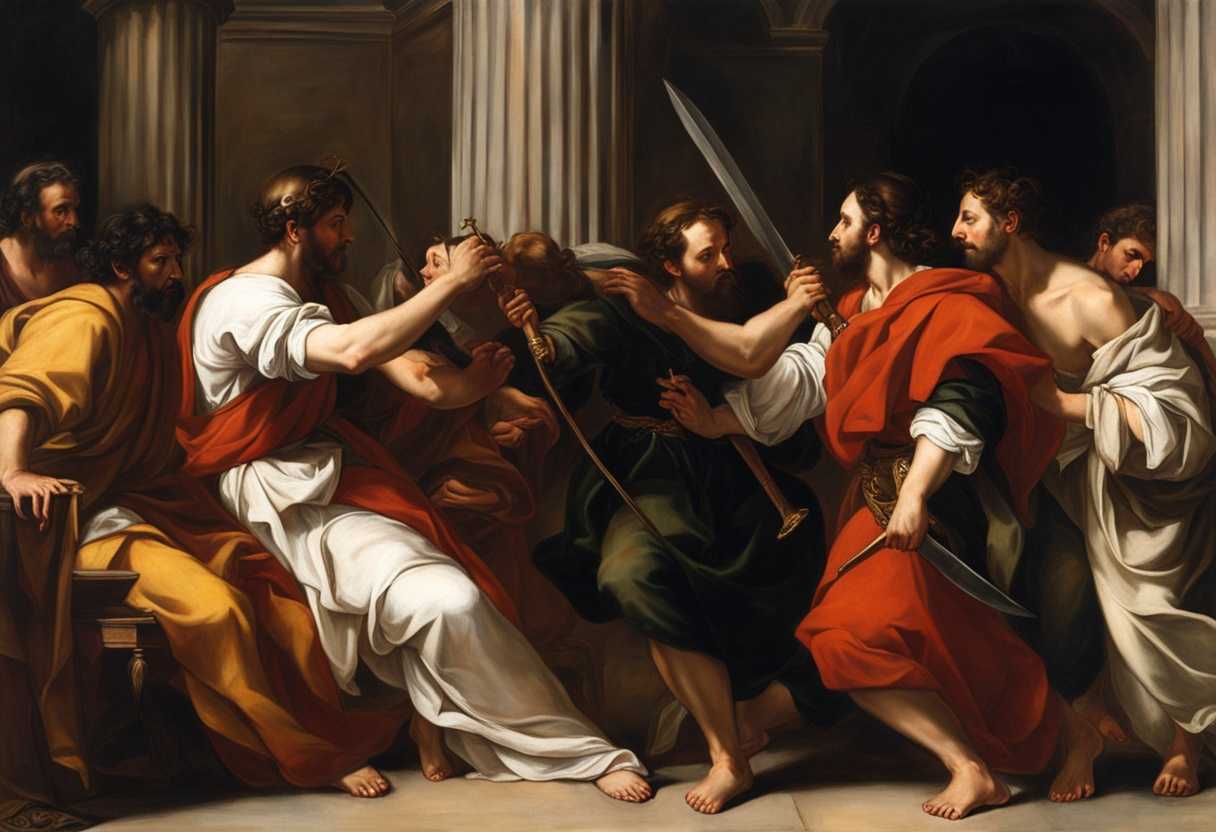
Setting the Scene for John 18:10-11
In John chapter 18, we find Jesus and his disciples in the Garden of Gethsemane. The scene is tense as Jesus knows that his betrayal and arrest are imminent. Judas, one of his disciples, has already led a group of soldiers and officials to the garden to arrest Jesus. The disciples are on edge, sensing the gravity of the situation.
As Jesus waits in prayer, Judas approaches him and betrays him with a kiss, signaling to the soldiers who Jesus is. In the chaos that ensues, Peter, one of Jesus’ closest disciples, draws his sword and strikes the high priest’s servant, cutting off his ear. Jesus, in a display of his divine power and compassion, immediately heals the servant’s ear, demonstrating his commitment to peace even in the face of violence.
The Garden of Gethsemane is a quiet and serene place, with olive trees casting long shadows in the moonlight. The disciples are scattered around Jesus, their faces reflecting a mix of fear, confusion, and loyalty. The tension in the air is palpable as Jesus prepares to face his captors and fulfill his destiny as the sacrificial lamb for the sins of humanity.
What is John 18:10-11 about?
This verse from the Bible, found in the book of John 18:10, highlights a profound moment in the life of Jesus Christ. It showcases Jesus’ teachings of love, forgiveness, and non-violence even in the face of hostility and conflict. Peter’s act of cutting off the ear of the high priest’s servant in a moment of fear and impulse contrasts sharply with Jesus’ response of compassion and healing. Jesus demonstrates his message of peace and mercy by healing the servant’s ear, even towards those who seek to harm him.
This verse challenges us to reflect on our own actions in times of conflict and adversity. It prompts us to consider how we respond to challenging situations – with violence and aggression like Peter, or with compassion and forgiveness like Jesus. It begs us to contemplate the power of love and healing in overcoming hostility and division. This verse ultimately serves as a powerful reminder of the importance of embodying Christ-like qualities of forgiveness, empathy, and peace in our interactions with others, even in the most trying of circumstances.
Understanding what John 18:10-11 really means
During the tumultuous events in the Garden of Gethsemane, where Jesus was arrested, a poignant moment unfolds as Peter, one of Jesus’ devoted disciples, reacts impulsively to defend his beloved teacher. Drawing his sword, Peter strikes the high priest’s servant, Malchus, cutting off his ear. This impulsive act by Peter sheds light on the human tendency to resort to violence and force in times of crisis, showcasing a lack of understanding of Jesus’ mission and the necessity of fulfilling God’s divine plan. In this moment, Peter’s actions serve as a stark reminder of the frailty of human nature and the struggle to align our will with God’s purpose.
Jesus, in response to Peter’s impulsive act, delivers a profound rebuke, instructing Peter to sheath his sword with the poignant question, “Shall I not drink the cup that the Father has given me?” This powerful statement underscores Jesus’ unwavering commitment to fulfilling God’s will, even in the face of imminent suffering and sacrifice. The metaphorical “cup” symbolizes the immense burden of suffering and redemption that Jesus willingly embraces for the salvation of humanity, highlighting the depth of His obedience and love for mankind.
These verses resonate with timeless truths that transcend the historical context, challenging believers today to trust in God’s plan even amidst hardship and adversity. They prompt reflection on our responses to conflict and challenges, urging us to emulate Jesus’ example of faith and non-violence in the face of provocation. In a world marred by violence and retaliation, Jesus’ teachings call us to a higher standard of love, forgiveness, and submission to God’s sovereign will, inspiring us to embody His principles of grace and peace in our interactions with others.
Drawing parallels from related biblical passages, such as Matthew 26:52-54 and Luke 22:51, we glean further insights into the futility of violence and the transformative power of compassion and non-violence. Jesus’ healing of Malchus’ ear exemplifies His unwavering compassion and the efficacy of responding to hostility with grace and mercy, rather than retaliation. These interconnected biblical narratives weave a tapestry of profound truths that invite believers to embrace a Christ-like attitude of humility, forgiveness, and trust in God’s providence.
In practical terms, these verses compel us to consider our responses to conflicts and injustices in our daily lives. Imagine a scenario where someone faces mistreatment at work and is tempted to retaliate in anger. Instead of yielding to impulse, they choose a path of peace and seek reconciliation, embodying the spirit of Christ’s teachings. This anecdote serves as a tangible illustration of how we can navigate challenging situations with grace, wisdom, and a steadfast reliance on God’s guidance, mirroring Jesus’ example of humility and obedience.
In conclusion, the exchange between Peter and Jesus in the Garden of Gethsemane encapsulates profound lessons in faith, obedience, and non-violence that resonate across generations. By contemplating these verses, we are encouraged to align our actions with God’s divine purpose, responding to life’s trials with a spirit of peace, trust, and unwavering faith in His sovereign plan. May we heed the timeless wisdom embedded in these verses, striving to embody the transformative power of Christ’s love and grace in our interactions with others and in our journey of faith.
How can we surrender our will to God’s plan?
To surrender our will to God’s plan, we should trust in His sovereignty and acknowledge that He holds the ultimate authority in our lives. We can surrender our own desires and plans to God, recognizing that His purpose is higher and perfect, just as Jesus accepted the Father’s will in the garden of Gethsemane before His arrest. We align ourselves with His divine plan and open ourselves to His guidance and direction in our lives by submitting our will to God.
Surrendering our will to God means yielding control and letting go of our own agendas, preferences, and ambitions in favor of seeking His will above all else. It involves a willingness to follow His path even when it may not align with our own expectations or understanding. Through prayer, reflection on His word, and seeking His guidance, we can continually surrender our will to God, trusting that He knows what is best for us and will lead us on the right path.
Application
Imagine standing firm at your workplace or within your family, even when storms are brewing around you. Jesus showed unyielding courage and purpose in the face of danger. Take that same spirit and channel it into your daily battles. Face adversity head-on with the same bravery. Will you let challenges starve your spirit, or will you rise and stand tall?

Reverend Michael Johnson is an experienced Church Minister with a profound expertise in spirituality and guidance. With a serene presence and a compassionate heart, he has faithfully served his congregation for over 20 years, leading them on a spiritual journey towards inner peace and enlightenment. Reverend Johnson’s extensive knowledge of religious philosophies and profound understanding of human nature have made him a trusted confidant and mentor to many, as he seamlessly weaves his profound wisdom into life teachings. Reverend Johnson’s calming demeanor and empathetic nature continue to uplift and heal souls, nurturing a sense of unity and tranquility within his community.