
John 1:1-14 is about the eternal existence of Jesus as the Word of God, who became flesh and dwelt among us, revealing God’s glory and grace through His incarnation.
1 In the beginning was the Word, and the Word was with God, and the Word was God.
2 He was in the beginning with God.
3 All things were made through him, and without him was not any thing made that was made.
4 In him was life, and the life was the light of men.
5 The light shines in the darkness, and the darkness has not overcome it.
6 There was a man sent from God, whose name was John.
7 He came as a witness, to bear witness about the light, that all might believe through him.
8 He was not the light, but came to bear witness about the light.
9 The true light, which gives light to everyone, was coming into the world.
10 He was in the world, and the world was made through him, yet the world did not know him.
11 He came to his own, and his own people did not receive him.
12 But to all who did receive him, who believed in his name, he gave the right to become children of God,
13 who were born, not of blood nor of the will of the flesh nor of the will of man, but of God.
14 And the Word became flesh and dwelt among us, and we have seen his glory, glory as of the only Son from the Father, full of grace and truth.
Setting the Scene for John 1:1-14
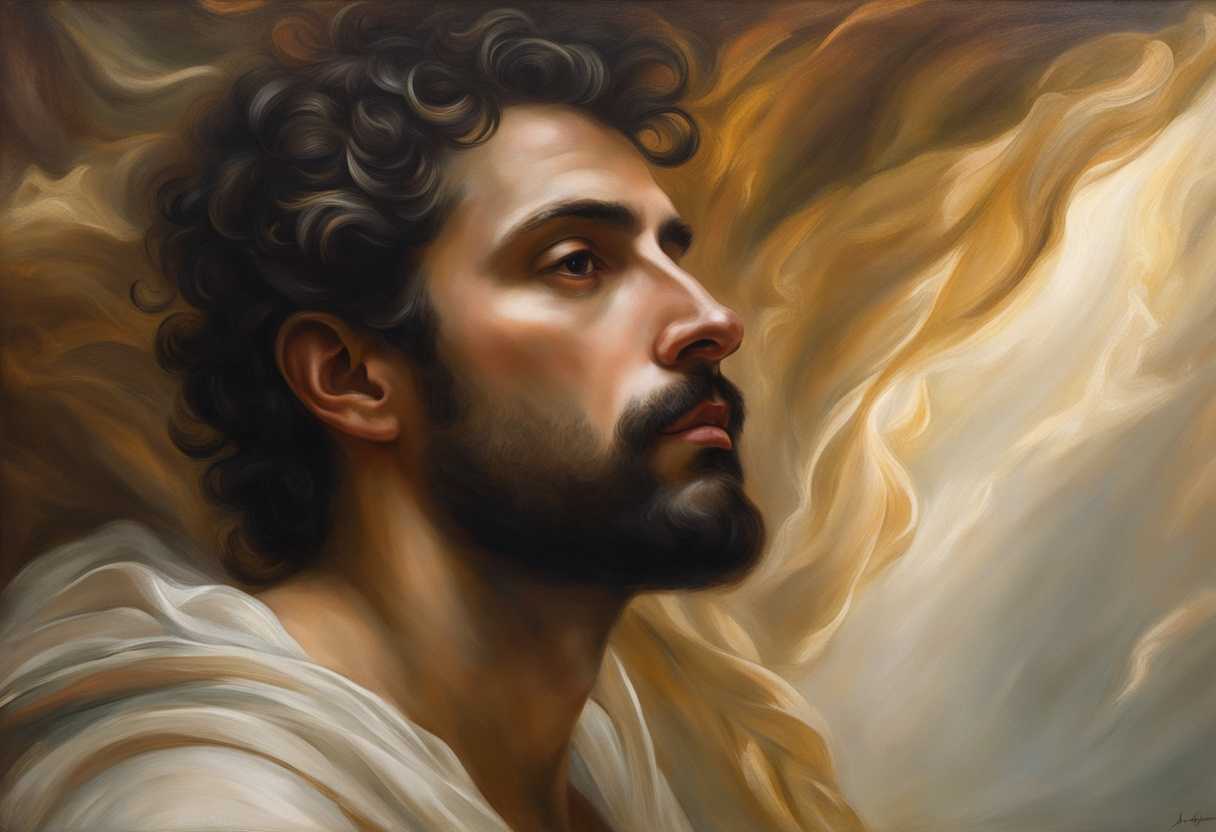
The scene in John chapter 1 opens with the introduction of the Word, who is Jesus Christ. The setting is a vast, celestial realm where the Word exists in perfect harmony with God the Father. The scene is filled with a sense of divine presence and majesty, with a radiant light illuminating the surroundings. The Word is described as being with God from the beginning, emphasizing his eternal nature and divine origin.
As the narrative unfolds, we see John the Baptist being introduced into the scene. He is depicted as a witness, sent by God to testify to the light that is coming into the world. John the Baptist’s role is to prepare the way for the Word, who is the true light that shines in the darkness. The scene is charged with anticipation and expectation as John the Baptist fulfills his mission to announce the arrival of the Word made flesh.
The scene culminates in the Word becoming incarnate, taking on human form and dwelling among us. This pivotal moment marks the beginning of Jesus’ earthly ministry, as he reveals the glory of God through his teachings, miracles, and ultimately his sacrificial death on the cross. The scene in John chapter 1 sets the stage for the profound impact that Jesus will have on the world, as the Word made flesh brings light, truth, and salvation to all who believe.
What is John 1:1-14 about?
Imagine the power and significance of these words. The divine, the eternal, took on human form to walk among us – to share in our joys and sorrows, to know our struggles and triumphs. Jesus, who is described as the light of the world, brought hope, love, and salvation to all of humanity through his teachings, miracles, and ultimately, his sacrifice on the cross.
Think about the profound impact of this verse in your life. It speaks to the incredible depth of God’s love for us, that He would send His only Son to live as one of us, to show us the way to eternal life. Jesus, as the embodiment of truth and grace, shines brightly in a world often consumed by darkness and despair. Jesus brings to all who believe in Him the power of redemption and the promise of eternal life as we ponder on this verse.
Understanding what John 1:1-14 really means
The Gospel of John stands out among the four Gospels for its unique perspective on the life and ministry of Jesus Christ. In its opening prologue, John 1:1-14, we encounter profound theological truths that lay the foundation for the entire Gospel narrative. The prologue begins with the powerful declaration, “In the beginning was the Word, and the Word was with God, and the Word was God.” This statement echoes the creation account in Genesis 1:1, drawing parallels between the eternal Word, who is Jesus Christ, and the divine act of creation. The concept of “Logos” (Word) in Greek philosophy and Jewish thought further illuminates Jesus as the embodiment of divine reason and creative order, emphasizing His eternal existence and divine nature.
Continuing in verse 2, we are reminded that Jesus, as the Word, was with God from the beginning, affirming His pre-existence and eternal co-existence with the Father. Colossians 1:17 reinforces this truth by stating that in Christ, all things hold together, underscoring His supreme authority and sustaining power. Verse 3 further emphasizes Jesus’ role in creation, highlighting His divine authority as the one through whom all things were made. Hebrews 1:2 echoes this sentiment, portraying Jesus as the agent of God’s creative work, emphasizing His central role in the universe’s existence.
The prologue also introduces the themes of life and light, symbolizing spiritual illumination and eternal life found in Jesus Christ. In Him, we find the source of life and the light that shines in the darkness, a light that darkness cannot overcome. This imagery of light overcoming darkness signifies the triumph of good over evil, echoing Jesus’ own words in John 12:46, where He declares Himself as the light of the world. The profound truth that the Word became flesh and dwelt among us encapsulates the doctrine of the Incarnation, where God took on human form in the person of Jesus Christ. Philippians 2:6-7 further elucidates this mystery, portraying Jesus’ humility in taking on human likeness for the sake of humanity.
As we reflect on the relevance of these truths today, we are called to recognize Jesus as both fully God and fully man, a foundational belief in Christian faith that shapes our understanding of salvation and our relationship with God. In a world filled with moral confusion, despair, and sin, Jesus stands as the light that offers hope and direction, illuminating the path to redemption and transformation. Through personal anecdotes and testimonies, we witness the tangible presence of God among us, drawing us closer to Him and reminding us of His care and love.
In conclusion, the prologue of John’s Gospel unveils profound truths about Jesus’ identity and mission, inviting us to deepen our relationship with Him and embrace the light and life He offers. Let us reflect on these truths, seeking a deeper understanding of Jesus’ divinity and humanity, and may we walk in the light of His presence, experiencing His grace and truth in our lives. Amen.
What does it mean for God to dwell among us?
For God to dwell among us means that He came to live with us in human form, in the person of Jesus Christ. This passage from the Gospel of John describes Jesus as the Word who became flesh and made His dwelling among us. It signifies God’s decision to enter into our human experience, to walk among us, teach us, and ultimately to save us from sin and death.
This incarnation of God as Jesus is a powerful demonstration of His love and desire to be close to His creation. Jesus showed us the way to live a life of faith, love, and obedience to God by dwelling among us. It also serves as a reminder that, despite our shortcomings and failures, God is always with us, ready to guide us and offer us salvation through His grace. This concept of God dwelling among us emphasizes His intimate connection with humanity and His willingness to bridge the gap between the divine and the earthly realm.
Application
Think of John 1:1-14 as a powerful message that cuts through the noise of our hectic lives. It calls you to strengthen your faith and grasp the true impact of Christ in your world. Imagine being a bright light, illuminating your workplace and family with His love and hope. Are you ready to live out the teachings of Jesus and become a beacon of His grace today?

Reverend Michael Johnson is an experienced Church Minister with a profound expertise in spirituality and guidance. With a serene presence and a compassionate heart, he has faithfully served his congregation for over 20 years, leading them on a spiritual journey towards inner peace and enlightenment. Reverend Johnson’s extensive knowledge of religious philosophies and profound understanding of human nature have made him a trusted confidant and mentor to many, as he seamlessly weaves his profound wisdom into life teachings. Reverend Johnson’s calming demeanor and empathetic nature continue to uplift and heal souls, nurturing a sense of unity and tranquility within his community.