
John 5:1-18 is about Jesus demonstrating his authority as the Son of God by healing a man on the Sabbath, revealing the importance of doing God’s work and honoring Him above man-made rules and traditions.
1 After this there was a feast of the Jews, and Jesus went up to Jerusalem.
2 Now there is in Jerusalem by the Sheep Gate a pool, in Aramaic called Bethesda, which has five roofed colonnades.
3 In these lay a multitude of invalids—blind, lame, and paralyzed.
4 for an angel of the Lord went down at certain seasons into the pool and stirred up the water; whoever stepped in first after the stirring of the water was healed of whatever disease he had.
5 One man was there who had been an invalid for thirty-eight years.
6 When Jesus saw him lying there and knew that he had already been there a long time, he said to him, “Do you want to be healed?”
7 The sick man answered him, “Sir, I have no one to put me into the pool when the water is stirred up, and while I am going another steps down before me.”
8 Jesus said to him, “Get up, take up your bed, and walk.”
9 And at once the man was healed, and he took up his bed and walked.
10 So the Jews said to the man who had been healed, “It is the Sabbath, and it is not lawful for you to take up your bed.”
11 But he answered them, “The man who healed me, that man said to me, ‘Take up your bed, and walk.’”
12 They asked him, “Who is the man who said to you, ‘Take up your bed and walk’?”
13 Now the man who had been healed did not know who it was, for Jesus had withdrawn, as there was a crowd in the place.
14 Afterward Jesus found him in the temple and said to him, “See, you are well! Sin no more, that nothing worse may happen to you.”
15 The man went away and told the Jews that it was Jesus who had healed him.
16 And this was why the Jews were persecuting Jesus, because he was doing these things on the Sabbath.
17 But Jesus answered them, “My Father is working until now, and I am working.”
18 This was why the Jews were seeking all the more to kill him, because not only was he breaking the Sabbath, but he was even calling God his own Father, making himself equal with God.
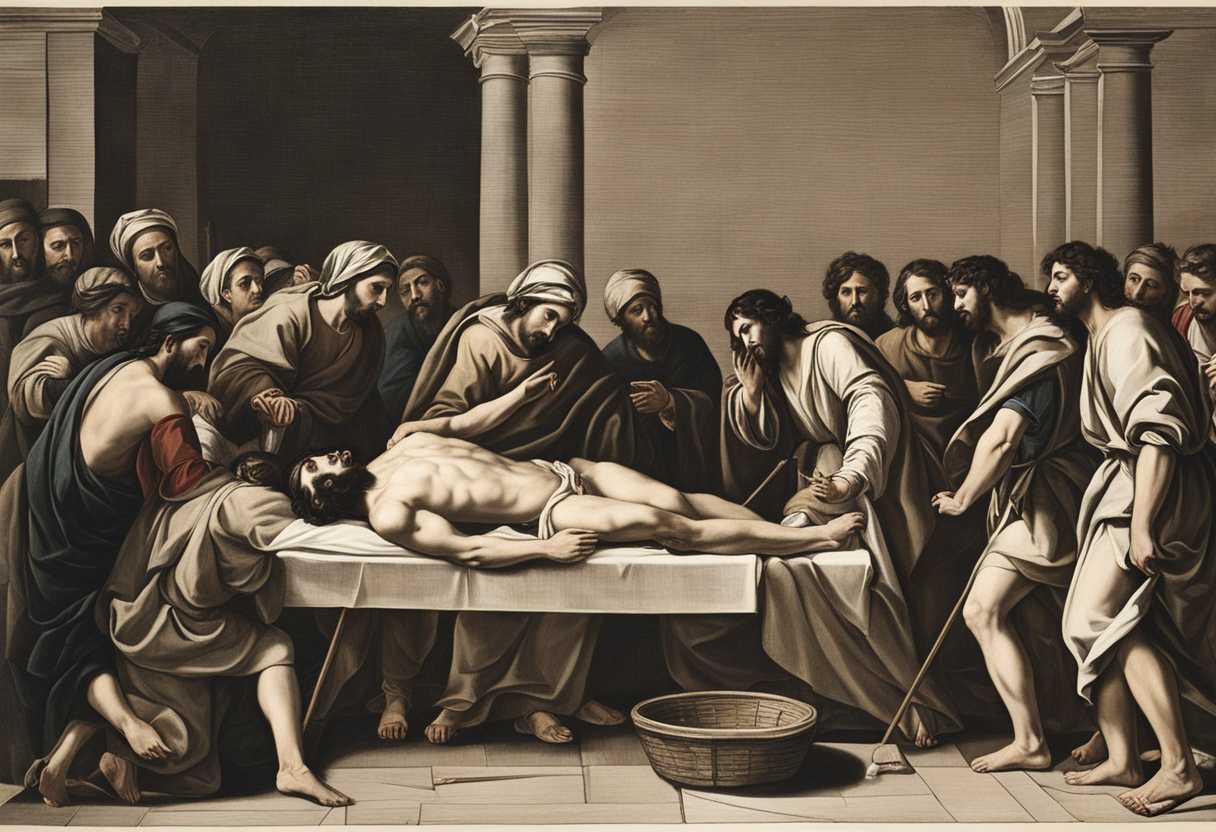
Setting the Scene for John 5:1-18
In John chapter 5, we find Jesus in Jerusalem during one of the Jewish festivals. The scene is set at the Pool of Bethesda, a place known for its healing properties. Surrounding the pool are five covered colonnades where a great number of disabled people, blind, lame, and paralyzed, gather seeking healing. Among them is a man who has been unable to walk for thirty-eight years.
Jesus arrives at the pool and sees the man lying there. He approaches him and asks if he wants to get well. The man explains that he has no one to help him into the pool when the water is stirred, believing that an angel of the Lord would occasionally come down and stir the waters, granting healing to the first person who entered. Jesus then tells the man to get up, pick up his mat, and walk. Instantly, the man is healed, picks up his mat, and walks away. This miraculous healing causes a stir among the Jews, who question the man about carrying his mat on the Sabbath, to which he responds that the man who healed him instructed him to do so.
What is John 5:1-18 about?
This verse showcases a powerful example of Jesus challenging the religious norms of His time. Jesus is sending a clear message about the importance of compassion and prioritizing human needs over rigid rules by healing a paralyzed man on the Sabbath, a day traditionally set aside for rest and abstaining from work. The anger of the religious leaders highlights the tension between legalistic adherence to religious regulations and genuine care for others. Jesus’ actions here invite us to reflect on whether we are more concerned with following rules or showing love and mercy to those in need. We might consider how we ourselves approach rules and regulations in our lives as we ponder this verse. Do we sometimes prioritize legalistic observance over acts of kindness and compassion? How can we emulate Jesus’ example of prioritizing love and mercy even in the face of opposition or criticism? This story challenges us to examine our own attitudes towards religious practices and to strive for a balance between upholding traditions and responding to the needs of those around us. Let us reflect on how we can prioritize love and empathy in all that we do by following Jesus’ lead.
Understanding what John 5:1-18 really means
The passage in John 5:1-18 recounts the miraculous healing of a man who had been an invalid for 38 years at the Pool of Bethesda in Jerusalem. This event took place on the Sabbath, sparking controversy with the Jewish leaders due to their strict interpretation of the Sabbath laws. Jesus’ question to the man, “Do you want to be healed?” underscores the significance of personal desire and willingness in experiencing transformation. His command, “Get up, take up your bed, and walk,” highlights the immediate action and faith required to receive Jesus’ healing.
In the response of the Jewish leaders, “It is the Sabbath, and it is not lawful for you to take up your bed,” we see the clash between Jesus’ ministry of compassion and the legalistic adherence to religious laws. This tension is a recurring theme in Jesus’ interactions with the religious authorities of his time. The passage challenges us to reflect on our own attitudes towards religious practices and the importance of prioritizing love and mercy over rigid rules.
Related Bible passages such as Mark 2:27-28 affirm Jesus’ authority over the Sabbath and emphasize the Sabbath’s purpose to benefit humanity. Isaiah 35:5-6 prophesies about the healing power of the Messiah, connecting this miracle to the messianic age. James 5:14-15 underscores the role of faith and prayer in healing, highlighting the spiritual dimension of physical restoration.
Today, this passage remains relevant as it prompts us to have faith in Jesus’ power to heal and transform our lives. It challenges us to break free from legalistic interpretations of religious practices and focus on the core principles of love and compassion. The question posed by Jesus, “Do you want to be healed?” serves as a reminder of our personal responsibility to actively seek change and growth in our lives.
Consider a scenario where a person struggling with addiction is asked, “Do you really want to be free from this?” This question ignites a spark of desire for change, leading to steps towards recovery with support and faith. This anecdote mirrors the invalid man’s journey towards healing, illustrating the transformative power of desire, faith, and action in overcoming life’s obstacles.
In conclusion, John 5:1-18 presents a profound message about Jesus’ authority, the significance of faith, and the primacy of compassion over legalism. It urges us to examine our hearts, seek transformation through faith in Jesus, and embody love and mercy in our interactions with others.
How can we show compassion and healing to others?
We can show compassion and healing to others by being attentive to their needs and offering our support. We can take the time to acknowledge the struggles of those around us and extend a helping hand, just as Jesus noticed the man who had been sick for 38 years and approached him with kindness. We contribute to the healing process in a person’s life by showing genuine concern and reaching out to offer comfort and assistance.
Compassion involves not just recognizing suffering but also taking action to alleviate it. Through our words and actions, we can provide a sense of hope and encouragement to those who are going through difficult times. Whether it is through lending a listening ear, offering practical help, or simply being a source of comfort, we have the ability to bring healing into the lives of others. We create a space for healing to take place by showing empathy and compassion, fostering a sense of connection and understanding.
Furthermore, by demonstrating empathy and compassion, we can help others feel seen, valued, and supported. It is through these genuine connections that true healing can begin to occur. We can inspire others to have faith in their own journey towards healing and wholeness by embodying the spirit of kindness and understanding.
Application
Just like juggling work deadlines and family responsibilities, you can bring balance and healing to someone’s life. Jesus healed a man who had been waiting for help for years – imagine the impact you can have today. Look around your office, neighborhood, or home; someone needs your compassion and action. Reach out and bring hope, be the helping hand they’ve been waiting for. Are you ready to transform lives just like Jesus did?

Reverend Michael Johnson is an experienced Church Minister with a profound expertise in spirituality and guidance. With a serene presence and a compassionate heart, he has faithfully served his congregation for over 20 years, leading them on a spiritual journey towards inner peace and enlightenment. Reverend Johnson’s extensive knowledge of religious philosophies and profound understanding of human nature have made him a trusted confidant and mentor to many, as he seamlessly weaves his profound wisdom into life teachings. Reverend Johnson’s calming demeanor and empathetic nature continue to uplift and heal souls, nurturing a sense of unity and tranquility within his community.