
John 5:28-29 is about the promise of a future resurrection for all people, where those who have done good will rise to eternal life and those who have done evil will rise to face judgment.
28 Do not marvel at this, for an hour is coming when all who are in the tombs will hear his voice
29 and come out, those who have done good to the resurrection of life, and those who have done evil to the resurrection of judgment.
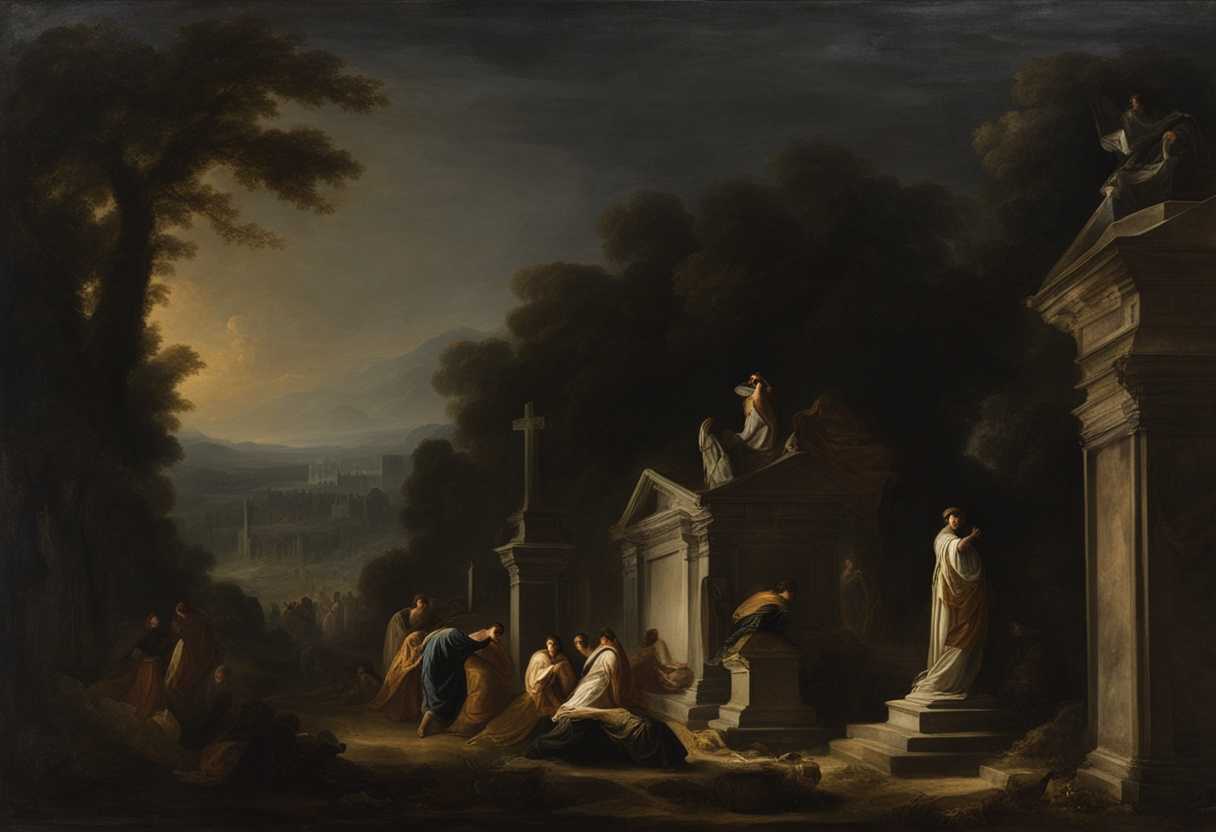
Setting the Scene for John 5:28-29
In John chapter 5, we find Jesus in Jerusalem during one of the Jewish festivals. The scene is set near the Pool of Bethesda, a place known for its healing properties. Surrounding the pool are five covered colonnades where a great number of disabled people, blind, lame, and paralyzed, would gather, hoping to be healed when the waters were stirred.
Among the crowd is a man who has been paralyzed for 38 years. He is lying on a mat, patiently waiting for someone to help him into the pool when the water is stirred, believing that it would bring him healing. Jesus approaches the man and asks him if he wants to get well. The man explains his situation, and Jesus, showing compassion, tells him to get up, pick up his mat, and walk. Miraculously, the man is healed, picks up his mat, and walks away, rejoicing in his newfound strength.
The atmosphere is filled with awe and wonder as the people witness this incredible miracle. The man who was once paralyzed is now walking, a living testimony to the power and compassion of Jesus. This event serves as a powerful demonstration of Jesus’ authority and ability to bring healing and restoration to those in need.
What is John 5:28-29 about?
Ah, the promise of resurrection and judgment – such profound and complex concepts found within the teachings of Jesus. It’s a reminder that there will come a time when everyone, regardless of their actions in this life, will face accountability and be brought to justice. Imagine the weight of that moment when all deeds, words, and intentions are laid bare before the divine presence.
The promise of resurrection brings hope and reassurance to those who have lived a righteous life, knowing that they will be rewarded for their faith and good works. Conversely, for the unrighteous, it serves as a stark reminder of the consequences of their choices and actions. It compels us to reflect on our own lives and question how we are living each day – are we aligning our actions with righteousness and goodness, or are we straying from the path of moral integrity? The promise of resurrection and judgment offers a sense of ultimate justice and divine accountability in a world filled with uncertainty and moral ambiguity. It challenges us to strive for righteousness and live with integrity, mindful of the eternal consequences of our actions. This promise will guide us as we navigate through life, encouraging us to choose the path that leads us towards righteousness and prepares us for the judgment that awaits us all.
Understanding what John 5:28-29 really means
In John 5:28-29, Jesus addresses a Jewish audience, asserting His divine authority as the Son of God and the ultimate judge of all humanity. He prefaces His message by urging them not to be astonished, preparing them for a profound truth about the future resurrection. Jesus proclaims a time when all who have passed away will hear His voice, emphasizing the universal nature of the resurrection where every individual will be summoned by Him. Those who have lived righteously will rise to eternal life, while those who have embraced evil will face condemnation, highlighting the significance of actions and faith in determining one’s eternal destiny.
These verses find resonance in other biblical passages, such as Daniel 12:2, which prophesies the awakening of the dead to either everlasting life or shame. Similarly, 1 Thessalonians 4:16-17 elaborates on the resurrection of the deceased, while Revelation 20:12-13 vividly portrays the final judgment based on individuals’ deeds recorded in the books. The interconnectedness of these passages underscores the consistency of the message regarding resurrection and judgment throughout Scripture.
The relevance of John 5:28-29 extends to contemporary life, offering hope for eternal life while emphasizing personal accountability for actions. In a world often consumed by immediate gratification, these verses prompt reflection on living with an eternal perspective and the importance of faith in Jesus as the arbiter of eternal life. They serve as a moral compass, guiding individuals towards ethical living and a deeper understanding of the eternal implications of their choices.
To illustrate the significance of these verses, consider a gardener planting seeds in anticipation of a bountiful harvest. Just as the gardener nurtures the seeds with care, knowing they will eventually bloom, our lives are akin to those seeds. The decisions we make and the faith we hold shape the outcome of our resurrection “harvest.” Like the gardener eagerly awaiting the fruition of the seeds, we too can anticipate the resurrection with hope, cognizant of the eternal impact of our lives.
In conclusion, John 5:28-29 serves as a poignant reminder of the resurrection and final judgment, urging individuals to live consciously aware of eternity, place their trust in Jesus, and strive for righteousness, recognizing the eternal consequences of their actions. These verses compel us to consider the weight of our choices and the assurance of a future resurrection, prompting a deeper commitment to faith and ethical living in light of the eternal perspective they provide.
How can we prepare for eternal life?
We can prepare for eternal life by focusing on how we live our lives in the present. Our actions, attitudes, and values in this life will have implications for our eternal destiny. We prepare ourselves for the eternal life that awaits us by living according to the teachings of Jesus and striving to do what is right in the sight of God.
Additionally, we can prepare for eternal life by seeking a personal relationship with God through prayer, worship, and studying His Word. Developing a close connection with God will help us grow spiritually, strengthen our faith, and align our lives with His will. We ensure that we are prepared for the eternal life promised to us by nurturing our faith and relationship with God. Our belief in Jesus Christ as our savior and our commitment to following Him ultimately hinge on our preparation for eternal life. Accepting Jesus as our Lord and Savior, confessing our sins, and striving to live a life that reflects His teachings are key aspects of preparing for the eternal life that He offers us. When we build our lives on the foundation of faith in Jesus, we can face the promise of eternal life with hope and assurance.
Application
Imagine your life as a book filled with daily chapters of choices. John 5:28-29 promises a final chapter of resurrection for those who believe in Christ. Today, reflect on how your choices shape your eternal story. Will you embrace this promise and align your actions with God’s purpose? Your decisions are the ink on the pages of your destiny. What will your next chapter say?

Reverend Michael Johnson is an experienced Church Minister with a profound expertise in spirituality and guidance. With a serene presence and a compassionate heart, he has faithfully served his congregation for over 20 years, leading them on a spiritual journey towards inner peace and enlightenment. Reverend Johnson’s extensive knowledge of religious philosophies and profound understanding of human nature have made him a trusted confidant and mentor to many, as he seamlessly weaves his profound wisdom into life teachings. Reverend Johnson’s calming demeanor and empathetic nature continue to uplift and heal souls, nurturing a sense of unity and tranquility within his community.