
John 6:54-69 is about Jesus emphasizing the spiritual significance of partaking in his body and blood, which symbolizes the deep connection and union believers must have with him to receive eternal life, leading to a test of faith for his disciples and a recognition that true discipleship requires unwavering faith in Jesus as the Holy One of God.
54 Whoever feeds on my flesh and drinks my blood has eternal life, and I will raise him up on the last day.
55 For my flesh is true food, and my blood is true drink.
56 Whoever feeds on my flesh and drinks my blood abides in me, and I in him.
57 As the living Father sent me, and I live because of the Father, so whoever feeds on me, he also will live because of me.
58 This is the bread that came down from heaven, not like the bread the fathers ate, and died. Whoever feeds on this bread will live forever.”
59 Jesus said these things in the synagogue, as he taught at Capernaum.
60 When many of his disciples heard it, they said, “This is a hard saying; who can listen to it?”
61 But Jesus, knowing in himself that his disciples were grumbling about this, said to them, “Do you take offense at this?
62 Then what if you were to see the Son of Man ascending to where he was before?
63 It is the Spirit who gives life; the flesh is no help at all. The words that I have spoken to you are spirit and life.
64 But there are some of you who do not believe.” (For Jesus knew from the beginning who those were who did not believe, and who it was who would betray him.)
65 And he said, “This is why I told you that no one can come to me unless it is granted him by the Father.”
66 After this many of his disciples turned back and no longer walked with him.
67 So Jesus said to the twelve, “Do you want to go away as well?”
68 Simon Peter answered him, “Lord, to whom shall we go? You have the words of eternal life,
69 and we have believed, and have come to know, that you are the Holy One of God.”
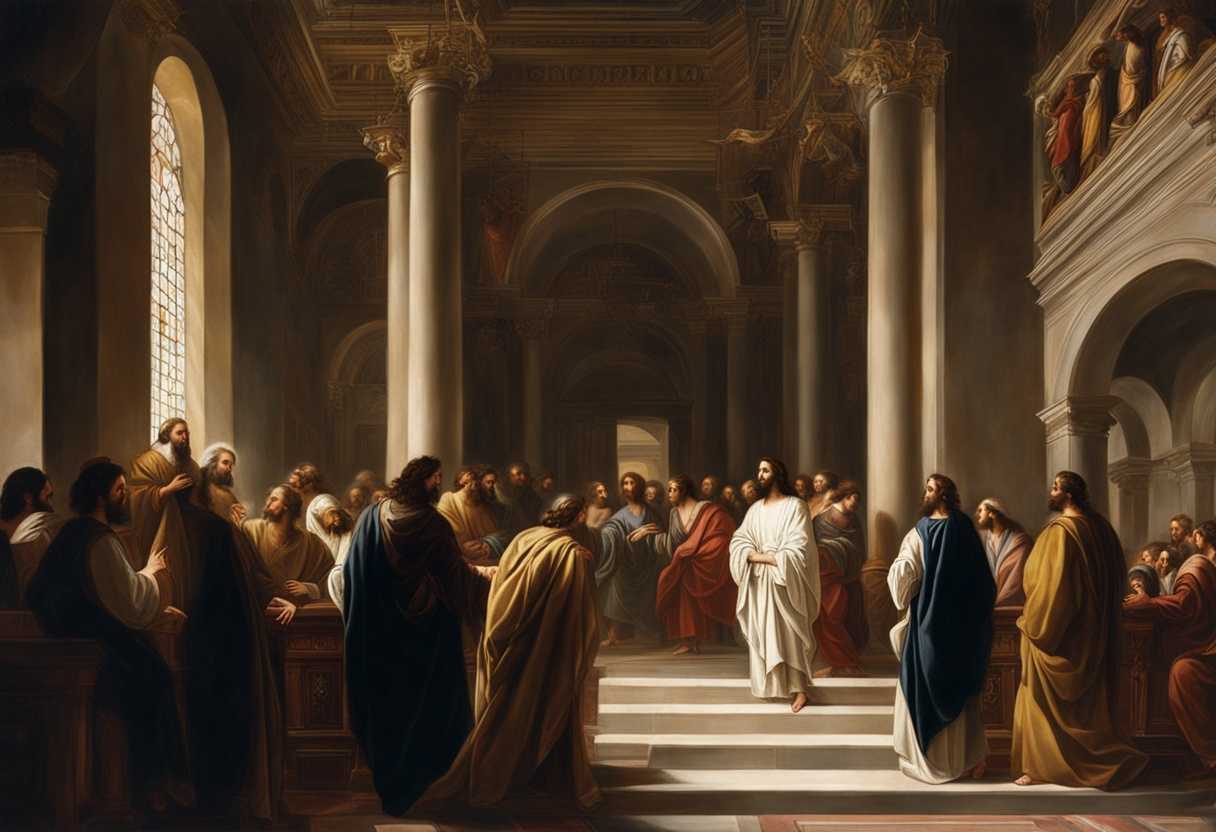
Setting the Scene for John 6:54-69
The scene in John chapter 6 is set in Capernaum, a town located on the northern shore of the Sea of Galilee. Jesus had just performed the miracle of feeding the five thousand with five loaves of bread and two fish. The crowd was amazed by this miraculous sign and began to follow Jesus, intrigued by his teachings and the possibility of witnessing more miracles.
Among the crowd were Jesus’ twelve disciples, including Peter, Andrew, James, and John. They had been with Jesus throughout his ministry, witnessing his teachings, healings, and miracles. As they gathered around Jesus in Capernaum, he began to speak about the significance of his body and blood, foreshadowing the Last Supper and the sacrifice he would make for the salvation of humanity.
As Jesus spoke about eating his flesh and drinking his blood, many in the crowd were confused and began to question his words. Some found his teachings too difficult to accept and turned away, but Peter, speaking on behalf of the disciples, expressed their unwavering faith in Jesus. He acknowledged that Jesus had the words of eternal life and that they believed he was the Holy One of God. This moment solidified the disciples’ commitment to following Jesus, despite the challenges and controversies they would face.
What is John 6:54-69 about?
Jesus in this verse is drawing a powerful parallel between physical bread, which sustains our bodies, and Himself as the “bread of life,” which sustains our souls for eternity. Jesus is telling us that we need spiritual nourishment to experience eternal life, just as we need physical nourishment to live. We invite Him to be at the center of our lives by believing in Him, and He provides us with the sustenance and fulfillment that only He can offer.
Think about it – just as bread is a staple food that people rely on for sustenance, Jesus is the ultimate source of spiritual sustenance for our souls. He is offering us a life that transcends this earthly existence, a life filled with purpose, meaning, and eternal joy. We accept the gift He offers us – the gift of eternal life and relationship with God – by accepting Him as the “bread of life.”
So, let us reflect on this powerful metaphor and ask ourselves: Are we seeking true fulfillment and nourishment for our souls? Are we willing to believe in Jesus as the bread of life and allow Him to sustain us spiritually for eternity? Let us open our hearts to His message and embrace the abundant life He promises.
Understanding what John 6:54-69 really means
In John 6:54-69, we find Jesus addressing His disciples and a crowd following the miraculous feeding of the 5,000. The central theme revolves around the necessity of spiritual nourishment through Jesus Christ. When Jesus proclaims, “Whoever eats my flesh and drinks my blood has eternal life,” He is symbolically referring to accepting His sacrifice and internalizing His teachings. This statement underscores the significance of communion in Christian practice, where believers partake in the body and blood of Christ as a means of spiritual sustenance.
Jesus further explains, “For my flesh is real food and my blood is real drink,” highlighting the spiritual nourishment He provides, contrasting it with physical sustenance that is temporary. This distinction emphasizes the eternal over the temporal, urging believers to prioritize spiritual growth over worldly concerns. “The Spirit gives life; the flesh counts for nothing” underscores the superiority of spiritual existence over the physical, prompting believers to focus on spiritual understanding and development.
Moreover, Jesus affirms, “The words I have spoken to you—they are full of the Spirit and life,” indicating that His teachings are life-giving and spiritually enriching. This encourages believers to delve deeply into His words for spiritual nourishment and guidance. These key phrases in the passage emphasize the transformative power of Jesus’ teachings and the importance of internalizing His message for spiritual growth.
Related Bible passages such as Matthew 26:26-28, 1 Corinthians 11:23-26, and John 4:13-14 further reinforce the significance of communion and spiritual sustenance through Jesus Christ. These passages connect the act of communion to Jesus’ sacrifice and the promise of eternal life through Him, highlighting the communal aspect of worship and the shared faith among believers.
In today’s materialistic world, the message of John 6:54-69 remains relevant by reminding us of the crucial need for spiritual nourishment amidst the distractions of daily life. It encourages participation in communal worship and the sacrament of communion, fostering a sense of belonging and shared faith within the Christian community. By focusing on eternal life and spiritual growth rather than transient worldly concerns, believers are prompted to prioritize their relationship with God and seek a deeper connection with Him.
Consider a scenario where a person, overwhelmed by the demands of daily life, feels spiritually depleted. Attending a church service and partaking in communion, they reflect on Jesus’ sacrifice and teachings. This act revitalizes their spirit, reminding them of the eternal promises of Jesus and the importance of spiritual nourishment. This experience prompts a reevaluation of priorities, shifting their focus towards faith and away from worldly distractions.
In conclusion, John 6:54-69 calls believers to a more profound relationship with Jesus, emphasizing the significance of spiritual sustenance through His teachings and sacrifice. It challenges individuals to move beyond a superficial understanding of faith to embark on a deeper spiritual journey, relevant to all who seek a meaningful and eternal connection with God.
How deeply do we trust in Jesus’ teachings?
Jesus speaks about the significance of believing in Him and His teachings in these verses. He emphasizes the necessity of having faith in Him as the source of eternal life. The disciples facing this challenging teaching were asked if they would also leave Him, but Peter’s response showed a deep trust in Jesus. Peter professed that they believed and knew that Jesus was the Holy One of God, demonstrating that their faith was rooted in acknowledging Jesus’ divine nature and authority.
This passage serves as a reminder for us to examine the depth of our trust in Jesus’ teachings. It calls us to reflect on whether we truly believe and commit to following His guidance and instructions. We are called to wholeheartedly trust in His words and not waver in our faith, recognizing that Jesus is the way, the truth, and the life, just as Peter and the disciples chose to remain with Him despite the difficulty of His teaching. Our level of trust and confidence in Jesus is ultimately revealed by our response to His teachings. May we, like Peter and the disciples, affirm our belief in Jesus as the Holy One of God and remain steadfast in following Him, even when faced with challenging or hard-to-understand teachings.
Application
Think of your faith as your life’s software—without updates, it lags and crashes. Dive into the teachings of Christ; let them fuel your spirit like a morning coffee fuels your day. Commit your actions and choices to His guidance, just as you commit to your work and family. Are you ready to hit refresh and embrace Christ fully, every single day?

Reverend Michael Johnson is an experienced Church Minister with a profound expertise in spirituality and guidance. With a serene presence and a compassionate heart, he has faithfully served his congregation for over 20 years, leading them on a spiritual journey towards inner peace and enlightenment. Reverend Johnson’s extensive knowledge of religious philosophies and profound understanding of human nature have made him a trusted confidant and mentor to many, as he seamlessly weaves his profound wisdom into life teachings. Reverend Johnson’s calming demeanor and empathetic nature continue to uplift and heal souls, nurturing a sense of unity and tranquility within his community.