
John 8:58-59 is about Jesus proclaiming his divine nature to the Jews by stating, “Before Abraham was born, I am,” revealing his eternal existence and leading the Jews to attempt to stone him for blasphemy.
58 Jesus said to them, “Truly, truly, I say to you, before Abraham was, I am.”
59 So they picked up stones to throw at him, but Jesus hid himself and went out of the temple.
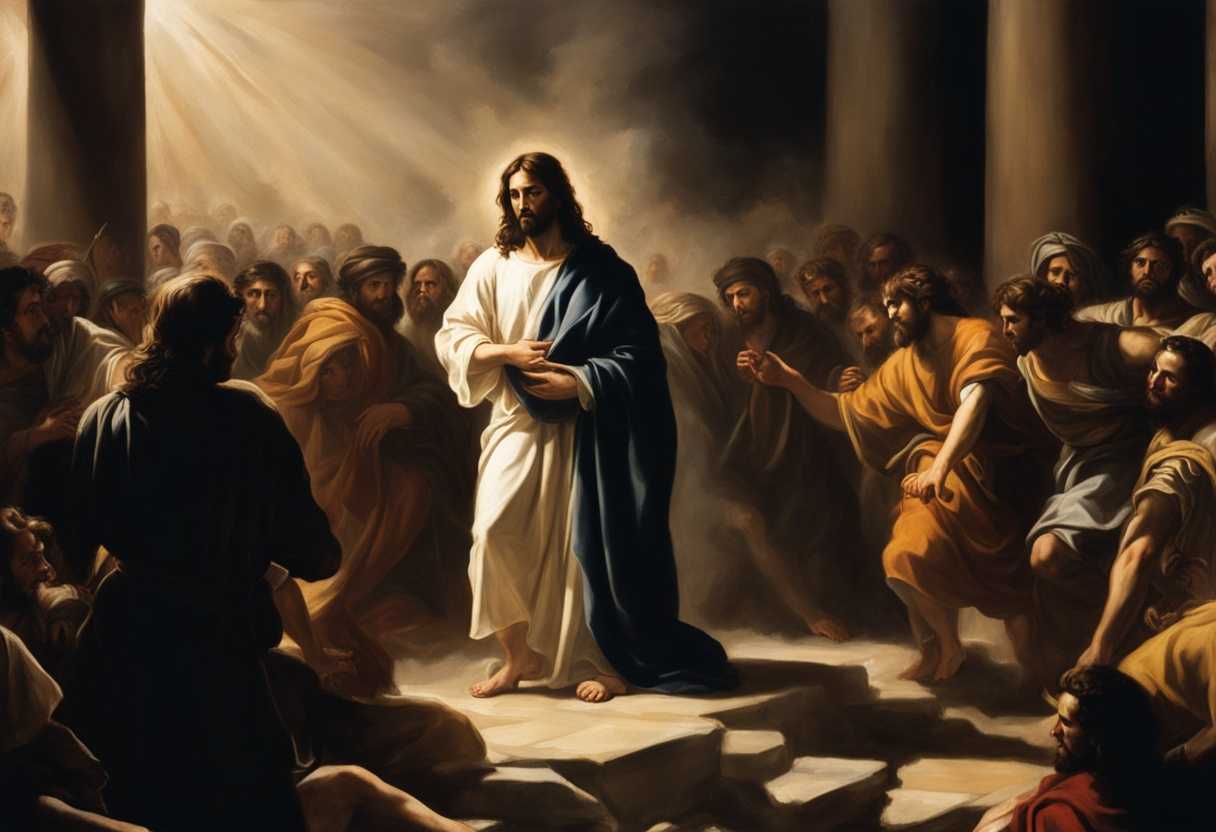
Setting the Scene for John 8:58-59
In John chapter 8, we find Jesus teaching in the temple courts in Jerusalem. The scene is bustling with people from all walks of life – Pharisees, scribes, teachers of the law, and ordinary citizens. They have gathered to listen to Jesus speak, some out of genuine curiosity and others with the intent to trap him in his words.
As Jesus continues to teach, a heated debate ensues between him and the religious leaders. They question his authority and challenge his teachings, trying to find a way to discredit him. The tension in the air is palpable as the crowd watches on, unsure of what will happen next.
In the midst of this confrontation, Jesus utters the powerful words, “Truly, truly, I tell you, before Abraham was born, I am.” This statement causes an uproar among the religious leaders, who pick up stones to stone him. But Jesus, aware of their intentions, slips away from the temple unharmed, leaving the crowd in awe of his wisdom and authority.
What is John 8:58-59 about?
Jesus boldly proclaims his divine nature and eternal existence in this powerful verse, revealing that he existed even before Abraham, a revered figure in Jewish history. Jesus is making a profound statement about his identity as the eternal Son of God by stating “before Abraham was, I am.” This declaration highlights Jesus’ unique position as the one who transcends time and space, emphasizing his divine nature and pre-existence before the creation of the world.
The Jews’ reaction to Jesus’ statement reflects their lack of understanding and acceptance of his divine nature. Their attempt to stone him reveals their rejection of his claims and their inability to comprehend the depth of his words. This verse challenges us to ponder the mystery of Jesus’ identity and invites us to reflect on our own beliefs about who he truly is. We are called to deepen our faith and embrace the profound truth of Jesus’ eternal existence as the Son of God as we contemplate his declaration.
Understanding what John 8:58-59 really means
In the midst of a tense exchange with the Jewish leaders in the temple, Jesus utters a statement that reverberates through time: “Before Abraham was, I am.” This seemingly simple declaration holds profound implications, as Jesus not only asserts His pre-existence before Abraham but also claims a divine identity by using the sacred name of God, “I am.” In doing so, Jesus aligns Himself with the eternal nature of God, transcending human limitations and revealing His true essence as the Son of God. The Jewish leaders’ immediate reaction, reaching for stones to stone Him, underscores the gravity of Jesus’ words in their eyes, as they perceived His claim as nothing short of blasphemy deserving of the harshest punishment.
This pivotal moment in the Gospel of John echoes the divine revelation given to Moses in Exodus 3:14, where God identifies Himself as “I AM WHO I AM.” By appropriating this divine title, Jesus unequivocally declares His eternal existence and unity with the Father, establishing His divine nature beyond any doubt. The parallel with John 1:1-3 further solidifies Jesus’ identity as the Word who was with God from the beginning, emphasizing His role in creation and His eternal presence alongside the Father. Additionally, Colossians 1:17 reinforces the concept of Jesus’ preeminence and sustaining power, highlighting His eternal significance in the cosmic order.
For contemporary readers, grappling with the implications of Jesus’ divinity remains a profound challenge and a transformative opportunity. This passage beckons us to move beyond viewing Jesus as a mere historical figure or moral teacher and to embrace Him as the eternal God who holds ultimate authority over all creation. In a world where questions of identity and truth abound, recognizing Jesus as the eternal “I AM” provides a solid foundation for understanding our own identity in relation to Him. Just as a person encountering this truth may experience a radical shift in their faith, so too can we deepen our relationship with Jesus by acknowledging His eternal nature and divine lordship over our lives.
As we reflect on the implications of Jesus’ declaration, we are prompted to examine our own perception of Him. Do we truly see Jesus as the eternal God who transcends time and space, or have we confined Him to a limited human understanding? Such introspection can lead us to integrate this profound truth into our daily lives, allowing our faith in Jesus’ divinity to shape our decisions, interactions, and worldview. Moreover, sharing the truth of Jesus’ identity with others becomes a powerful means of bearing witness to the living God in our midst, inviting them to encounter the transformative reality of Jesus as the eternal “I AM.” In embracing the depth of Jesus’ statement and its reverberations in our lives, we open ourselves to a deeper understanding of His divine nature and the profound impact of His presence in our world today.
Do we believe Jesus is the eternal I AM?
Yes, according to John 8:58-59, Jesus affirms that He is the eternal I AM. Jesus in this passage uses the divine name “I AM” to refer to Himself, harkening back to when God revealed His name to Moses in the Old Testament as “I AM WHO I AM. Jesus is asserting his divine nature and eternal existence by claiming this title for Himself. This declaration by Jesus caused the Jews to pick up stones to throw at Him for what they perceived as blasphemy.
This assertion of being the eternal I AM is significant in the Christian faith as it highlights Jesus’ divinity and his role as the promised Messiah. It emphasizes that Jesus is not simply a good teacher or prophet but the Son of God who existed before Abraham and continues to exist eternally. This passage underscores the belief in the Trinity within Christianity, where Jesus is one with God the Father and the Holy Spirit in the eternal nature of the one true God. So, yes, according to the meaning of John 8:58-59, we believe that Jesus is the eternal I AM.
Application
Think of your faith as your anchor in the whirlwind of work and family life. Just as Jesus stood unwavering in His convictions, you too can find strength and stability in His teachings. When challenges arise, lean on your faith to guide you through. Dedicate time to prayer, study His Word, and join your community for support. Will you choose to firm up your faith like a rock in the face of adversity?

Reverend Michael Johnson is an experienced Church Minister with a profound expertise in spirituality and guidance. With a serene presence and a compassionate heart, he has faithfully served his congregation for over 20 years, leading them on a spiritual journey towards inner peace and enlightenment. Reverend Johnson’s extensive knowledge of religious philosophies and profound understanding of human nature have made him a trusted confidant and mentor to many, as he seamlessly weaves his profound wisdom into life teachings. Reverend Johnson’s calming demeanor and empathetic nature continue to uplift and heal souls, nurturing a sense of unity and tranquility within his community.