
John 9:1-17 is about Jesus healing a man born blind, illustrating the power of faith, the blindness of the Pharisees to recognize Jesus as the Son of God, and the revelation that true sight comes from spiritual understanding rather than physical vision.
2 And his disciples asked him, “Rabbi, who sinned, this man or his parents, that he was born blind?”
2 And his disciples asked him, “Rabbi, who sinned, this man or his parents, that he was born blind?”
3 Jesus answered, “It was not that this man sinned, or his parents, but that the works of God might be displayed in him.
4 We must work the works of him who sent me while it is day; night is coming, when no one can work.
5 As long as I am in the world, I am the light of the world.”
6 Having said these things, he spit on the ground and made mud with the saliva. Then he anointed the man’s eyes with the mud.
7 and said to him, “Go, wash in the pool of Siloam” (which means Sent). So he went and washed and came back seeing.
8 The neighbors and those who had seen him before as a beggar were saying, “Is this not the man who used to sit and beg?”
9 Some said, “It is he.” Others said, “No, but he is like him.” He kept saying, “I am the man.”
10 So they said to him, “Then how were your eyes opened?”
11 He answered, “The man called Jesus made mud and anointed my eyes and said to me, ‘Go to Siloam and wash.’ So I went and washed and received my sight.”
12 They said to him, “Where is he?” He said, “I do not know.”
13 They brought to the Pharisees the man who had formerly been blind.
14 Now it was a Sabbath day when Jesus made the mud and opened his eyes.
15 So the Pharisees again asked him how he had received his sight. And he said to them, “He put mud on my eyes, and I washed, and I see.”
16 Some of the Pharisees said, “This man is not from God, for he does not keep the Sabbath.” But others said, “How can a man who is a sinner do such signs?” And there was a division among them.
17 So they said again to the blind man, “What do you say about him, since he has opened your eyes?” He said, “He is a prophet.”
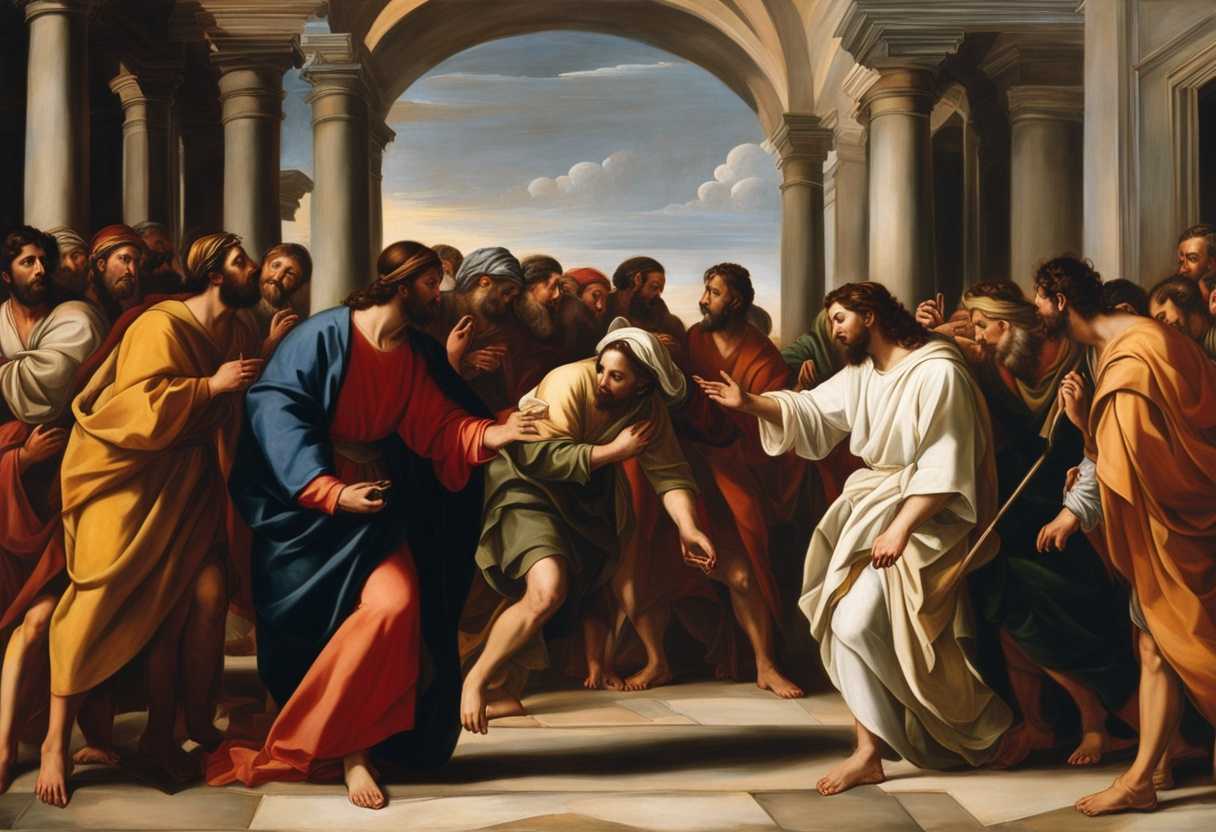
Setting the Scene for John 9:1-17
In John chapter 9, we find Jesus and his disciples walking along the streets of Jerusalem. As they pass by the temple, they come across a man who has been blind from birth, sitting by the roadside begging for alms. The man’s name is not mentioned in the passage, but his condition is a well-known sight to the people in the area.
The disciples, curious about the man’s condition, ask Jesus, “Rabbi, who sinned, this man or his parents, that he was born blind?” Jesus takes this opportunity to teach them about the nature of sin and suffering, explaining that neither the man nor his parents sinned, but that the works of God might be displayed in him.
Jesus then proceeds to heal the blind man by spitting on the ground, making mud with the saliva, and spreading it on the man’s eyes. He instructs the man to go and wash in the pool of Siloam. As the man obeys and washes his eyes, he is miraculously healed and gains his sight for the first time in his life. The people in the area are amazed and begin to question how this transformation could have taken place.
What is John 9:1-17 about?
The miracle of Jesus healing a man who was born blind in this verse goes beyond just physical healing. It symbolizes a deeper meaning, highlighting the spiritual blindness that can affect all of us. Many of us can also be blind to the truth, love, and grace of God in our lives, just as the blind man couldn’t see physically. This miracle serves as a powerful reminder that God’s grace has the power to heal our spiritual blindness and open our eyes to the light of truth and love. We reflect on this verse, inviting us to examine our own hearts and minds. Are there areas in our lives where we are spiritually blind? Are there truths about God’s love and grace that we have yet to fully understand or embrace? He offers to heal us from our spiritual blindness just as Jesus healed the blind man. Through this verse, we are reminded of the transformative power of God’s grace and the importance of opening our hearts to receive His healing touch.
Understanding what John 9:1-17 really means
In John 9:1-17, we witness a profound moment in Jesus’ ministry where He encounters a man blind from birth. This miracle holds significant weight in the broader narrative of Jesus’ work, showcasing His compassion, power, and ability to bring light into the darkest of situations.
As Jesus and His disciples come across the blind man, the disciples’ question about sin and suffering reflects common beliefs of the time, linking personal sin to physical ailments. However, Jesus disrupts this notion by stating, “Neither this man nor his parents sinned,” highlighting His rejection of the idea that individual sin directly caused the man’s blindness.
“But this happened so that the works of God might be displayed in him,” Jesus declares, shifting the focus from assigning blame to recognizing suffering as an opportunity for God’s glory to be revealed. His proclamation, “I am the light of the world,” not only speaks to His identity but also signifies His mission to bring spiritual and physical sight to those in darkness.
When Jesus instructs the blind man to “Go, wash in the Pool of Siloam,” He underscores the importance of obedience and faith in the healing process. This act serves as a metaphor for the spiritual cleansing and renewal that come through following Jesus’ commands and trusting in His power.
Drawing connections to other Bible passages, such as John 8:12 where Jesus reiterates His role as the light of the world, and referencing Old Testament prophecies like Psalm 146:8 and Isaiah 42:7, we see the fulfillment of God’s promises through Jesus’ actions.
Today, this story resonates with people grappling with questions about suffering and its purpose. It challenges us to look beyond physical afflictions to the spiritual lessons and opportunities for God’s work in our lives. Just as the blind man’s eyes were opened, we are called to recognize our spiritual blindness and the need for Jesus’ light to illuminate our path.
Consider the story of a person who faced immense suffering but found healing and purpose through faith. Their journey mirrors the blind man’s transformation from darkness to light, illustrating the profound impact of encountering Jesus in the midst of trials.
In conclusion, John 9:1-17 showcases Jesus’ power to heal, the deeper meaning behind suffering, and the call to faith and obedience in following Him. Let us seek Jesus as the light in our lives, trusting in God’s greater plan even when faced with challenges, knowing that He can bring clarity and purpose to our darkest moments.
How can we demonstrate compassion and love like Jesus?
One way we can demonstrate compassion and love like Jesus is by being willing to reach out and help those in need, regardless of their circumstances. This includes showing kindness and understanding to those who are marginalized or discriminated against in society, just as Jesus did. We can follow His example by showing empathy and providing assistance to those who are suffering, in both small and big ways.
Another way to demonstrate compassion and love like Jesus is by forgiving others, even when they may not deserve it. Jesus showed great forgiveness towards those who wronged Him, and He taught us to do the same. Through forgiveness, we can show compassion, understanding, and extend grace to others, just as Jesus did for us.
Furthermore, demonstrating compassion and love like Jesus involves putting the needs of others before our own, showing selflessness and a willingness to serve. We can reflect the love and kindness that Jesus showed throughout His ministry by being humble and serving others with a genuine heart. We can choose to respond with empathy, understanding, and generosity in our interactions with others, just as Jesus did during His time on earth.
Application
Imagine juggling the demands of a hectic workday and family commitments, only to overlook the small wonders and acts of kindness around you. Open your heart and mind like you would open an unexpected email full of good news. The world is bursting with moments that showcase the transformative power of compassion. Your actions can be the catalyst that spreads hope and faith like a ripple in a busy pond. Will you seize these opportunities to make a difference today?

Reverend Michael Johnson is an experienced Church Minister with a profound expertise in spirituality and guidance. With a serene presence and a compassionate heart, he has faithfully served his congregation for over 20 years, leading them on a spiritual journey towards inner peace and enlightenment. Reverend Johnson’s extensive knowledge of religious philosophies and profound understanding of human nature have made him a trusted confidant and mentor to many, as he seamlessly weaves his profound wisdom into life teachings. Reverend Johnson’s calming demeanor and empathetic nature continue to uplift and heal souls, nurturing a sense of unity and tranquility within his community.