
Jonah 1:2-3 is about Jonah’s disobedience to God’s command to go to Nineveh and preach repentance, instead choosing to flee on a ship to Tarshish, symbolizing the consequences of trying to escape one’s divine calling and the inevitability of being pursued by God’s will.
2 “Arise, go to Nineveh, that great city, and call out against it, for their evil has come up before me.”
3 But Jonah rose to flee to Tarshish from the presence of the Lord. He went down to Joppa and found a ship going to Tarshish. So he paid the fare and went down into it, to go with them to Tarshish, away from the presence of the Lord.
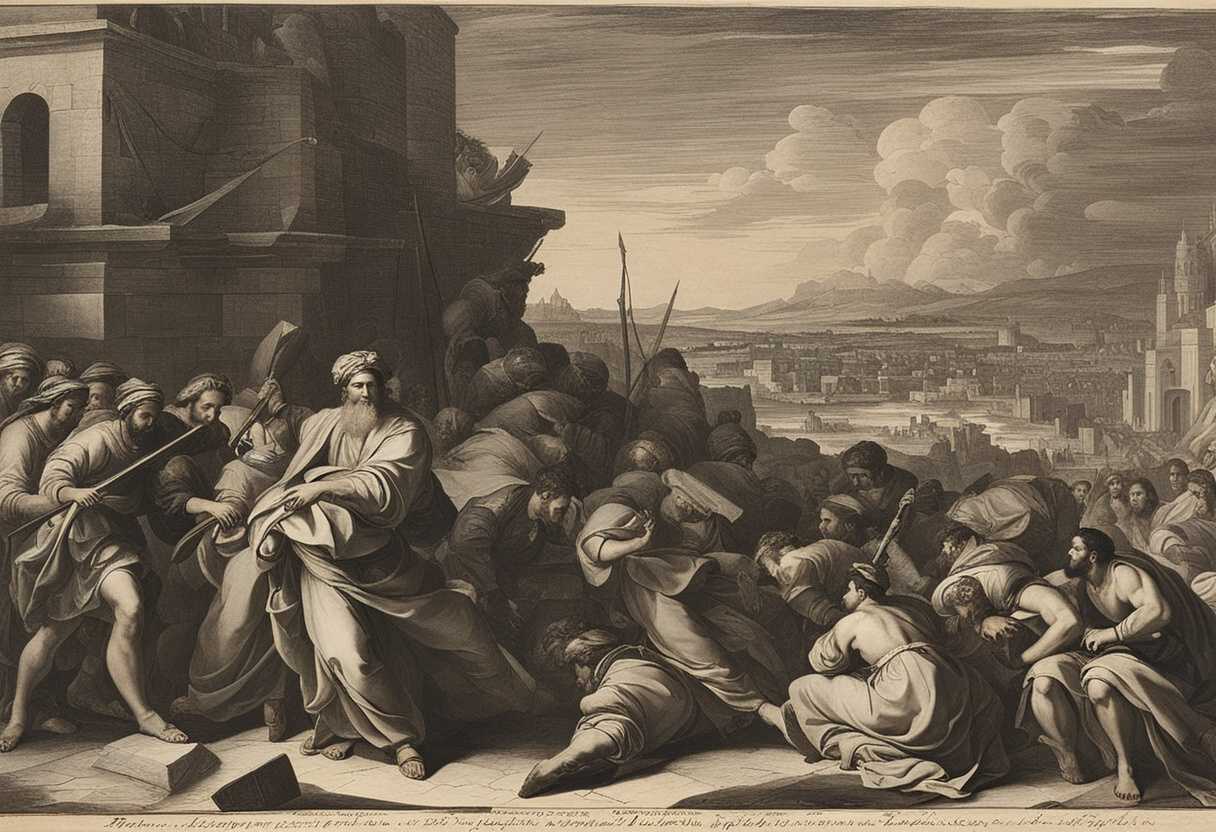
Setting the Scene for Jonah 1:2-3
The scene in Jonah 1:2-3 opens with the prophet Jonah receiving a divine command from the Lord to go to the great city of Nineveh and preach against its wickedness. However, instead of obeying God’s instructions, Jonah decides to flee in the opposite direction, boarding a ship bound for Tarshish. The bustling port of Joppa serves as the backdrop for Jonah’s attempted escape, with ships coming and going, merchants haggling over goods, and sailors preparing for their voyages.
As Jonah boards the ship, he joins a diverse group of sailors, each with their own reasons for being there. Some are seasoned seafarers, weathered by years of travel, while others are younger and eager to prove themselves. The captain, a grizzled veteran of the sea, barks orders to his crew as they set sail, unaware of the storm brewing on the horizon. The salty sea air fills their lungs as the ship cuts through the waves, carrying Jonah further away from his divine calling and into the heart of the tempest that will test his faith like never before.
The sun begins to dip below the horizon, casting a golden glow over the restless waters as the ship sails further and further from the shores of Joppa. Jonah’s decision to defy God’s command sets in motion a chain of events that will lead to a life-changing encounter with the Almighty, challenging his beliefs and ultimately revealing the boundless mercy and grace of the Lord.
What is Jonah 1:2-3 about?
Jonah disobeys God’s direct command to go to the city of Nineveh and preach against its wickedness in this verse. Instead of following God’s instruction, Jonah boards a ship intending to flee in the opposite direction. This act of disobedience highlights Jonah’s reluctance to carry out God’s will and his attempt to escape his responsibility. It also serves as a reminder to us of the consequences of straying from the path set for us by a higher power.
Have you ever found yourself hesitant to fulfill a duty or complete a task that you knew was important or necessary? Jonah’s actions reflect the internal struggles we may face when confronted with challenges or responsibilities that seem daunting or uncomfortable. It prompts us to reflect on our own tendencies towards disobedience or avoidance when faced with difficult circumstances. Jonah’s story ultimately teaches us the importance of faith, obedience, and trust in carrying out the plans set forth for us, even when they may seem daunting or require us to step outside of our comfort zones.
Understanding what Jonah 1:2-3 really means
In the book of Jonah, we encounter a prophet who receives a direct and urgent command from God to go to Nineveh, a great city known for its wickedness, and preach against it. The phrase “Arise, go to Nineveh, that great city” highlights the significance of God’s call and the magnitude of Nineveh’s sins. God instructs Jonah to “cry out against it,” indicating a message of impending judgment. However, instead of obeying, Jonah chooses to flee to Tarshish, attempting to escape from the presence of the Lord.
Jonah’s immediate reaction to run away reveals his reluctance and fear in facing the task set before him. Tarshish symbolizes a place far from Nineveh, reflecting Jonah’s desire to avoid God’s mission. The futile nature of Jonah’s escape is emphasized in Psalm 139:7-10, where it is made clear that one cannot flee from God’s presence. This serves as a poignant reminder of the impossibility of evading God’s plans.
The story of Jonah resonates with people today, highlighting the importance of obedience to God’s call. Just as Jonah was called to a challenging task, individuals are often summoned to step out of their comfort zones to fulfill God’s purposes. The narrative also serves as a cautionary tale against running from responsibilities. Jonah’s attempt to flee mirrors the tendency of individuals to avoid difficult tasks, underscoring the potential consequences of disregarding God’s call.
Moreover, Jonah’s story underscores the omnipresence of God. It illustrates that one cannot escape from God’s presence or plans, offering both comfort and a sobering truth for believers today. The parallels between Jonah’s experience and contemporary struggles with obedience and faith are evident, urging individuals to trust in God’s guidance and to embrace His calling with courage and faith.
Consider the anecdote of Sarah, a young professional who, like Jonah, initially tries to evade her calling. Despite feeling drawn to serve in a mission field, Sarah succumbs to fear and pursues a different path. However, through a series of events and a persistent sense of unrest, she realizes the peace and fulfillment that come from obeying God’s call, no matter how daunting it may seem.
In conclusion, Jonah’s narrative serves as a compelling reminder of the significance of obedience to God’s commands and the impossibility of escaping His presence. It encourages believers to have faith in God’s plans, knowing that He equips and supports those He calls. Jonah’s story challenges us to reflect on our responses to God’s call and to trust in His unwavering guidance and provision.
Are we running from God’s calling in our lives?
Jonah attempted to flee from God’s calling in his life in Jonah 1:2-3. Instead of following the command to go to Nineveh, Jonah decides to run in the opposite direction, boarding a ship headed for Tarshish. This is a clear example of someone running from the responsibilities and tasks that God has set before them. However, as the story unfolds, we see the consequences of Jonah’s disobedience and the lengths to which God will go to bring him back to His intended path.
This passage serves as a reminder that we cannot escape or hide from God’s calling in our lives. Whether it is a specific task, a mission, or a purpose that God has laid out for us, attempting to avoid it will only lead to turmoil and adversity. We are called to trust in God’s plan, have faith in His direction, and submit ourselves to His will, knowing that His ways are higher than our ways.
So, when we find ourselves in situations where we may be tempted to flee from God’s calling, let us instead lean into His guidance and provision. We have the courage to step out in faith, knowing that God’s plans for us are ultimately for our good and His glory.
Application
Don’t be like Jonah, trying to escape your destiny. Avoiding God’s plan only brings chaos. Embrace His guidance and follow the path He has chosen for you. Will you step up and follow His will, ready to walk obediently in His plan?

Reverend Michael Johnson is an experienced Church Minister with a profound expertise in spirituality and guidance. With a serene presence and a compassionate heart, he has faithfully served his congregation for over 20 years, leading them on a spiritual journey towards inner peace and enlightenment. Reverend Johnson’s extensive knowledge of religious philosophies and profound understanding of human nature have made him a trusted confidant and mentor to many, as he seamlessly weaves his profound wisdom into life teachings. Reverend Johnson’s calming demeanor and empathetic nature continue to uplift and heal souls, nurturing a sense of unity and tranquility within his community.