
Judges 16:31 is about Samson’s final act of sacrificing himself to defeat his enemies, symbolizing redemption through selfless sacrifice and the consequences of succumbing to temptation.
31 Then his brothers and all his family came down and took him and brought him up and buried him between Zorah and Eshtaol in the tomb of Manoah his father. He had judged Israel twenty years.
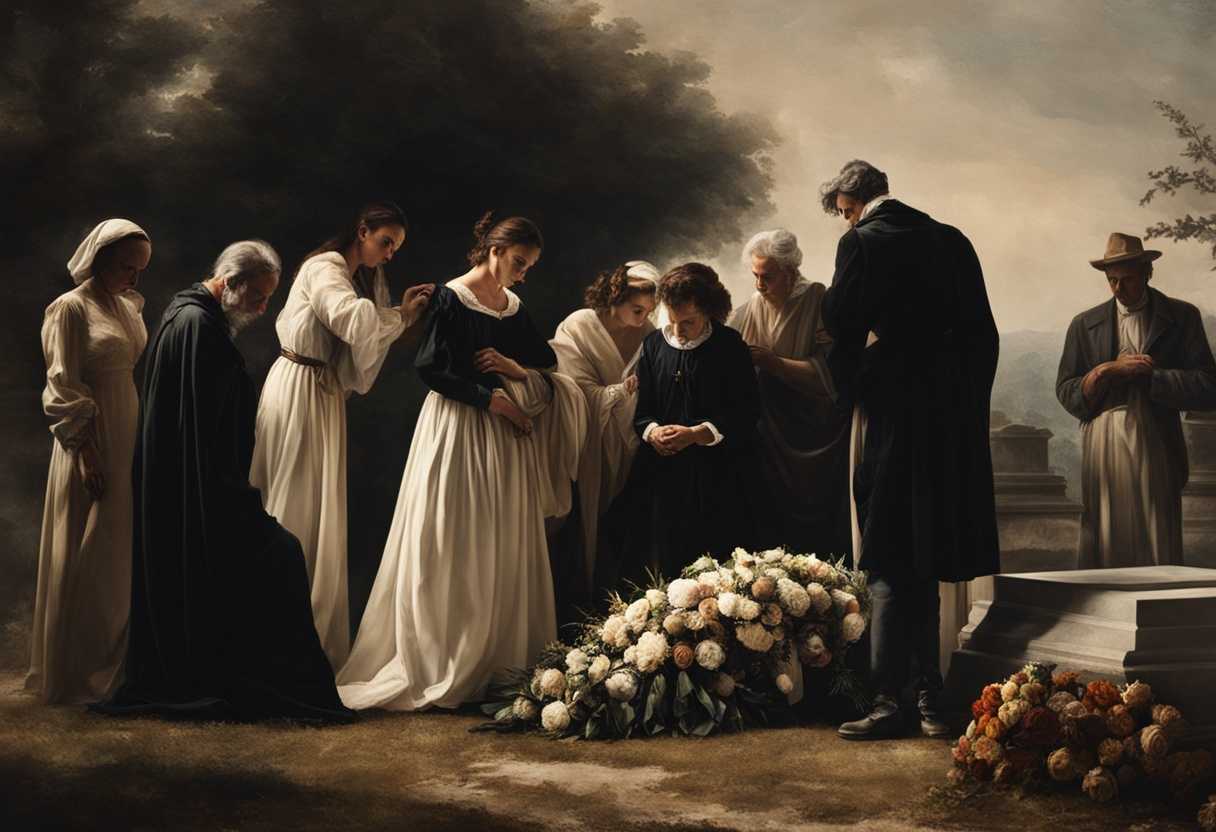
Setting the Scene for Judges 16:31
The scene in Judges 16:31 takes place in the city of Gaza, where Samson, a judge of Israel, finds himself in a dire situation. Samson had been captured by the Philistines, who were enemies of the Israelites. They had blinded him and imprisoned him in Gaza. The Philistines gathered in a great temple dedicated to their god Dagon to celebrate their victory over Samson.
In this temple, surrounded by Philistine rulers, nobles, and a large crowd of people, Samson was brought out to entertain them. Little did they know that Samson’s strength had returned to him, and he prayed to God for one last burst of strength. As he stood between the two central pillars that supported the temple, Samson pushed against them with all his might, causing the entire structure to collapse. In this dramatic moment, Samson sacrificed himself to bring down the temple and kill more Philistines in his death than he had in his life.
The scene is one of tension and anticipation as the Philistines revel in their victory, unaware of the impending destruction that Samson would bring upon them. The temple would have been grand and imposing, with intricate carvings and decorations dedicated to the Philistine god Dagon. The atmosphere would have been charged with excitement as the Philistines watched Samson, their captive, perform for their entertainment, not realizing that he would ultimately bring about their downfall.
What is Judges 16:31 about?
This verse signifies the ultimate sacrifice and triumph of Samson, a biblical figure known for his incredible physical strength. Despite his moments of weakness and downfall, Samson’s final act of toppling the temple of the Philistines symbolizes redemption and the fulfillment of his destiny. Through his selfless act, Samson brings justice to his people and delivers them from their oppressors.
Can you imagine the sheer magnitude of strength and determination it must have taken for Samson to collapse an entire temple upon himself and his enemies? His actions highlight the unwavering resolve and unwavering devotion to his people’s freedom. This verse serves as a powerful reminder of the transformative power of sacrifice and the ability of individuals to rise above their circumstances to achieve greatness.
Samson’s heroic deed not only demonstrates the importance of perseverance and courage in the face of adversity but also underscores the inherent human desire for justice and liberation. His story is a compelling testament to the enduring legacy of those who are willing to give everything for a cause greater than themselves. Reflecting on Samson’s final act may inspire us to consider the impact of our own choices and actions in the ongoing quest for justice and righteousness.
Understanding what Judges 16:31 really means
In the concluding verse of Judges 16, we witness the closure of Samson’s tumultuous life, marked by his family retrieving his body and laying him to rest in his father’s tomb. This act of burial signifies respect and finality, encapsulating the end of a chapter in Israel’s history. It serves as a poignant reminder of the consequences of Samson’s choices and the ultimate price he paid for his actions.
The narrative of Samson’s life, spanning from miraculous beginnings to a tragic end, is chronicled in Judges 13-16. Despite his flaws and shortcomings, Samson is recognized in Hebrews 11:32-34 among the heroes of faith, showcasing that even imperfect individuals can play a significant role in God’s plan. Ecclesiastes 3:1-2 further emphasizes the cyclical nature of life and death, resonating with Samson’s journey from birth to his eventual demise.
Samson’s story holds relevance for contemporary audiences, offering lessons on redemption, family bonds, and divine strength. His final act of destroying the Philistine temple symbolizes redemption, illustrating that it’s never too late to turn back to God, no matter how far one has strayed. The gesture of his family retrieving and burying him underscores the importance of honoring loved ones, despite their flaws, highlighting the enduring value of familial ties.
Consider a modern parallel to Samson’s narrative—a person who has faced numerous setbacks and struggles but ultimately finds redemption and purpose. This individual’s transformation, akin to Samson’s final act, serves as a testament to God’s grace and the potential for a renewed life. Their journey from darkness to light becomes a powerful testimony of resilience and faith, mirroring Samson’s own trajectory.
Delving into the details of the verse, phrases like “His brothers and all his family came down and took him” emphasize the significance of familial unity and support during times of loss and disgrace. The mention of Samson’s burial between Zorah and Eshtaol symbolizes a return to his origins and heritage, connecting him to his roots even in death. The statement that “he had judged Israel twenty years” highlights Samson’s impact on his people, showcasing that one’s contributions can endure despite personal failings.
In contemplating Judges 16:31, we glean insights into themes of redemption, family honor, and the lasting repercussions of our actions. Samson’s story serves as a mirror for our own journeys, reminding us of the potential for transformation and the importance of familial bonds. By reflecting on these timeless truths, we can draw parallels to our lives today, finding inspiration in the enduring legacy of individuals like Samson.
The question: What does it mean to die for God’s purpose?
To die for God’s purpose means to fulfill a righteous mission or to bring about divine justice, no matter the personal cost. This could involve sacrificing one’s life in service to God’s will and for the greater good. The protagonist willingly and bravely gives up their life as a sacrifice to carry out God’s plan and bring about a desired outcome in the context of the verse referenced.
Dying for God’s purpose involves a deep faith and trust in God’s guidance and ultimate plan. It requires a willingness to let go of one’s own desires and even life itself in order to serve a higher purpose. The verse mentioned sees the act of dying for God’s purpose as a noble and honorable deed, reflecting a strong devotion and commitment to God’s will above all else.
Application
Avoid the traps of pride, deceit, and disobedience that can lead to downfall. Reflect on your own life, identify any patterns that may steer you away from your desired path. Embrace humility, honesty, and obedience in all aspects. Will you choose to learn from this cautionary tale and strive for righteousness in all that you do?

Reverend Michael Johnson is an experienced Church Minister with a profound expertise in spirituality and guidance. With a serene presence and a compassionate heart, he has faithfully served his congregation for over 20 years, leading them on a spiritual journey towards inner peace and enlightenment. Reverend Johnson’s extensive knowledge of religious philosophies and profound understanding of human nature have made him a trusted confidant and mentor to many, as he seamlessly weaves his profound wisdom into life teachings. Reverend Johnson’s calming demeanor and empathetic nature continue to uplift and heal souls, nurturing a sense of unity and tranquility within his community.