
Judges 17:18 is about the consequences of abandoning God’s commandments and following one’s own desires, resulting in chaos and moral decline.
18 And Micah said to him, “Stay with me, and be to me a father and a priest, and I will give you ten pieces of silver a year and a suit of clothes and your living.” And the Levite went in.
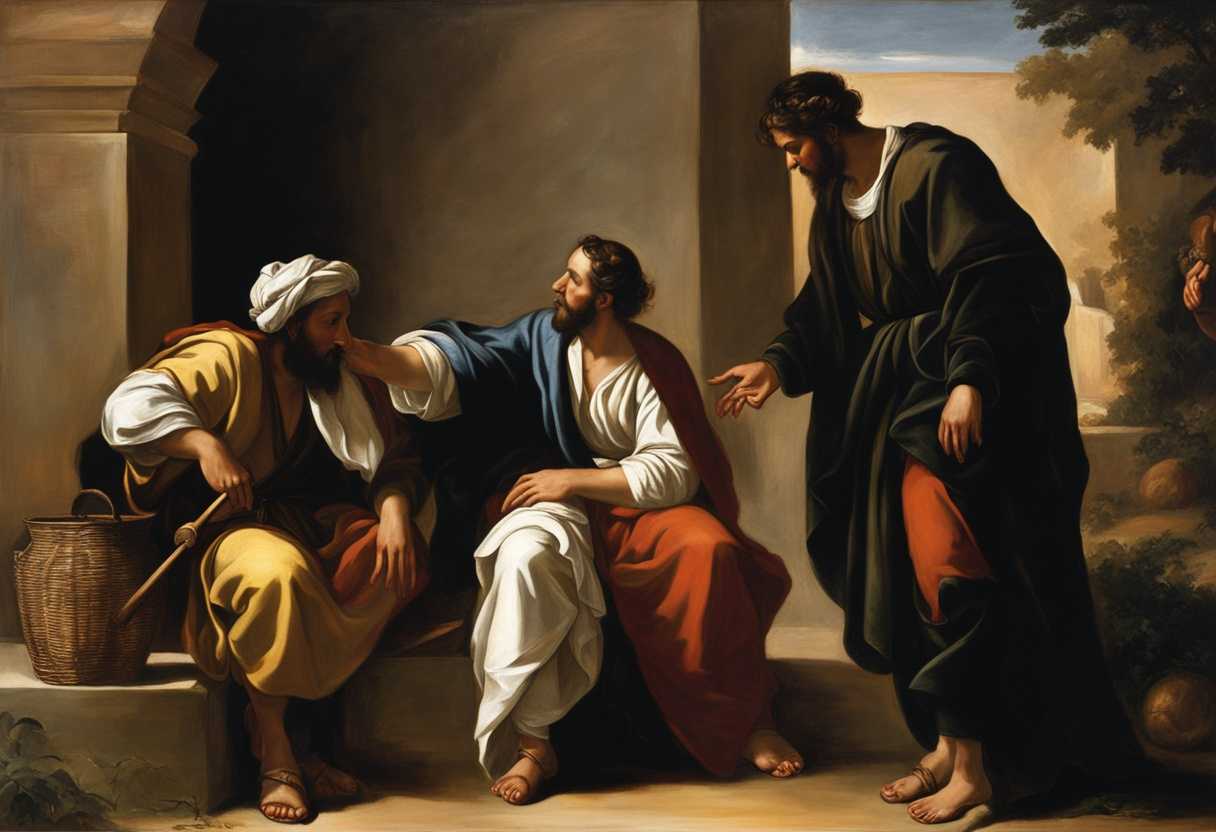
Setting the Scene for Judges 17:18
In Judges chapter 17, we find a scene set in the hill country of Ephraim, a region known for its rugged terrain and picturesque landscapes. The main characters in this scene are a Levite named Micah and a young man who has recently become his priest. Micah had stolen silver from his mother, who then cursed the thief. Out of guilt and fear of the curse, Micah confessed to his mother, who then blessed him. Micah decided to return the silver to his mother, who in turn used a portion of it to create an idol for Micah’s household.
As the scene unfolds, we see Micah consecrating the young man as his personal priest, a role that was not traditionally held by just anyone. The surroundings are rustic, with the sounds of nature echoing through the hills as the two men engage in their newfound religious practices. The atmosphere is tense with a mix of guilt, fear, and misguided devotion as Micah and his priest navigate the consequences of their actions and the creation of their own makeshift religious sanctuary.
What is Judges 17:18 about?
Imagine a beautiful garden that you meticulously tend to every day. Now, picture introducing a stubborn weed that grows uncontrollably, taking over your garden and choking the life out of your precious plants. This is similar to idolatry in our lives. When we place anything or anyone above God, it’s like allowing that insidious weed to take root and spread chaos in our spiritual life. The devastating effects of idolatry are witnessed in Micah’s household. The idolatrous practices led them away from God’s intended path, causing discord, strife, and ultimately spiritual decline. It serves as a cautionary tale for us, reminding us of the dangers of putting our trust and devotion in anything other than God.
So, let us reflect on our own lives. Are there idols that we unconsciously worship, setting them above our Creator? How can we uproot these idols and cultivate a deep, meaningful relationship with God, free from the chaos and decline that idolatry brings? Let Micah’s story be a beacon of warning and a call to realign our hearts with the one true source of peace and fulfillment.
Understanding what Judges 17:18 really means
In the historical context of the Book of Judges, characterized by moral decline, Judges 17 introduces Micah, who deviates from true worship by creating idols and appointing his son as a priest. The misuse of “household gods” and an “ephod” signifies a departure from Yahweh. The hiring of a Levite, typically dedicated to religious duties, highlights the spiritual corruption of the time.
The commandments in Exodus 20:3-4 and Deuteronomy 12:5-7 directly oppose Micah’s actions, emphasizing exclusive worship of God at designated places. The principle in 1 Samuel 15:22 underscores obedience over ritualistic practices. These passages provide a framework for understanding Micah’s misguided choices.
The narrative of Micah prompts reflection on modern idolatry, where people prioritize worldly pursuits over God. It challenges us to evaluate our spiritual authenticity, ensuring our practices align with God’s Word rather than personal preferences. Just as Micah sought favor through his own means, we are reminded that true favor comes from obedience and genuine relationship with God.
Consider a scenario where someone prioritizes career success over their relationship with God, believing it will enable better service in the future. This parallels Micah’s flawed belief in self-made religious practices. True favor is found in obedience and intimacy with God, not in our constructed methods. Reflect on areas in your life where idols may exist, redirecting focus towards aligning with God’s commands.
In conclusion, let us contemplate Micah’s story to realign our lives with God’s will. By recognizing the dangers of idolatry and the importance of obedience, we can cultivate a faith that is genuine and pleasing to God. Strive for a faith that prioritizes obedience and relationship with God above all else, trusting in His wisdom and guidance.
How can we discern between true and false prophets?
One way to discern between true and false prophets is by observing their actions and behaviors. True prophets are likely to exhibit a genuine piety, humility, and adherence to moral and ethical principles in their daily lives. They will not seek personal gain or exploit their followers for their own benefit. On the other hand, false prophets may display characteristics such as arrogance, greed, and a lack of sincerity in their teachings, using manipulation or deceit to deceive their followers.
Additionally, the message of a true prophet will align with the core principles and teachings of the faith they claim to represent. Their prophecies and teachings will be in harmony with established religious beliefs and values, guiding their followers towards spiritual growth, compassion, and righteousness. False prophets, on the other hand, may introduce teachings that contradict or distort the fundamental tenets of the faith, leading their followers astray and causing confusion and division within the community. Discerning between true and false prophets ultimately requires carefully evaluating their character, conduct, teachings, and the fruits of their labor. Individuals can safeguard themselves against deception and manipulation by false prophets by remaining vigilant, studying scripture, seeking guidance from religious authorities, and cultivating a strong personal relationship with the divine.
Application
In the fast-paced arena of modern life, where distractions abound and decisions weigh heavy, let us turn to the ultimate guide, God. Instead of relying solely on our limited perspectives, let’s anchor our choices in His wisdom. Take a moment to center yourself through prayer, delve into His teachings, and extend kindness to those around you. Will you embrace the challenge of prioritizing God’s will as your guiding light in this ever-changing world?

Reverend Michael Johnson is an experienced Church Minister with a profound expertise in spirituality and guidance. With a serene presence and a compassionate heart, he has faithfully served his congregation for over 20 years, leading them on a spiritual journey towards inner peace and enlightenment. Reverend Johnson’s extensive knowledge of religious philosophies and profound understanding of human nature have made him a trusted confidant and mentor to many, as he seamlessly weaves his profound wisdom into life teachings. Reverend Johnson’s calming demeanor and empathetic nature continue to uplift and heal souls, nurturing a sense of unity and tranquility within his community.