
Judges 4:4 is about the leadership and wisdom of Deborah, a prophetess and judge in Israel, who played a crucial role in guiding the Israelites in a time of crisis and conflict.
4 Now Deborah, a prophetess, the wife of Lappidoth, was judging Israel at that time.
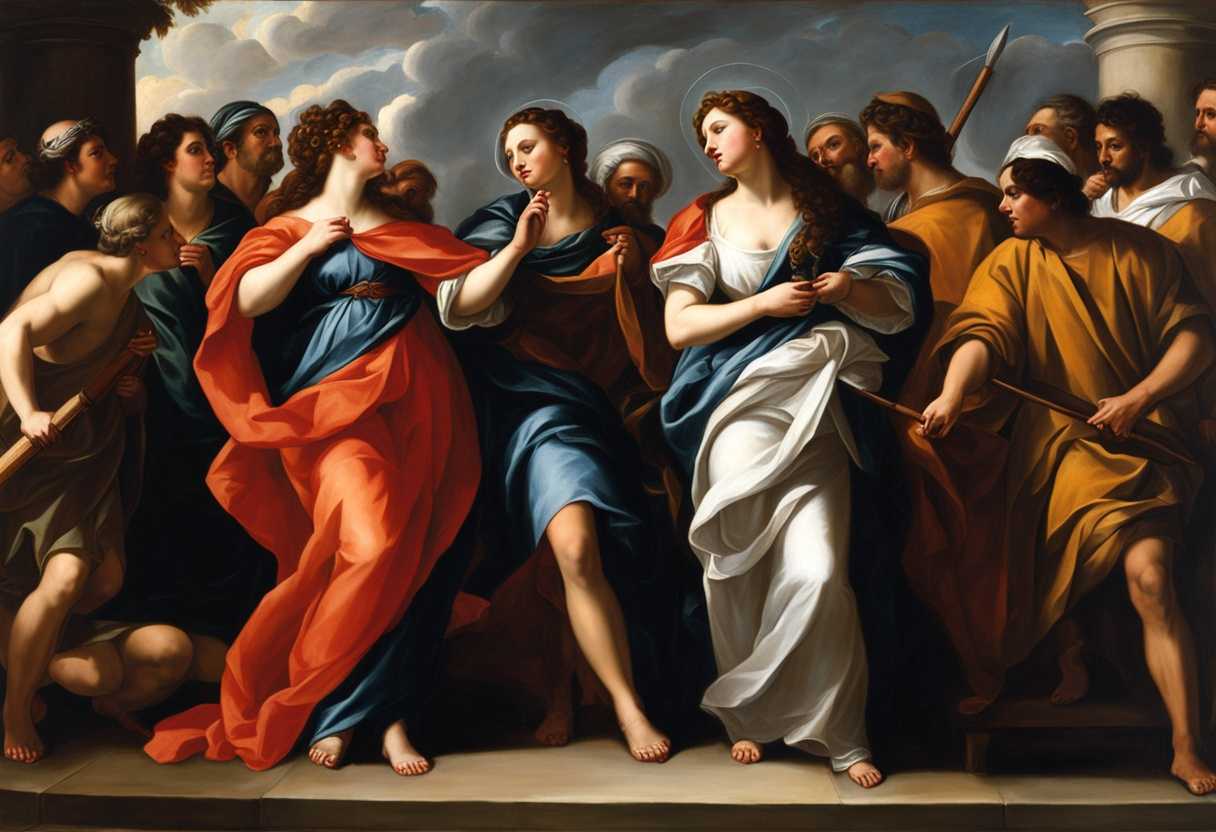
Setting the Scene for Judges 4:4
In Judges chapter 4, we find ourselves in the land of Israel during the time when the Israelites were being oppressed by the Canaanites under the rule of King Jabin. Deborah, a prophetess and judge, is leading the Israelites during this tumultuous period. She is known for her wisdom and her close relationship with God, often providing guidance and direction to the people.
Deborah summons Barak, a military commander, and informs him that God has commanded him to gather an army of 10,000 men from the tribes of Naphtali and Zebulun to confront the Canaanite forces led by Sisera. Barak hesitates to go into battle without Deborah by his side, and she agrees to accompany him. The scene is set on the eve of the battle, with the Israelite army camped on Mount Tabor, a strategic location overlooking the Jezreel Valley where the decisive confrontation with the Canaanites will take place.
As the sun sets over the valley, Deborah and Barak stand together, their faces illuminated by the fading light, as they prepare themselves for the upcoming battle. The air is tense with anticipation, but Deborah’s unwavering faith in God’s plan and Barak’s determination to lead his men to victory fill the night with a sense of hope and courage. The stage is set for a pivotal moment in Israel’s history, where faith, bravery, and divine intervention will come together to deliver the Israelites from their oppressors.
What is Judges 4:4 about?
Deborah’s dual role as a prophetess and judge signifies her deep connection with God and her authority to lead the people of Israel. She received divine messages and guidance from God as a prophetess, enabling her to make decisions that were aligned with His will. Her leadership as a judge involved settling disputes, administering justice, and overseeing the affairs of the people.
During a time of oppression, Deborah’s leadership was a beacon of hope for the Israelites. Her courage, wisdom, and faith in God inspired the people to rise up against their oppressors and fight for their freedom. Despite societal norms that may have limited women’s leadership roles during that time, Deborah’s example challenges traditional gender roles and demonstrates that God can use anyone, regardless of gender, to fulfill His plans.
Reflecting on Deborah’s story, we are reminded of the power of faith, courage, and obedience to God’s will in overcoming challenges and leading others towards justice and liberation. Deborah’s story invites us to examine our own capacity for leadership and to trust in God’s guidance as we navigate difficult times in our lives. Just like Deborah, we can draw strength from our faith, stand up against oppression, and lead others towards a brighter future.
Understanding what Judges 4:4 really means
Introduction
In the Book of Judges, we are presented with a tumultuous period in Israel’s history where cycles of sin, oppression, repentance, and deliverance characterize the narrative. Amidst this backdrop, Deborah emerges as a significant figure, playing a crucial role in the deliverance of the Israelites.
Contextual Background
During the time of the Judges, Israel was in a constant cycle of disobedience to God, leading to oppression by foreign nations. When the people cried out for help, God raised up judges to deliver them. Deborah, a prophetess and judge, stood out as a beacon of hope and leadership during this turbulent era, guiding the Israelites with wisdom and courage.
Key Phrases and Their Meanings
“Deborah, a prophetess,” signifies her unique position as a woman chosen by God to deliver His messages and lead His people. In a male-dominated society, Deborah’s role as a prophetess was not only rare but also a testament to God’s inclusive nature in selecting His servants.
“The wife of Lappidoth” indicates the cultural practice of identifying individuals by their spouses, suggesting that Deborah’s marital status was known and possibly respected in her community. This detail adds depth to her character and hints at a supportive partnership with her husband.
“Judging Israel at that time” underscores Deborah’s authority and responsibility as a judge, tasked with settling disputes, upholding justice, and leading the nation in God’s ways. Her leadership was marked by wisdom, discernment, and a deep connection to God.
Related Biblical Passages
In Exodus 15:20, Miriam is also recognized as a prophetess, establishing a tradition of female spiritual leadership in Israel. Similarly, 2 Kings 22:14-20 mentions Huldah the prophetess, highlighting the continuity of women serving as conduits for God’s messages. Proverbs 31:10-31 portrays the virtuous woman, mirroring Deborah’s strength, wisdom, and dedication to her people.
Relevance to People Today
Deborah’s story resonates with contemporary audiences by challenging societal norms and showcasing the importance of recognizing and valuing female leadership. Her example inspires individuals to embody qualities of wisdom, courage, and faithfulness in their own spheres of influence, regardless of gender.
Anecdote
Consider a modern-day woman who, like Deborah, exemplifies leadership and wisdom in her community. Through her faith and actions, she positively impacts those around her, demonstrating the enduring relevance of Deborah’s legacy in inspiring others to lead with integrity and compassion.
Conclusion
Deborah’s significance as a prophetess and judge in the Book of Judges serves as a timeless reminder of the power of godly leadership. As we reflect on her life, may we be inspired to seek wisdom and courage in our own leadership roles, honoring God and serving others with humility and grace. Let us emulate Deborah’s example as we navigate the challenges of our time, trusting in God’s guidance and strength.
What role do women play in spiritual leadership?
Women play a significant role in spiritual leadership, as exemplified in the verse. They can serve as guides and leaders, using their wisdom, courage, and faith to inspire and guide others on their spiritual journeys. This verse highlights a woman who held a position of authority and led the people in a time of need, showing that gender is not a limitation when it comes to serving as a spiritual leader.
Women have the capacity to provide guidance, make decisions, and lead others towards fulfilling their spiritual duties. They bring unique qualities and perspectives to their roles as spiritual leaders, offering compassion, empathy, and understanding to those in need. This verse challenges traditional gender roles and demonstrates that women are capable of taking on important leadership roles within the spiritual community.
Application
Embrace the powerful example of Deborah’s leadership in the Bible – her faith and courage changed the course of history. Think about how her obedience transformed the destiny of a nation, and imagine the impact you could have by answering your own unique calling. Will you step up with bravery and unwavering devotion in your own modern-day battles, as Deborah did in hers?

Reverend Michael Johnson is an experienced Church Minister with a profound expertise in spirituality and guidance. With a serene presence and a compassionate heart, he has faithfully served his congregation for over 20 years, leading them on a spiritual journey towards inner peace and enlightenment. Reverend Johnson’s extensive knowledge of religious philosophies and profound understanding of human nature have made him a trusted confidant and mentor to many, as he seamlessly weaves his profound wisdom into life teachings. Reverend Johnson’s calming demeanor and empathetic nature continue to uplift and heal souls, nurturing a sense of unity and tranquility within his community.