
Judges 5:14-18 is about the heroic leadership of Deborah and Barak in rallying the Israelites against their oppressors and the faithfulness of tribes like Zebulun and Naphtali who courageously joined the battle, highlighting the importance of unity, bravery, and divine intervention in times of conflict.
14 From Ephraim their root they marched down into the valley, following you, Benjamin, with your kinsmen; from Machir marched down the commanders, and from Zebulun those who bear the lieutenant’s staff;
15 the princes of Issachar came with Deborah, and Issachar faithful to Barak; into the valley they rushed at his heels.
16 “Why did you sit still among the sheepfolds, to hear the whistling for the flocks? Among the clans of Reuben there were great searchings of heart.”
17 Gilead stayed beyond the Jordan; and Dan, why did he stay with the ships? Asher sat still at the coast of the sea, staying by his landings.
18 Zebulun is a people who risked their lives to the death; Naphtali, too, on the heights of the field.
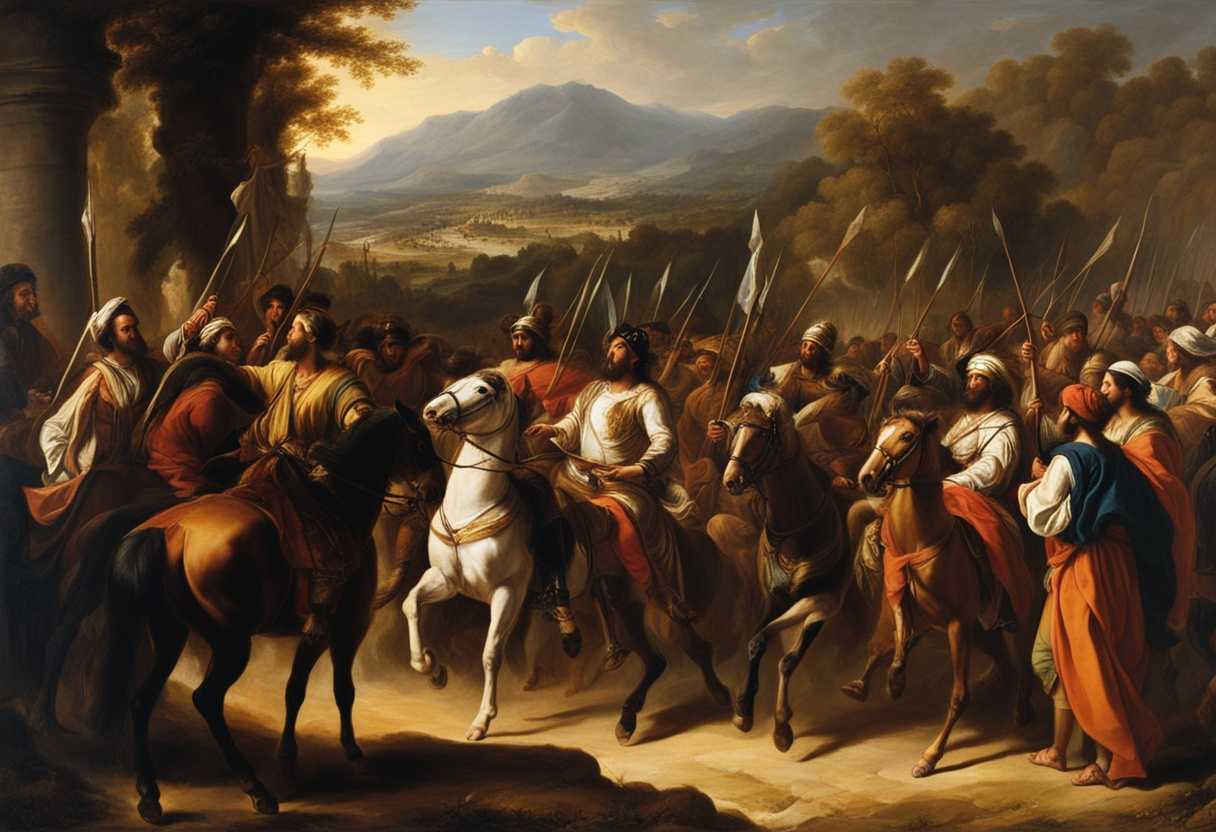
Setting the Scene for Judges 5:14-18
The scene in Judges 5:14-18 takes place during a pivotal moment in the book of Judges when the Israelites, led by Deborah and Barak, are engaged in a battle against their oppressors, the Canaanites. The passage describes various tribes of Israel who joined the fight against the Canaanite king, Jabin, and his general, Sisera.
In this scene, we see the tribes of Ephraim, Benjamin, Machir, Zebulun, and Issachar coming together to fight alongside Deborah and Barak. The atmosphere is charged with anticipation and determination as the Israelites prepare to face their enemies. The surroundings are rugged and war-torn, with the sound of clashing swords and battle cries filling the air.
Deborah, a prophetess and judge, plays a crucial role in rallying the Israelites for battle, while Barak leads them into the fight. The unity and courage displayed by these tribes in the face of adversity highlight the importance of standing together in times of struggle. As the battle unfolds, the Israelites demonstrate their faith and determination to overcome their oppressors, ultimately achieving victory through their unwavering trust in God.
What is Judges 5:14-18 about?
Deborah, a prophetess, and Barak, a military leader, lead the Israelites to victory over the Canaanites with the help of God, showcasing the power of faith and courage. It showcases the importance of trusting in God’s guidance and following his commands to achieve success in the face of adversity. We learn that by following Deborah and Barak’s example, we can overcome even the most daunting challenges with faith, determination, and divine assistance.
Imagine the scene of Deborah and Barak rallying the Israelite troops, armed with faith in God’s plan and unwavering determination to achieve victory. Reflect on the significance of their leadership, uniting the people and inspiring them to fight for their freedom and belief in God’s power. We are reminded of the timeless lesson that with faith, courage, and obedience to God, we can conquer any obstacle that stands in our way as we contemplate this verse. Let us draw inspiration from Deborah and Barak’s triumph and strive to walk in faith, knowing that God is always by our side, guiding us towards victory in our own battles.
Understanding what Judges 5:14-18 really means
The period of the Judges in Israel’s history was a turbulent time, characterized by a cycle of sin, oppression, repentance, and deliverance. In Judges 5, we encounter the Song of Deborah, a triumphant hymn sung by Deborah and Barak after their victory over the Canaanite army led by Sisera. The imagery in this passage vividly portrays the unity and actions of various tribes in Israel during this significant event.
Ephraim, symbolized as the root of the Israelites, descends from their mountainous region into the valley to join the battle. This movement highlights the importance of unity and collective action in achieving victory. It prompts us to reflect on the power of collaboration and stepping out of our comfort zones to accomplish great things.
The leaders from Machir, a clan within the tribe of Manasseh, are commended for their involvement in the battle. This emphasizes the essential role of leadership and responsibility in any undertaking. It underscores the need for decisive leaders who are willing to take action for the greater good.
The support of the princes of Issachar for Deborah, the prophetess and judge, showcases the significance of wisdom and discernment in leadership. It encourages us to seek out and uphold wise leadership while understanding the times we live in to make informed decisions.
On the other hand, the hesitation of the tribe of Reuben and the absence of Gilead in the battle serve as cautionary tales against indecision and choosing comfort over duty. These instances remind us of the consequences of inaction and the importance of decisiveness in seizing opportunities and fulfilling responsibilities.
The criticism of Dan for prioritizing personal interests over collective duties and Asher for remaining in their secure coastal territory instead of engaging in the battle warns against complacency and isolation. It urges us to balance personal pursuits with communal obligations and to use our resources and positions to support broader causes.
In applying these lessons to modern life, we are reminded of the value of unity, collaboration, strong leadership, wisdom, discernment, decisiveness, and active engagement in important causes. Just as the tribes of Israel needed to unite and act decisively to achieve victory, we too must work together, support capable leaders, make wise choices, and take decisive actions to overcome challenges and contribute positively to our communities and society.
How can we discern God’s leading in battle?
Certain individuals made actions and decisions that showed God’s leading in battle in Judges 5:14-18. Through their courage, obedience, and strategic thinking, they were able to achieve victory in battle. This story teaches us that God can work through individuals who are willing to be instruments of His plans and purposes.
Additionally, we can discern God’s leading in battle through prayer and seeking His guidance. We can be confident that God will lead us on the right path and give us the strength and courage we need to face the challenges ahead by seeking His wisdom and direction before heading into battle.
Furthermore, God’s leading in battle can be discerned through observing the circumstances and events that unfold. When things align in a way that seems beyond chance or coincidence, we can recognize God’s hand at work. We can navigate the battles we face with His wisdom and strength by staying attuned to His leading and being sensitive to His guidance.
Application
Summon your inner warrior. Rise up, courageously face injustices, and fight for what is right in your circles. Just as those heroes of old stood their ground, it is now our time to stand tall against oppression. Today, let’s be the warriors that history will remember. Will you answer the call to make a difference in the world today?

Reverend Michael Johnson is an experienced Church Minister with a profound expertise in spirituality and guidance. With a serene presence and a compassionate heart, he has faithfully served his congregation for over 20 years, leading them on a spiritual journey towards inner peace and enlightenment. Reverend Johnson’s extensive knowledge of religious philosophies and profound understanding of human nature have made him a trusted confidant and mentor to many, as he seamlessly weaves his profound wisdom into life teachings. Reverend Johnson’s calming demeanor and empathetic nature continue to uplift and heal souls, nurturing a sense of unity and tranquility within his community.