
1 When he had finished speaking, she said to him, “The God of our fathers be with you, and may he reward you for what you have done, and grant you a reward for your deeds!
2 And Judith said to him, “Please listen to what your maidservant has to say, and I will speak a word in your ears, and no one will harm you.
3 And Holofernes said to her, “Take courage, woman, and do not be afraid in your heart, for I have never hurt anyone who chose to serve Nebuchadnezzar, the king of all the earth.
4 And when they had done so, Judith said, “Praise God, our God, who has not withdrawn his mercy from the house of Israel, but has destroyed our enemies by my hand this very night.”
5 Then Holofernes said to her, “Take courage, woman, and do not be afraid in your heart, for I have never hurt anyone who chose to serve Nebuchadnezzar, the king of all the earth.
6 And now tell me what you have done all these days.”
7 And now tell me what you have done all these days.”
8 For we have heard of your wisdom and skill, and it is reported in all the land that you are the best in the whole kingdom, and very wise in your understanding.
9 And now, pray tell me what you have in mind, so that I may act accordingly.”
10 And when they saw her, that her countenance was altered and her apparel was changed, they wondered at her beauty very greatly and said to her.
11 And now, who are you that have tempted God this day, and stand instead of God among the sons of men?
12 Then Holofernes said to Judith, “Have a drink and be merry with us!”
13 And now, who are you that have tempted God this day, and stand instead of God among the sons of men?
14 And now, who are you that have tempted God this day, and stand instead of God among the sons of men?
15 And now, who are you that have tempted God this day and stand instead of God among the sons of men?
16 And when you stand before him, drink what he gives you, and be merry.
17 Your servant is a God-fearing woman, and serves the God of heaven day and night.
18 And they came to Holofernes’ tent and said to him, “Let my lord now command that your maidservant may go out to pray.”
19 And when she had done speaking, the people standing around the tent began to laugh.
20 And now, my lord, as your soul lives, since the Lord has prevented you from carrying out this plan of bloodshed and from committing a sin against God, the Lord is ready to receive you; return to the city, take your people with you, and go to the mountains that lie close by.
21 And now, O my lord, let me remain with you, and let me be an attendant of your person; whatever you desire, I will do it, and whatever will be agreeable to you, I will regard as my own good counsel.
22 And now, O brother, let me go up to my room to pray, and you shall stand outside the door, and I will pray to the Lord. Then I will tell you something.”
23 And now, O lord and master, if there is any mistake in this people and they sin against their God, let us consider that this will be their ruin, and let us go up, and we shall overcome them.
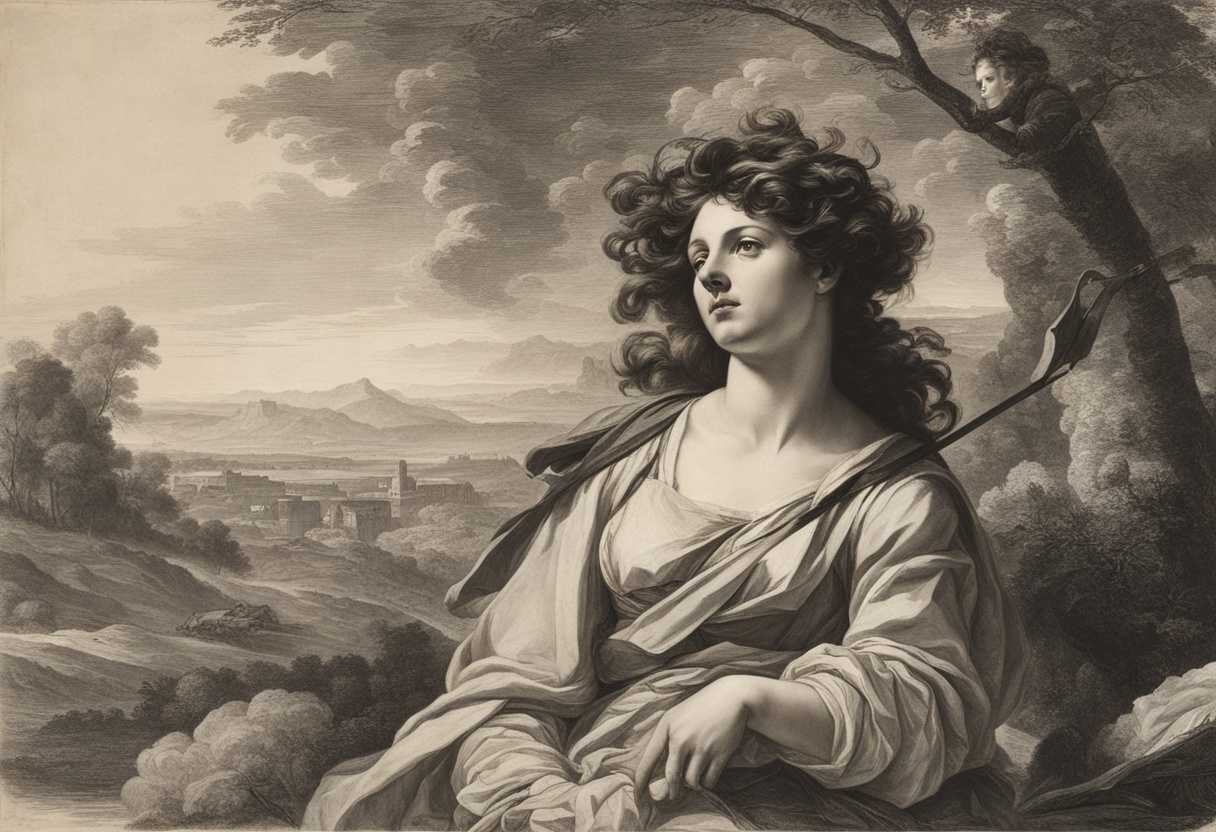
The True Meaning of Judith 11
The Book of Judith is part of the Apocrypha, a collection of books not found in the Hebrew Bible but included in some versions of the Christian Old Testament. The author is unknown, but the text was likely written in the 2nd or 1st century BCE, during a time of great turmoil for the Jewish people. Judith, a widow who risks her life to save her people from the Assyrian army, demonstrates cunning and bravery in this chapter. Judith devises a plan to infiltrate the enemy camp and eliminate the threat as the Assyrian general Holofernes lays siege to the city of Bethulia. Her actions echo the words of the prophet Jeremiah, who declared that “the Lord will be the shield of the humble” (Jeremiah 15:15).
Judith’s story is a testament to the power of faith and the resilience of the human spirit in the face of overwhelming odds. Through her unwavering courage and her trust in God, she becomes an inspiration to her people and a symbol of hope for all who face oppression and adversity.
Judith 11:1-5
Judith uses her wisdom and courage to approach Holofernes, the Assyrian general, in order to plead for her people, the Israelites, in Judith 11:1-5. Let’s break down this important section for a closer examination.
Verse 1 sets the scene by informing us that Judith, hearing about the Assyrian commander’s decision to destroy her city, goes up to the tent where Holofernes was. This action reveals Judith’s bravery and her willingness to put herself at great risk for the sake of her people. It is important to note that courage and faith are recurring themes in the Bible, and Judith exemplifies both qualities in this narrative.
Moving on to verse 2, we see Judith being welcomed by Holofernes’ officers, who marvel at her beauty and ask her purpose for coming. Judith’s physical beauty is frequently highlighted in the book of Judith, but it is her inner strength and cunning that truly define her character. It is through her intelligence and resourcefulness, rather than her physical appearance, that she ultimately achieves victory for her people.
Verse 3 depicts Judith’s approach to Holofernes, where she tells him that she has a message of great importance to deliver. Judith gains the attention of Holofernes by using her wit and eloquence, setting the stage for the unfolding of her plan. This episode showcases Judith’s strategic planning and her ability to navigate dangerous situations with skill and grace. Judith begins her persuasive speech to Holofernes in verse 4 by flattering him with words of praise and admiration. She presents herself as a loyal subject of the Assyrian empire, seeking to win Holofernes’ trust and sympathy. Judith’s approach to diplomacy demonstrates her shrewdness and her understanding of human nature, as she employs flattery as a strategic tool to achieve her goals.
Finally, in verse 5, Judith makes her plea to Holofernes, urging him not to attack the Israelites but instead to wait for God’s punishment to be brought upon them if they have truly disobeyed Him. Judith’s appeal to divine justice reveals her deep faith in God and her belief in His power to deliver her people. This moment underscores the theme of divine intervention and the idea that God works through ordinary individuals to accomplish His will. Judith’s encounter with Holofernes in these verses showcases her remarkable qualities of courage, intelligence, and faith. Through her actions and words, Judith emerges as a formidable figure who challenges oppressive forces and trusts in God’s guidance. The story of Judith serves as a powerful reminder that even in the face of overwhelming odds, individuals who are steadfast in their faith and dedicated to justice can bring about redemption and deliverance for their people.
Judith 11:6-8
Judith speaks to Holofernes, the commander of the Assyrian army, as she crafts a clever and calculated plan to deceive him in Judith 11:6-8. Judith approaches Holofernes with humility, calling herself a mere servant of God, which sets the tone for her strategy to ensnare the enemy leader through flattery and manipulation. She praises Holofernes for his wisdom, bravery, and military prowess, appealing to his vanity in order to gain his trust and ultimately bring about his downfall.
Judith’s approach in these verses exemplifies the concept of using one’s enemies’ weaknesses against them, a recurring theme throughout the Bible. Enemies disguise themselves with their lips, but in their hearts they harbor deceit, as written in Proverbs 26:24-26. Though their speech is charming, do not believe them, for seven abominations fill their hearts.” Judith’s smooth words and deceptive strategy serve as a means to an end, as she ultimately seeks to save her people from imminent destruction by outwitting the enemy.
Furthermore, the interaction between Judith and Holofernes in these verses highlights the power dynamics at play between the righteous and the wicked. Holofernes, a symbol of oppression and evil, is portrayed as easily swayed by flattery and pride, whereas Judith, guided by God’s wisdom and virtue, uses her intelligence and cunning to outsmart her adversary. This dichotomy of good versus evil, wisdom versus folly, is a central theme in the Bible, where the righteous are often tested by the unrighteous but ultimately triumph through faith and obedience to God’s will. As we delve deeper into the story of Judith, her bravery, resourcefulness, and unwavering faith in God ultimately lead to the salvation of her people. Her journey is a testament to the power of courage in the face of adversity, as well as the importance of remaining steadfast in one’s convictions even in the most dire circumstances. Through her actions, Judith becomes a symbol of hope and inspiration, showing that even the most unlikely hero can rise up to defeat the forces of evil when guided by faith and righteousness. Judith sets her plan in motion to deceive Holofernes and ultimately save her people from destruction, making the verses in Judith 11:6-8 a pivotal moment in the story. We can gain a deeper understanding of the timeless messages of the Bible and the enduring lessons we can glean from the actions of its characters by examining the themes of deception, humility, power dynamics, and faith present in these verses.
Judith 11:9-11
Judith 11:9-11 reads, “Then Judith said to him: ‘Listen to the words of your servant, and let your maidservant speak in your presence, and I will say nothing false to my lord this night. If you follow out the words of your maidservant, God will accomplish something through you, and my lord will not fail to achieve his purposes. Judith is addressing Holofernes, the powerful general of the Assyrian army who had besieged the Israelites in these verses. Judith, a brave and wise Jewish widow, had taken it upon herself to go to Holofernes’ camp in order to save her people from destruction. She uses her eloquence and wisdom to speak to Holofernes, appealing to his desire for success and victory.
Judith begins by humbly referring to herself as a servant and a maidservant, showing her humility and deference towards Holofernes. This was a strategic move on her part, as she knows that appealing to his ego and sense of power would make him more receptive to her words. Despite her humble stance, Judith boldly asserts that she will speak nothing false, emphasizing her integrity and trustworthiness. Judith is subtly pointing to the bigger picture of divine intervention in human affairs by stating that if Holofernes follows her counsel, God will work through him and help him achieve his goals. Throughout the Bible, we see the theme of God using unexpected and often unlikely individuals to accomplish His purposes. Judith’s belief in God’s power and ability to work through even her enemy, Holofernes, is a testament to her strong faith and trust in God’s sovereignty.
This passage from Judith 11:9-11 reminds us of the importance of integrity, wisdom, and faith in the face of adversity. Judith’s courage and shrewdness in dealing with Holofernes serve as a powerful example of using one’s gifts and resources to bring about deliverance and salvation. Her willingness to step out in faith and rely on God’s guidance challenges us to similarly trust in God’s providence and be willing to act boldly for the sake of righteousness and justice. Judith 11:9-11 echoes the stories of other courageous individuals who stood up against oppressors and enemies of God’s people in the broader context of the Bible. From figures like Esther, who risked her life to save the Jewish people from annihilation, to prophets like Elijah, who confronted wicked rulers, we see a consistent theme of God using ordinary men and women to bring about extraordinary deliverance and redemption. Judith’s story adds to this rich tapestry of faith and courage, inspiring believers to trust in God’s power and be willing to act decisively in times of crisis.
Judith 11:12-14
Judith speaks with Holofernes, the powerful Assyrian general, offering her counsel in Judith 11:12-14. Let’s break this verse down into its important sections to provide a detailed commentary:
-
“And now, that my lord, swear to me by the God before whom I am standing, that you will not kill me or hand me over to my enemies… Judith’s shrewdness and courage shine as she navigates a dangerous situation in this section. Judith is demonstrating her unwavering faith and trust in Him by invoking the name of her God. She boldly requests a promise of safety from Holofernes, appealing to a higher authority that she knows he would respect. This act not only shows her cleverness in dealing with a powerful figure like Holofernes but also highlights the importance of seeking divine protection in times of peril. It is a reminder of the biblical principle that those who trust in the Lord will find refuge and deliverance (Psalm 91:2).
-
“…And tonight, let us share a meal together, and may it bring joy to us both.”
Judith’s proposal of sharing a meal with Holofernes is strategic and calculated. She is subtly building rapport with him by suggesting a meal together, potentially softening his heart towards her. Meals in biblical times were significant events often symbolizing hospitality, trust, and unity. Judith’s invitation to dine together could be seen as an attempt to disarm Holofernes, setting the stage for her ultimate mission of delivering her people from his tyranny. This demonstrates Judith’s wisdom in using her feminine charm and persuasive skills to achieve a righteous end.
- “For no one will refuse this request of a woman’s beauty. Judith plays to Holofernes’ vanity in this final section by appealing to her own beauty. She understands the power that her physical appearance holds over men and cleverly uses it to her advantage. This line further emphasizes Judith’s resourcefulness and willingness to employ all available means to accomplish her divine mission. However, it is crucial to note that Judith’s beauty is not her only strength; her faith, courage, and intelligence play equally significant roles in the successful outcome of her mission. Judith and Holofernes showcase the complex interplay of power, faith, strategy, and divine intervention in these verses. Judith’s actions exemplify the biblical theme of God using the humble and unexpected to confound the mighty and proud (1 Corinthians 1:27). Through her story, we learn valuable lessons about courage, faith, and the power of God to work through ordinary individuals to achieve extraordinary feats.
Judith 11:15-19
Judith said unto him, “Receive the words of thy servant, and suffer thine handmaid to speak in thy presence, and I will declare no lie to my lord this night.” And if thou wilt follow the words of thine handmaid, God will bring the thing perfectly to pass by thee; and my lord shall not fail of his purposes. Nebuchadnezzar king of all the earth lives, and his power lives, which has sent thee for the upholding of every living thing. For we have heard of thy wisdom and thy policies, and it is reported in all the earth, that thou art excellent in all the kingdom, and thy strategies are wonderful. Judith is speaking to Holofernes, the commander of the Assyrian army, who has besieged the city of Bethulia where Judith lives in this passage. Judith pleads with Holofernes to hear her words and promises him that she will speak the truth. She couches her message in flattery and appeals to his vanity, praising his wisdom and strategy, and even invoking the name of Nebuchadnezzar to lend authority to her words.
Judith’s approach here is strategic and calculated. She is attempting to gain Holofernes’ trust and favor by flattering him and painting him as a powerful and wise leader. She is setting the stage for her ultimate goal, which is to deceive him and ultimately defeat him to save her people. Through her cunning words and clever tactics, Judith is able to manipulate Holofernes and gain the upper hand in their interactions.
This passage serves as a reminder of the power of persuasion and the importance of strategy in achieving one’s goals. Judith’s actions demonstrate the lengths to which one may go in a desperate situation to secure victory and protect their people. It also highlights the theme of God using the unexpected and unassuming to achieve His purposes, as Judith, a mere widow, becomes a tool in the hands of the Almighty to bring down a mighty enemy. The story of Judith in the broader context of the Bible is a powerful example of faith, courage, and divine intervention. Judith’s bravery and quick thinking serve as an inspiration for believers to trust in God’s guidance and to be willing to step out in faith, even in the face of overwhelming odds. Christians are encouraged to lean on God in times of trouble and to trust in His plans for their lives, knowing that He is able to bring about victory in unexpected ways, just as Judith relied on God’s strength to defeat her enemies.
After Judith 11
The reverend closed the book, his brow furrowed in contemplation. The events of the past few days had shaken his faith, but he knew that the answers he sought lay in the pages ahead. With a deep breath, he turned the book to the next chapter, steeling himself for what revelations it might hold. The path forward was uncertain, but he was determined to uncover the truth, no matter where it might lead.

Reverend Michael Johnson is an experienced Church Minister with a profound expertise in spirituality and guidance. With a serene presence and a compassionate heart, he has faithfully served his congregation for over 20 years, leading them on a spiritual journey towards inner peace and enlightenment. Reverend Johnson’s extensive knowledge of religious philosophies and profound understanding of human nature have made him a trusted confidant and mentor to many, as he seamlessly weaves his profound wisdom into life teachings. Reverend Johnson’s calming demeanor and empathetic nature continue to uplift and heal souls, nurturing a sense of unity and tranquility within his community.