
1 When the evening had come, his servants quickly withdrew.
2 And Judith said to them, “Listen to me. I am about to do something that will go down through all generations of our descendants.
3 And they came to her, and she said to them: “Listen to me, rulers of the people of Bethulia! What you have said to the people today is not right, nor have you fulfilled the oath and sworn to God to deliver the city to our enemies if within a certain time the Lord does not come to our aid.”
4 And they came to her, and she said to them, “Listen to me, rulers of the people of Bethulia! What you have said to the people today is not right, nor is your oath to God, that you promised to surrender the town to our enemies if within a certain days the Lord does not come to your aid.”
5 And she said to them, “Praise God! Praise him! Praise God, who has not withdrawn his mercy from the house of Israel, but has destroyed our enemies by my hand this very night!”
6 And she took hold of the head of the corpse and removed the sword from it,
7 And she said to them, “Praise God! Praise him! Praise God, who has not withdrawn his mercy from the house of Israel, but has destroyed our enemies by my hand this very night!”
8 And Uzziah said to her, “O daughter, you are blessed by the Most High God above all women on earth, and blessed be the Lord God, who created the heavens and the earth, who has guided you to cut off the head of the leader of our enemies.
9 And when they came to her, they blessed her with one accord and said to her, “You are the exaltation of Jerusalem, you are the great glory of Israel, you are the great pride of our nation!
10 And when they came to her, they blessed her with one accord and said to her, “You are the exaltation of Jerusalem, you are the great glory of Israel, you are the great pride of our nation!
11 And they all fell down and worshiped God, and said with one accord, “Blessed are you, our God, who have this day humiliated the enemies of your people.”
12 And they came to her and she said to them, “Listen to me, rulers of the people of Bethulia! What you have said to the people today is not right, nor is your oath to God, that you promised to surrender the town to our enemies if within a certain days the Lord does not come to our aid.”
13 And then they ran to awaken the servants, and they came to her, and she said to them, “Listen to me, my friends. Do not be afraid of him.
14 And she said to them, “Praise God! Praise him! Praise God, who has not withdrawn his mercy from the house of Israel, but has destroyed our enemies by my hand this very night!”
15 And they were astonished at her beauty and admired the Israelites, and everyone said to his neighbor, “Who would despise this people, who have among them such women? Surely it is not good that one man of them be left alive, for if we let them go they will be able to beguile the whole world.”
16 Then Holofernes commanded his guard not to hinder her.
17 And the Israelites were gathered together and they went up to Bethulia, and they found water, and they filled themselves to their satisfaction.
18 Then Uzziah said to her, “O daughter, you are blessed by the Most High God above all women on earth; and blessed be the Lord God, who created the heavens and the earth, who has guided you to cut off the head of the leader of our enemies.
19 And they were all astonished at her, and said to one another, “No one has ever seen anything like this in Israel.”
20 And all the people were greatly astonished.
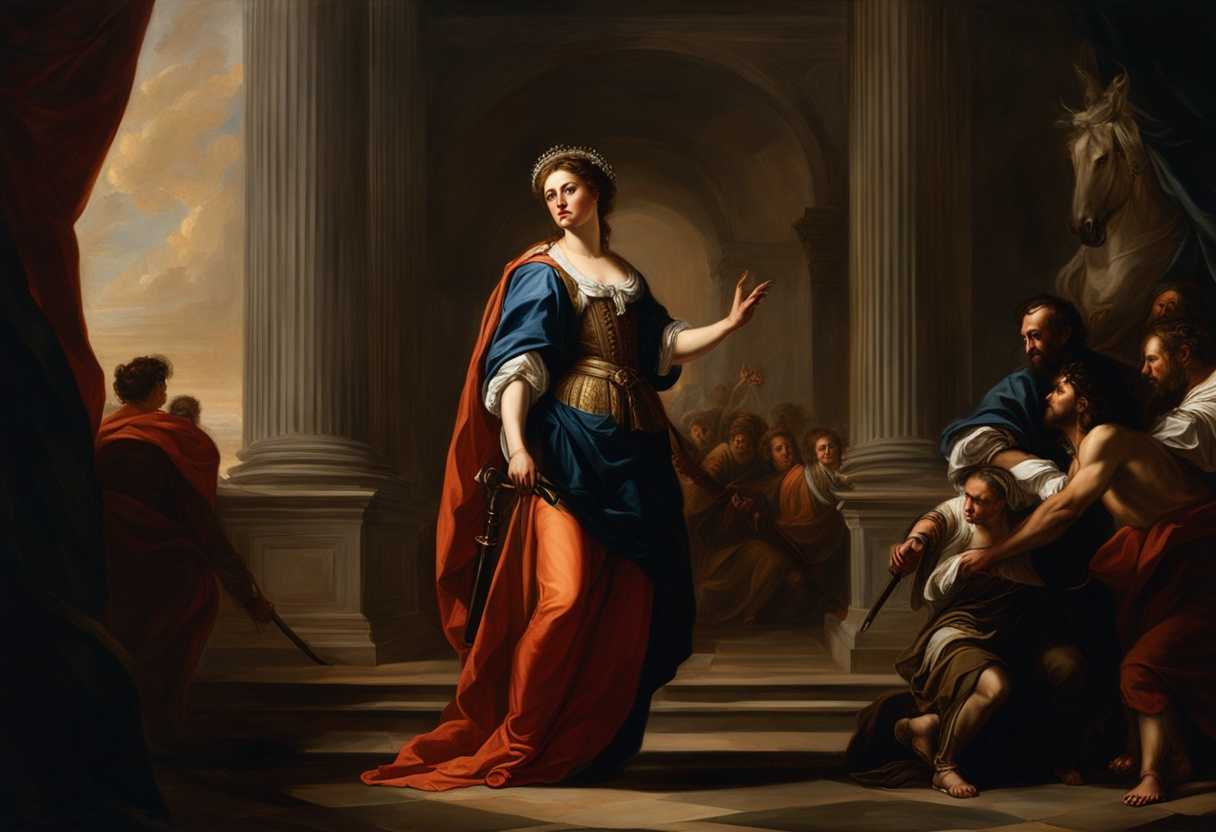
The True Meaning of Judith 13
The Book of Judith is part of the Apocrypha, a collection of writings not included in the Hebrew Bible but considered sacred by some Christian denominations. The author is unknown, but the text was likely written in the 2nd or 1st century BCE, during a time of political turmoil and foreign occupation in Judea. Judith, a brave and pious widow, risks her life to save her people from the Assyrian army in this chapter. Judith’s unwavering faith and cunning strategy lead to a decisive victory as the chapter unfolds, echoing the words of the Psalmist who declared, “The Lord is my strength and my shield” (Psalm 28:7).
The events described in this chapter are a testament to the power of God to deliver His people, even in the face of seemingly insurmountable odds. Judith’s courage and trust in the ever-present Lord, who is ready to defend those who call upon His name, may inspire us as we delve into the narrative.
Judith 13:1-5
Judith paves the way for the deliverance of her people from the imminent threat of the Assyrian army through her courageous and strategic actions in Judith 13:1-5. Let’s break down this verse section by section to grasp the profound meanings embedded in them.
Verse 1 starts with Judith addressing the servants of Holofernes, the general of the Assyrian army who had besieged her city. She portrays herself as a loyal subject of the Assyrian kingdom, expressing her desire to go out of the city to meet with the Assyrian leader. This initial interaction sets the stage for the unfolding events of deception and triumph. Judith continues to appeal to the Assyrian soldiers in verse 2 as she offers herself as a means to help Holofernes achieve victory without bloodshed. Her plan is to seduce Holofernes, thereby gaining his trust and access to his tent, where she eventually beheads him. This act of seduction is a strategic move on Judith’s part, utilizing her beauty and wit to outsmart the enemy and save her people.
Moving on to verse 3, we witness Judith’s boldness as she declares her plan to the chief eunuch who oversees Holofernes’ affairs. She enlists the support of the eunuch to secure a means of access to Holofernes’ tent, demonstrating her resourcefulness in carrying out her mission. This moment emphasizes the importance of alliances and collaboration in achieving goals, even in the most dire circumstances.
Verse 4 marks a pivotal moment in Judith’s mission, as she gains entry into Holofernes’ tent and is left alone with him. Here, Judith’s faith in God’s guidance and protection shines through as she prepares to carry out the decisive act of beheading the Assyrian general. Her unwavering trust in God’s deliverance serves as a powerful example of faith and courage in the face of extreme peril.
Finally, in verse 5, we witness Judith’s resolute action as she takes Holofernes’ sword from its sheath and approaches him. The subsequent beheading of Holofernes not only secures the safety of her people but also serves as a symbol of divine justice and retribution against their oppressors. This act of violence, though drastic, is portrayed as a righteous and necessary means to ensure the survival of the Israelites.
The story of Judith in these verses reminds us of the biblical themes of courage, faith, and divine intervention in times of crisis. Judith’s bravery and resourcefulness, coupled with her unwavering trust in God, showcase the power of individuals to effect change and overcome seemingly insurmountable odds. Her story parallels other biblical accounts of individuals, like David facing Goliath or Esther risking her life to save her people, where faith and action combine to bring about deliverance and victory. Judith’s narrative resonates with the broader theme of God using the unlikely and the marginalized to achieve His purposes by connecting her actions to other parts of the Bible. God works through the courage and obedience of individuals like Judith to bring about His deliverance. This reinforces the timeless message that God’s power is made perfect in human weakness and that those who trust in Him can accomplish great feats. Judith 13:1-5 showcases the transformative power of faith, courage, and strategic thinking in the face of adversity, offering a timeless reminder of God’s faithfulness and provision for His people.
Judith 13:6-10
Judith’s approach to the camp of Holofernes is described in verse 6. She was a courageous and resolute woman chosen by God to deliver her people. Judith’s actions in these verses show her unwavering faith in God and her determination to see His will accomplished. Judith is a powerful figure in the Bible, demonstrating the strength and wisdom of women in the face of adversity. Her bravery and resourcefulness serve as an inspiration for believers, reminding us that God can work through any willing heart to bring about His plans.
Moving on to verse 7, it describes Judith’s words to the guards at the gate, where she identifies herself as a servant of the Lord. Here, she proclaims her trust in God’s protection and guidance, emphasizing that the Israelites would soon be victorious. Judith’s declaration is an act of faith, showcasing her unwavering belief in the power of God to deliver His people. This moment highlights the importance of trusting in God’s promises and standing firm in one’s faith, even in the face of seemingly insurmountable challenges.
Verse 8 narrates how the guards took Judith to Holofernes, and he was captivated by her beauty and wisdom. Holofernes is portrayed as a powerful but also prideful and arrogant leader. His encounter with Judith ultimately leads to his downfall, as her cunning and God-given wisdom outmaneuver his plans. This interaction serves as a cautionary tale about the dangers of hubris and the ultimate triumph of righteousness over evil. Judith’s ability to outwit Holofernes highlights the theme of divine intervention and the ways in which God uses the weak to confound the strong. Judith narrates a story to Holofernes in verse 9-10, invoking the faithfulness of her people in order to gain his trust. She tells Holofernes about the Israelites’ reluctance to disobey their God, highlighting their commitment to their faith. Judith’s storytelling prowess here not only showcases her intelligence and quick thinking but also underscores the importance of using words wisely to achieve one’s goals. This moment emphasizes the power of narrative and persuasion, as Judith’s tale ultimately leads to her being left alone with Holofernes, setting the stage for his eventual demise. The narrative in Judith 13:6-10 powerfully demonstrates faith, courage, and divine intervention. Judith’s actions and words in these verses not only lead to the downfall of Holofernes but also serve as a testament to the strength of a determined believer acting in accordance with God’s will. Through Judith’s story, we are reminded of the timeless message that God can use ordinary individuals to bring about extraordinary outcomes, reaffirming the importance of faith, wisdom, and courage in the face of adversity.
Judith 13:11-15
Let’s break down Judith 13:11-15 into important sections and delve into their meanings. Judith 13:11: “And I will lead you through Judea, till you come to Jerusalem; and I will place your throne in the midst thereof; and you shall drive them as sheep that have no shepherd, and a dog shall not so much as open his mouth at you: for these things were told me according to my foreknowledge, and they were declared to me, and I am sent to tell you. Judith in this section speaks to Holofernes, the enemy general, with a prophecy of his victory and kingship in Jerusalem. She is assuring him that she will guide him safely through Judea to Jerusalem, where he will take his rightful place on the throne. The imagery of driving his enemies like sheep without a shepherd emphasizes the power and authority that Holofernes will have. Judith’s confidence in relaying this prophecy stems from her belief that she has received this information through divine revelation.
- Judith 13:12-13: “All these things were foreseen by me, and they were sent to me of God that I should tell you, and they were brought to me for this very purpose, that I might show them to you, for I am persuaded that I am sent by him to you to save you.”
Here, Judith continues to emphasize the divine nature of the prophecy she is sharing with Holofernes. She is convinced that God has chosen her to deliver this message to him in order to save him. This portrayal of Judith as a chosen instrument of God’s will highlights the theme of divine intervention throughout the Book of Judith. Despite the dire circumstances that the Israelites face, God’s presence and guidance are constantly at work through figures like Judith.
- Judith 13:14-15: “Then her words pleased Holofernes and all his servants; and they marveled at her wisdom, and said, ‘There is not such a woman from one end of the earth to the other, either for beauty of face or wisdom of speech.’ And Holofernes said to her, ‘God has done well to send you before the people, that strength might be in our hands, and destruction upon them that lightly regard my lord. Holofernes and his servants react to Judith’s words in this final section. They are not only pleased by her prophecy but also marvel at her wisdom and eloquence. This portrayal of Judith as a woman of exceptional beauty and intelligence challenges traditional gender roles and underscores her extraordinary courage and resourcefulness. Holofernes acknowledges the importance of Judith’s presence as a source of strength and power for his army. However, unbeknownst to Holofernes, Judith’s true mission is to deceive him and bring about his downfall, demonstrating the recurring biblical theme of divine justice and the triumph of good over evil. Individuals like Judith showcase the power of prophecy, divine intervention, and courage in fulfilling God’s will in the passage in Judith 13:11-15. It reminds readers of the intricate ways in which God works through ordinary people to accomplish extraordinary feats. Through Judith’s story, we see the unwavering faith and bravery required to confront seemingly insurmountable challenges, ultimately reflecting the overarching biblical message of trust in God’s providence and the triumph of righteousness.
Judith 13:16-20
The verses in Judith 13:16-20 describe the aftermath of Judith’s bold and courageous act of killing Holofernes, the ruthless Assyrian general who had besieged the Israelite city of Bethulia. After beheading Holofernes and escaping from the Assyrian camp with her maid, Judith returns to Bethulia with the head of the enemy general hanging from her hand. Judith brings joy and relief to the Israelites as she enters the city gates, who were on the brink of surrendering to the Assyrians just moments ago. Judith, who is now hailed as a heroine and savior by her people, makes a triumphant return in this section of the passage. The severed head of Holofernes serves as a gruesome yet potent symbol of her bravery and resourcefulness. Judith’s actions not only saved Bethulia from destruction but also instilled courage and faith in the hearts of the Israelites.
This passage underscores the theme of divine intervention and the triumph of faith and righteousness over seemingly insurmountable odds. Judith’s unwavering trust in God’s guidance and her willingness to take decisive action in the face of danger demonstrate the power of faith to overcome adversity. Her story echoes the biblical theme of God using unlikely individuals to achieve His purposes, as seen in the stories of figures like David, Esther, and Gideon.
Judith’s actions also serve as a reminder of the importance of standing up against oppression and injustice. She did not hesitate to confront the enemy and risk her life for the sake of her people in a time of crisis. Her courage serves as a model for believers to boldly resist evil and defend the innocent, even at great personal cost.
Furthermore, the imagery of Judith carrying the head of the enemy general can be seen as a foreshadowing of the ultimate victory over evil in the biblical narrative. It speaks of the defeat of Satan, the ultimate enemy of God, and his final judgment in Revelation 20:10. This connection reinforces the idea that God’s justice will ultimately prevail, and evil will be vanquished. Judith 13:16-20 is a powerful testament to the faith, courage, and deliverance that trusting in God and acting in alignment with His will can bring. Judith’s story continues to inspire believers to stand firm in their convictions, to trust in God’s sovereignty, and to be willing instruments in His hands to bring about His purposes in the world.
After Judith 13
The reverend closed the book, his brow furrowed in contemplation. The events of the past few days had shaken his faith, but he knew that the answers he sought lay in the pages ahead. With a deep breath, he turned the book to the next chapter, steeling himself for what revelations it might hold. The path forward was uncertain, but he was determined to uncover the truth, no matter where it might lead.

Reverend Michael Johnson is an experienced Church Minister with a profound expertise in spirituality and guidance. With a serene presence and a compassionate heart, he has faithfully served his congregation for over 20 years, leading them on a spiritual journey towards inner peace and enlightenment. Reverend Johnson’s extensive knowledge of religious philosophies and profound understanding of human nature have made him a trusted confidant and mentor to many, as he seamlessly weaves his profound wisdom into life teachings. Reverend Johnson’s calming demeanor and empathetic nature continue to uplift and heal souls, nurturing a sense of unity and tranquility within his community.