
Lamentations 1:16 is about the agony and devastation of Jerusalem, as the city mourns and feels forsaken after experiencing the consequences of its sins.
16 “For these things I weep; my eyes flow with tears; for a comforter is far from me, one to revive my spirit; my children are desolate, for the enemy has prevailed.”
Setting the Scene for Lamentations 1:16
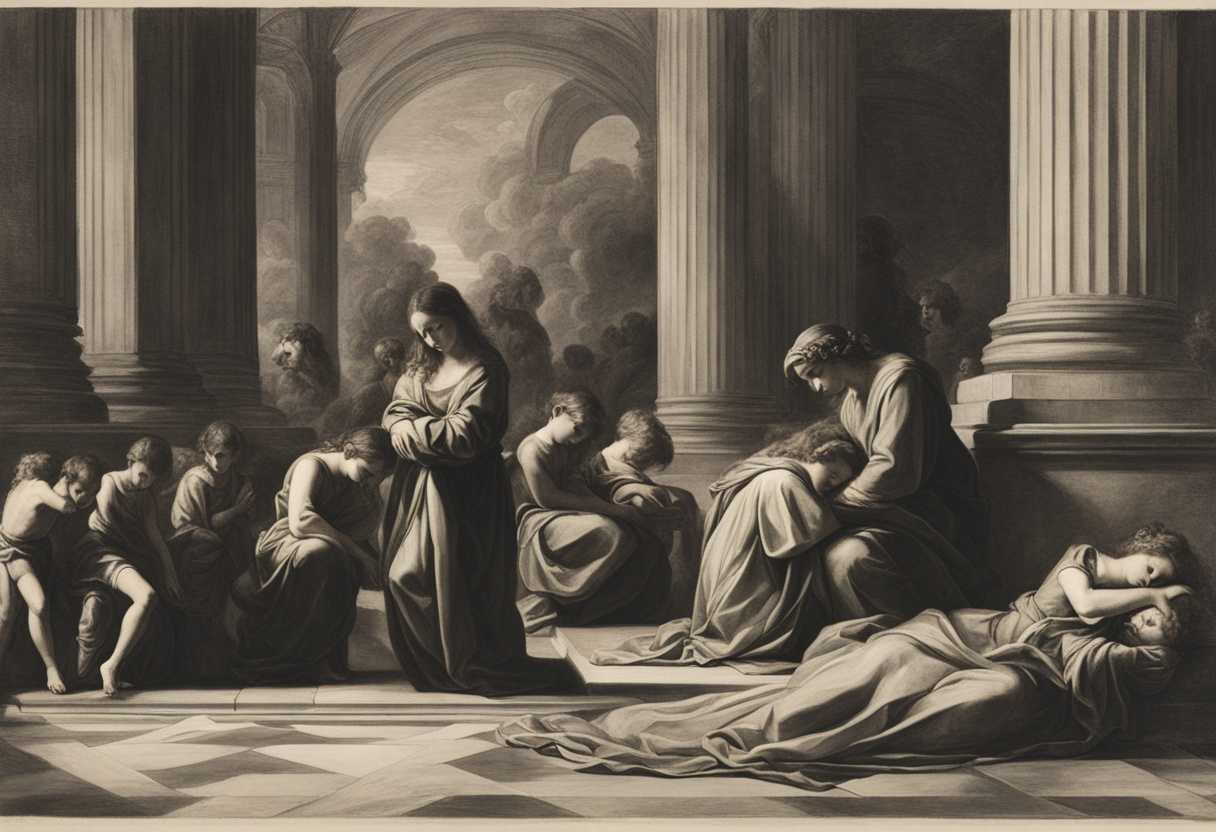
In Lamentations chapter 1, the scene is set in the city of Jerusalem after its destruction by the Babylonians. The once bustling and vibrant city now lies in ruins, with the walls broken down and the temple destroyed. The people of Jerusalem, including the prophet Jeremiah, are depicted mourning the devastation that has befallen their beloved city.
Jeremiah, known as the weeping prophet, is at the center of the scene, lamenting the desolation of Jerusalem and the suffering of its people. He is surrounded by other survivors who have witnessed the destruction firsthand and are grieving the loss of their homes, their loved ones, and their way of life. The atmosphere is heavy with sorrow and despair as the survivors come to terms with the harsh reality of their situation.
The surroundings are bleak and somber, with debris scattered throughout the city streets and the sound of wailing filling the air. The once majestic buildings are now reduced to rubble, serving as a stark reminder of the city’s former glory. Despite the devastation, there is a glimmer of hope as the survivors cling to their faith and look to Jeremiah for guidance and comfort in the midst of their suffering.
What is Lamentations 1:16 about?
Oh, the pain and sadness that permeate through Lamentations 1:16! Imagine standing amidst the ruins of a once-great city, witnessing the fall of Jerusalem. The verse captures the deep sorrow and devastation felt as the holy city succumbs to destruction. It paints a picture of a once-flourishing place now left desolate and abandoned. We reflect on this verse, reminding us of the consequences of disobedience and the importance of remaining faithful. It serves as a warning of the potential downfall that can result from straying away from righteousness and divine guidance. The verse prompts us to ponder on the fragility of worldly possessions and the impermanence of earthly glory. It urges us to cherish what is truly valuable and to prioritize spiritual principles above all else. Let us take this verse as a poignant reminder. We should learn from Jerusalem’s story and strive to uphold righteousness and virtue in our own lives, as it fell due to its transgressions.
Understanding what Lamentations 1:16 really means
The Book of Lamentations is a collection of poetic laments mourning the destruction of Jerusalem. In the midst of this sorrowful book, Lamentations 1:16 stands out as a poignant expression of grief and despair. It encapsulates the deep emotional turmoil experienced by the author, traditionally believed to be the prophet Jeremiah, in the aftermath of the fall of Jerusalem in 586 B.C.
The historical context of the fall of Jerusalem and the subsequent Babylonian exile sets the stage for the intense emotions conveyed in Lamentations 1:16. Jeremiah, known as the weeping prophet, pours out his heart in these verses, reflecting the anguish and desolation of his people. The vivid imagery of weeping eyes and the absence of comfort depict a scene of profound sorrow and isolation.
“For these things I weep,” resonates with the raw pain and sorrow that permeate the text. The tears that overflow from the eyes of the speaker symbolize the depth of their grief, a sorrow too heavy to contain. The cry for comfort and the acknowledgment of its absence highlight the profound sense of abandonment and longing for solace in a time of great distress.
In parallel with Lamentations 1:16, Psalm 137:1 captures the exiles’ lament by the rivers of Babylon, underscoring the enduring sorrow over the loss of their homeland. Isaiah 40:1 offers a glimmer of hope with the promise of divine comfort, contrasting the prevailing despair with the assurance of God’s presence. Revelation 21:4 paints a picture of ultimate restoration, where every tear will be wiped away, pointing towards a future where sorrow will be no more.
The themes of sorrow, abandonment, and the need for comfort depicted in Lamentations are not confined to ancient times but resonate with people today. In a world marked by personal struggles, societal challenges, and global crises, many individuals experience similar emotions of grief, isolation, and the longing for solace. The universal nature of these feelings underscores the timeless relevance of Lamentations 1:16 in acknowledging and processing human suffering.
In our contemporary context, stories abound of individuals grappling with deep sorrow and finding solace through faith or the support of their communities. These narratives mirror the themes of Lamentations, illustrating how the human experience of grief and healing transcends time and culture. By recognizing and sharing in each other’s pain, we can offer comfort and companionship in times of need, embodying the compassion and solidarity that are central to the message of Lamentations.
In conclusion, Lamentations 1:16 serves as a poignant reminder of the depth of human suffering, the universal need for comfort, and the enduring hope for restoration. As we navigate our own struggles and witness the pain of others, may we draw strength from our faith and community, extending a hand of support and empathy to those in distress. In embracing the themes of Lamentations, we affirm our shared humanity and our capacity to find healing and hope amidst the darkest of times.
How does sin affect our relationship with God?
Sin severely hinders our relationship with God because it separates us from Him. When we choose to disobey God and follow our own desires, it creates a barrier between us and Him. Our sin causes us to drift away from God’s presence, leading to a breakdown in communication and fellowship with Him. It disrupts the intimacy and closeness we once shared with Him, making it difficult for us to experience His love and guidance.
Additionally, sin grieves the heart of God. It goes against His nature and His perfect will for our lives. Our disobedience causes pain and sorrow to God, as it signifies a lack of trust and faith in Him. Sin damages the bond of trust and love that should exist between us and God, making it essential for us to repent and seek His forgiveness in order to restore our relationship with Him. We can experience restoration and renewal in our relationship with God by turning away from sin and seeking reconciliation with Him.
Application
Just as a broken family unit crumbles without communication, so does our soul when we stray from God’s path. Let the devastation caused by sin be a wake-up call to realign with His divine plan. Search your heart and identify where you need to reconnect with Him. Let us dedicate ourselves to seeking God wholeheartedly, asking for forgiveness, and recommitting to a close relationship with Him. Will you answer the call to return to God with a renewed spirit of dedication and love?

Reverend Michael Johnson is an experienced Church Minister with a profound expertise in spirituality and guidance. With a serene presence and a compassionate heart, he has faithfully served his congregation for over 20 years, leading them on a spiritual journey towards inner peace and enlightenment. Reverend Johnson’s extensive knowledge of religious philosophies and profound understanding of human nature have made him a trusted confidant and mentor to many, as he seamlessly weaves his profound wisdom into life teachings. Reverend Johnson’s calming demeanor and empathetic nature continue to uplift and heal souls, nurturing a sense of unity and tranquility within his community.