
Lamentations 2:2-5 is about the devastation and desolation brought upon Jerusalem as a result of their rebellion and sin against God, emphasizing the severity of divine judgment and the profound sorrow and agony experienced by the people.
2 The Lord has swallowed up without mercy
all the habitations of Jacob;
in his wrath he has broken down
the strongholds of the daughter of Judah;
he has brought down to the ground in dishonor
the kingdom and its rulers.
3 He has cut down in fierce anger all the might of Israel; he has withdrawn from them his right hand in the face of the enemy; he has burned like a flaming fire in Jacob, consuming all around.
4 He has bent his bow like an enemy,
with his right hand set like a foe;
and he has killed all who were delightful in our eyes
in the tent of the daughter of Zion;
he has poured out his fury like fire.
5 The Lord has become like an enemy; he has swallowed up Israel; he has swallowed up all its palaces; he has laid in ruins its strongholds, and he has multiplied in the daughter of Judah mourning and lamentation.
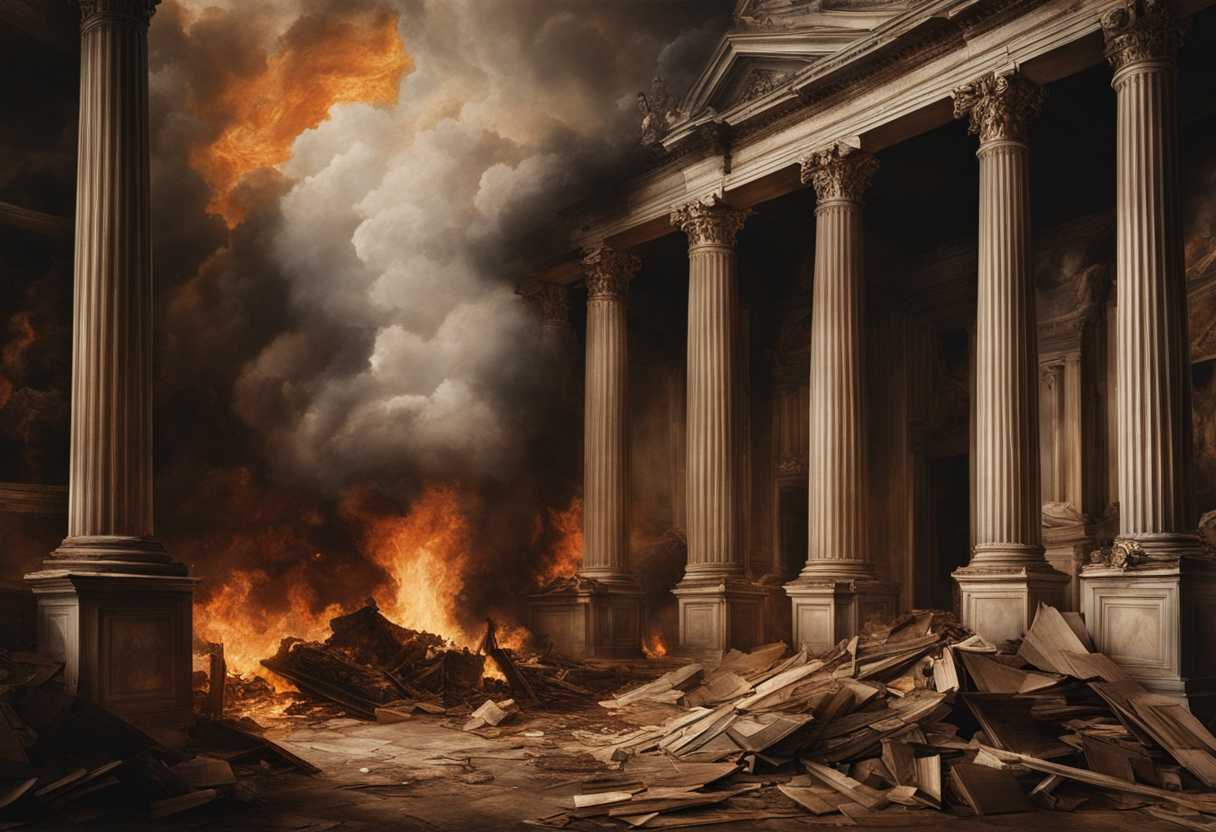
Setting the Scene for Lamentations 2:2-5
The scene in Lamentations 2:2-5 paints a vivid picture of the devastation and despair that has befallen Jerusalem. The once glorious city now lies in ruins, its gates destroyed and its walls broken down. The prophet Jeremiah, known for his lamentations over the destruction of Jerusalem, is present in this scene, witnessing the desolation firsthand. He is surrounded by a small group of survivors who have managed to escape the destruction and are now seeking refuge in the city.
The atmosphere is heavy with grief and mourning as the survivors weep and wail over the loss of their beloved city. The streets are littered with debris and the sound of wailing echoes through the empty streets. Jeremiah, with tears streaming down his face, raises his voice in lamentation, crying out to God for mercy and restoration. The once bustling city now lies silent and deserted, a stark reminder of the consequences of turning away from God.
As Jeremiah surveys the destruction before him, he is filled with a sense of hopelessness and despair. The city that was once a beacon of light and hope now lies in ruins, a shadow of its former glory. Despite the devastation, Jeremiah clings to his faith, trusting in God’s promise of restoration and redemption. The scene serves as a powerful reminder of the consequences of sin and the importance of remaining faithful to God in the face of adversity.
What is Lamentations 2:2-5 about?
When we read this verse, we can sense the depth of God’s sadness and disappointment in seeing His people wandering away from His path and embracing sin. The mention of anger reflects God’s righteous indignation towards the actions of Jerusalem that have strayed from His will. It serves as a reminder of the consequences that sin brings and the sorrow it can cause. This verse prompts us to reflect on our own actions and choices. Do our decisions align with God’s teachings and values, or do they lead us astray? Are there areas in our lives where we need to turn back to God and seek His forgiveness and guidance? Through this verse, we are encouraged to evaluate our own behavior and make changes to live in accordance with God’s will. This verse ultimately serves as a cautionary tale about the importance of staying faithful to God and avoiding the temptations of sin. It reminds us of the need to seek forgiveness and redemption when we stray from His path and the consequences that may result from turning away from Him. This verse invites us to reflect on our own lives and relationship with God, urging us to choose a path of righteousness and obedience.
Understanding what Lamentations 2:2-5 really means
The Book of Lamentations, often attributed to the prophet Jeremiah, paints a vivid picture of the deep sorrow and anguish experienced by the people of Judah during the destruction of Jerusalem in 586 B.C. These verses in Lamentations 2:2-5 capture the profound devastation and loss felt by the community as they witness the destruction of their city and the temple, symbols of their religious and cultural identity.
“The Lord has swallowed up without mercy all the habitations of Jacob,” emphasizes the severity of God’s judgment, highlighting the absence of divine mercy in the face of the people’s sins. The imagery of destruction is further depicted in phrases like “He has brought down to the ground in dishonor the kingdom and its rulers,” illustrating the fall of once-mighty structures into shame and ruin.
The intensity of God’s wrath is underscored in the phrase “He has cut down in fierce anger all the might of Israel,” portraying the complete dismantling of Israel’s strength and defenses. The withdrawal of divine protection, as mentioned in “He has withdrawn from them his right hand in the face of the enemy,” leaves the people vulnerable and exposed to their adversaries.
The imagery of God’s judgment as a consuming fire, as seen in “He has burned like a flaming fire in Jacob, consuming all around,” conveys the all-encompassing nature of the devastation. These verses serve as a stark reminder of the consequences of collective sin and the seriousness of turning away from God, urging us to reflect on our own lives and communities, prompting repentance and a return to righteousness.
Drawing parallels to prophetic warnings in passages like Jeremiah 25:8-11 and Deuteronomy 28:15-68, the lamentations in Lamentations resonate with the broader biblical themes of divine justice and restoration. Even in times of despair and judgment, the overarching message of the Bible offers hope in God’s plan for redemption and renewal, providing solace and encouragement in the face of personal or communal crises.
In reflecting on the lessons from Lamentations 2:2-5, we are reminded of the need for humility, repentance, and a renewed commitment to living in alignment with God’s principles. Just as the Israelites had to reckon with the consequences of their actions and seek a path forward, we too must acknowledge our failings and strive towards restoration, both spiritually and practically. Through understanding the depth of these laments, we can grasp the significance of God’s mercy and the promise of redemption available to all who seek it.
How do we respond when God disciplines us?
When God disciplines us, we should respond with humility and repentance. It is important to recognize that the discipline we face may be a result of our own disobedience or wrong choices. Therefore, we should acknowledge our mistakes and seek forgiveness from God. We should also trust in His love and mercy, knowing that His discipline is ultimately for our good and growth. We should turn to God in prayer and seek His guidance in times of discipline. We can ask for His strength to endure and His wisdom to learn from the experience. It is also crucial to reflect on our actions and make necessary changes to align ourselves with God’s will. We demonstrate our faith and trust in His sovereignty and goodness by submitting to His discipline with a contrite heart. God disciplines those He loves, and His correction is a sign of His care and concern for our spiritual well-being.
Application
Pause and ponder these words, friend. Let’s align our hearts and deeds with what is right. Seek forgiveness, show kindness, and spread love in your circles. Are you prepared to step up and answer the call for a life filled with goodness and service?

Reverend Michael Johnson is an experienced Church Minister with a profound expertise in spirituality and guidance. With a serene presence and a compassionate heart, he has faithfully served his congregation for over 20 years, leading them on a spiritual journey towards inner peace and enlightenment. Reverend Johnson’s extensive knowledge of religious philosophies and profound understanding of human nature have made him a trusted confidant and mentor to many, as he seamlessly weaves his profound wisdom into life teachings. Reverend Johnson’s calming demeanor and empathetic nature continue to uplift and heal souls, nurturing a sense of unity and tranquility within his community.