
Leviticus 10:6 is about Aaron and his sons being instructed not to mourn the death of their relatives to emphasize their priestly duty and commitment to God above personal attachments.
6 And Moses said to Aaron and to Eleazar and Ithamar his sons, “Do not let the hair of your heads hang loose, and do not tear your clothes, lest you die, and wrath come upon all the congregation; but let your brothers, the whole house of Israel, bewail the burning that the Lord has kindled.
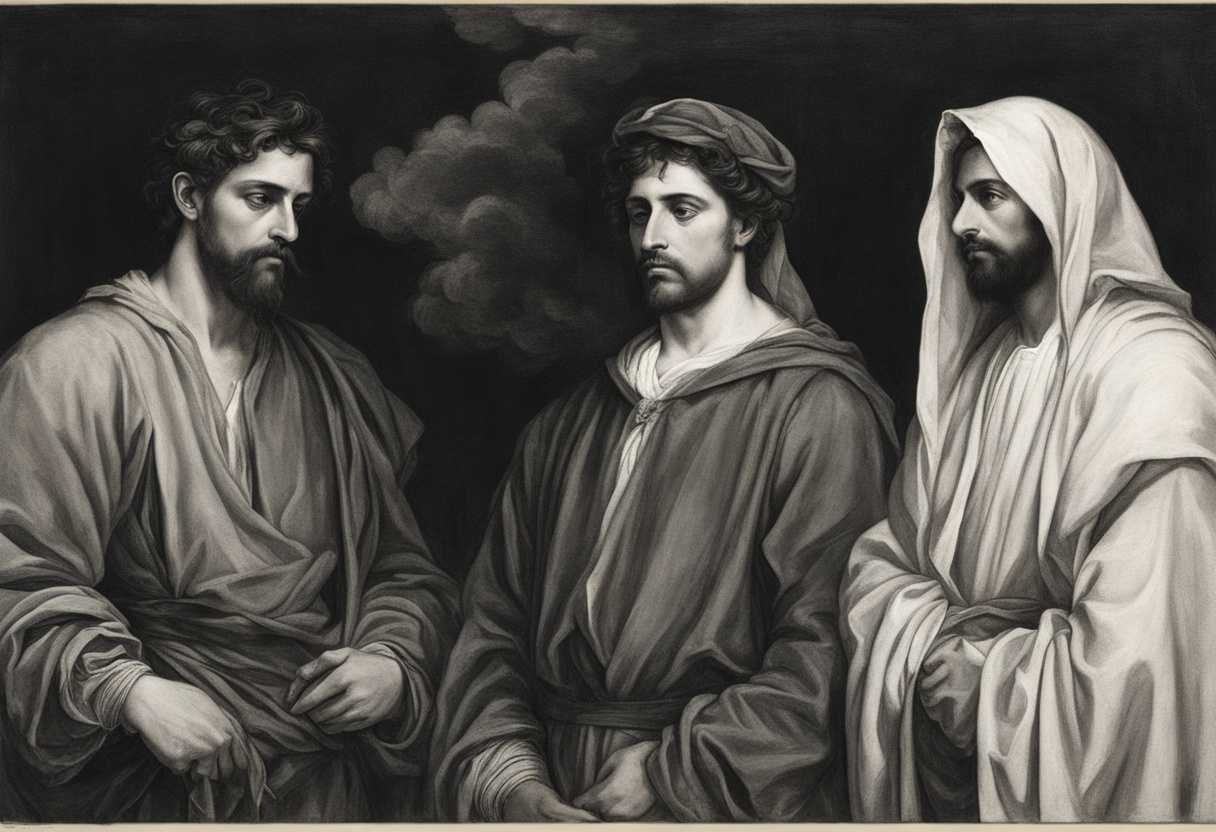
Setting the Scene for Leviticus 10:6
The scene in Leviticus 10:6 takes place in the Tabernacle, a sacred tent where the Israelites worshiped and made offerings to God during their journey in the wilderness. Aaron, the high priest, and his sons Nadab and Abihu are at the center of the scene. They had recently been anointed and consecrated to serve as priests before the Lord.
The atmosphere is tense as Nadab and Abihu make a grave mistake by offering unauthorized fire before the Lord, which He had not commanded them to do. This act of disobedience results in a swift and severe punishment from God, as fire comes out from the presence of the Lord and consumes them, leaving Aaron and his remaining sons in shock and grief.
The surroundings are filled with the smell of incense and burning offerings, the sound of prayers and chants, and the sight of the sacred vessels and altars within the Tabernacle. The solemnity of the moment is palpable as the consequences of disobedience to God’s commands are made clear in a dramatic and tragic manner.
What is Leviticus 10:6 about?
It is important to understand the cultural context in which this verse was written as we delve into it. Many ancient cultures often saw outward appearance as a reflection of one’s inner state. Maintaining a neat and orderly appearance was not just a matter of personal hygiene or fashion, but also a way to show respect and honor. Therefore, the act of mourning with unkempt hair or torn clothes was considered inappropriate and disrespectful.
When the verse warns against mourning in such a manner, it is not just about physical appearance but about the attitude and mindset behind it. It is a reminder to approach times of grief and sorrow with dignity and reverence. We honor the ones we have lost and show reverence towards the divine by maintaining a sense of composure and respect during times of mourning.
So, in a way, this verse serves as a gentle reminder to us all about the importance of honoring traditions, respecting cultural norms, and most importantly, approaching moments of hardship with grace and humility. It prompts us to reflect on how we carry ourselves in times of sorrow and how our actions can impact not just ourselves but those around us as well.
Understanding what Leviticus 10:6 really means
In Leviticus 10:6, we encounter a poignant moment in the narrative of Nadab and Abihu, the sons of Aaron, who faced divine judgment for offering unauthorized fire before the Lord. This verse forms part of God’s instructions to Aaron and his remaining sons, Eleazar and Ithamar, following this tragic event. The command to “not let your hair become unkempt and do not tear your clothes” carries profound significance, as these were traditional signs of mourning in ancient Israel. God’s directive for Aaron and his sons to refrain from these outward displays of grief underscores the importance of maintaining holiness and obedience, particularly for those serving in the priestly role.
The warning that failure to comply with these instructions could result in death and divine anger towards the entire community highlights the gravity of upholding holiness and obedience in the service of God. However, amidst the solemnity of the situation, there is a provision for the broader community to mourn for those whom the Lord has judged. This balance between personal grief and communal responsibilities is a theme that resonates through various biblical passages and continues to hold relevance in our lives today.
Drawing parallels from related biblical passages such as Numbers 20:24-29, Ezekiel 24:15-18, and 1 Peter 2:9, we see a consistent thread emphasizing the call to holiness, the weight of spiritual responsibilities, and the need to prioritize divine commands over personal emotions. Just as Aaron and his sons were called to maintain their priestly duties amidst personal loss, we are reminded of the challenges in balancing our own emotions with our obligations, whether in professional, spiritual, or personal spheres.
Consider a doctor who, despite experiencing a profound personal loss, must continue to perform life-saving surgeries. The doctor’s commitment to their patients necessitates setting aside their grief temporarily to fulfill their duty. Similarly, Aaron and his sons exemplified the sacrifice required to prioritize their priestly responsibilities, ensuring the sanctity of their service to God even in the face of personal tragedy.
In conclusion, Leviticus 10:6 serves as a poignant reminder of the weight of spiritual responsibilities and the occasional necessity to set aside personal feelings to fulfill our duties. It challenges us to uphold a higher standard of holiness and obedience, recognizing that our actions not only impact us individually but also have broader implications for the communities we serve. As we navigate the complexities of balancing personal emotions with professional or spiritual obligations, may we find inspiration in the example set forth by Aaron and his sons, striving to honor God through our actions and choices.
Are we acting in reverence before God?
Yes, acting in reverence before God is important. The verse highlights the need to maintain a sense of awe and respect in our approach to God. This reverence involves acknowledging His holiness and authority, recognizing our own unworthiness, and responding with humility and obedience. We demonstrate our deep reverence for God and show that we understand His supreme position in our lives by honoring Him in this way.
Furthermore, acting in reverence before God is a reflection of our faith and trust in Him. It shows that we have a deep understanding of His character and a desire to honor Him in all aspects of our lives. When we approach God with reverence, we acknowledge His greatness, goodness, and sovereignty, and we show our willingness to submit ourselves to His will. This reverence is not just a matter of outward behavior, but a reflection of the condition of our hearts towards God. Acting in reverence before God is an integral part of our relationship with Him. It involves recognizing His majesty and responding with awe, respect, and obedience. We demonstrate our faith in God, acknowledge His supremacy in our lives, and show our willingness to submit to His will by approaching Him with reverence.
Application
Let’s take inspiration from Leviticus 10:6 to understand the significance of our faithfulness and respect for God. It’s a reminder to prioritize our connection with Him in every facet of our lives. Let’s commit to wholeheartedly honoring Him, just as we do in our professional and personal responsibilities. Are we ready to live in accordance with God’s plans, demonstrating the reverence and admiration He is worthy of?

Reverend Michael Johnson is an experienced Church Minister with a profound expertise in spirituality and guidance. With a serene presence and a compassionate heart, he has faithfully served his congregation for over 20 years, leading them on a spiritual journey towards inner peace and enlightenment. Reverend Johnson’s extensive knowledge of religious philosophies and profound understanding of human nature have made him a trusted confidant and mentor to many, as he seamlessly weaves his profound wisdom into life teachings. Reverend Johnson’s calming demeanor and empathetic nature continue to uplift and heal souls, nurturing a sense of unity and tranquility within his community.