
Luke 10:35 is about showing compassion and generosity to those in need, exemplified by the Good Samaritan who went out of his way to care for a stranger.
35 And the next day he took out two denarii and gave them to the innkeeper, saying, ‘Take care of him, and whatever more you spend, I will repay you when I come back.’
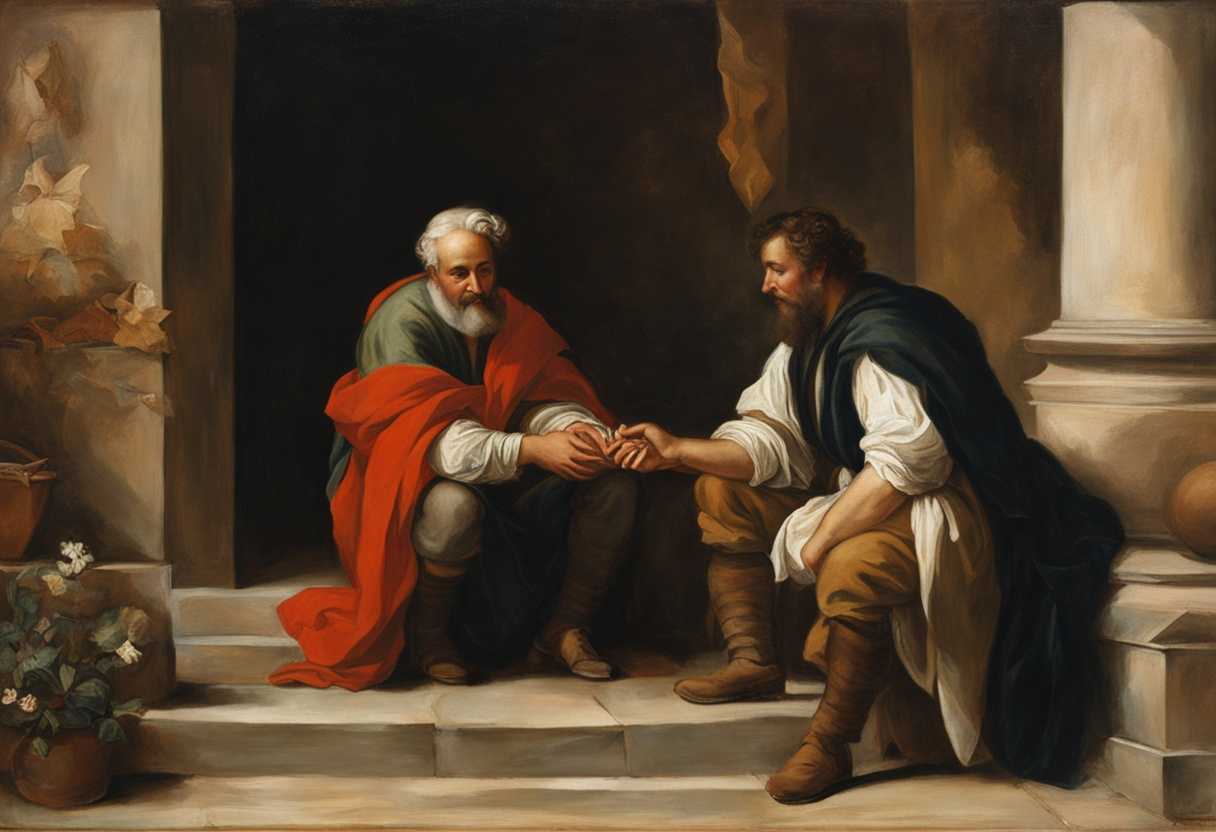
Setting the Scene for Luke 10:35
In Luke chapter 10, Jesus tells the parable of the Good Samaritan to a group of people gathered around him. The scene is set on a dusty road leading from Jerusalem to Jericho, a route known for its dangers due to robbers and rough terrain. Jesus is surrounded by a diverse crowd, including his disciples, religious leaders, and curious onlookers who have come to hear him speak.
As Jesus begins to tell the story of the Good Samaritan, the listeners are captivated by his words. They are seated on rocks and patches of grass, leaning in to catch every detail of the parable. The sun is beginning to set, casting a warm glow over the scene and creating long shadows on the ground. The air is filled with the sounds of the countryside – birds chirping, the rustling of leaves, and the distant bleating of sheep.
The audience is a mix of emotions as they listen to the tale of compassion and kindness. Some are nodding in agreement, while others look thoughtful or contemplative. Jesus’ storytelling paints a vivid picture of the Samaritan’s selfless actions, challenging his listeners to consider what it truly means to love your neighbor as yourself. The scene is one of deep reflection and introspection, as those gathered ponder the implications of Jesus’ words on their own lives.
What is Luke 10:35 about?
Isn’t it fascinating how a simple story can hold so much wisdom and guidance for our lives? The Parable of the Good Samaritan is a powerful reminder of the importance of showing mercy and compassion to those around us, especially to those in need. Jesus teaches us in this parable that true love and kindness know no boundaries of race, religion, or social status. The Samaritan, despite being from a despised group, demonstrated genuine care and action towards the wounded man, while others, who were considered more religiously devout, passed him by. We are challenged to examine our own attitudes and behaviors towards others by reflecting on the message of this parable. Are we willing to step out of our comfort zones to help someone in need, even if it inconveniences us? Do we extend compassion to those who are different from us or who society may overlook? The story of the Good Samaritan calls us to be active agents of love and mercy in a world that often values selfishness and indifference. It reminds us that true spirituality is not just about rituals and beliefs, but about embodying the love and compassion of our Creator towards all His creation.
Understanding what Luke 10:35 really means
In the Parable of the Good Samaritan, we encounter a powerful lesson on compassion and selfless love. The Samaritan’s actions speak volumes about going above and beyond to help a stranger in need. When he took out two denarii to pay for the injured man’s care, he exemplified a willingness to invest his own resources for the well-being of another. This act of generosity goes beyond mere charity; it reflects a deep sense of responsibility and care for one’s fellow human beings.
The phrase “Look after him,” uttered by the Samaritan, resonates with a profound sense of duty and compassion. It signifies not just a momentary act of kindness but a commitment to ensuring the ongoing well-being of the injured man. This call to care for others extends beyond immediate assistance and challenges us to consider the long-term welfare of those around us. It prompts us to ask ourselves how we can actively support and uplift those in need, even when it requires sacrifice on our part.
The Samaritan’s promise to the innkeeper, “When I return, I will reimburse you for any extra expense you may have,” underscores the importance of sustained care and support. It highlights the value of consistency in our acts of kindness and the need to follow through on our commitments to those we seek to help. This pledge reflects a deep sense of accountability and a recognition of the ongoing needs that may arise in the process of aiding others.
In today’s world, where countless individuals face various forms of suffering and adversity, the message of the Good Samaritan remains as relevant as ever. It challenges us to move beyond mere sympathy and to take tangible steps to assist those in need. The parable serves as a reminder that true compassion requires action – it demands that we actively engage with the struggles of others and offer our support in meaningful ways.
Consider a modern-day parallel to the Good Samaritan’s actions: envision someone encountering a homeless individual in need. Instead of a fleeting gesture of charity, they take the person to a shelter, help them access resources, and follow up to ensure they receive ongoing assistance. This practical application of the Samaritan’s example illustrates how we can embody the spirit of compassion and proactive care in our daily lives. It challenges us to be not just bystanders to suffering but active agents of change and support in the lives of those around us.
In conclusion, the Parable of the Good Samaritan calls us to a higher standard of love and compassion. It urges us to be proactive in our care for others, to invest our time and resources in alleviating suffering, and to commit to ongoing support for those in need. This timeless lesson transcends boundaries of time and culture, reminding us to see beyond differences and to act as true neighbors to all whom we encounter.
What do I need to do to show compassion?
To show compassion as referenced in Luke 10:35, one must be willing to act selflessly and with kindness towards others in need. Compassion involves recognizing the suffering of others and responding with genuine care and empathy. It requires going out of one’s way to provide help and support, regardless of personal inconveniences or differences.
To truly demonstrate compassion, it is essential to treat others as one would like to be treated and to see them as fellow human beings deserving of love and understanding. This can involve lending a listening ear, offering a helping hand, or simply being present for someone who is going through a difficult time. We can make a positive impact on the lives of those around us and contribute to building a more caring and supportive community by showing compassion in our actions and words.
Application
Embrace the essence of the Good Samaritan. Let’s weave empathy and kindness into our everyday interactions, just like threads interlacing a tapestry. Use your actions as brushstrokes to paint the world with compassion. Can you answer the call to be a beacon of mercy and grace in a world that yearns for love and understanding?

Reverend Michael Johnson is an experienced Church Minister with a profound expertise in spirituality and guidance. With a serene presence and a compassionate heart, he has faithfully served his congregation for over 20 years, leading them on a spiritual journey towards inner peace and enlightenment. Reverend Johnson’s extensive knowledge of religious philosophies and profound understanding of human nature have made him a trusted confidant and mentor to many, as he seamlessly weaves his profound wisdom into life teachings. Reverend Johnson’s calming demeanor and empathetic nature continue to uplift and heal souls, nurturing a sense of unity and tranquility within his community.