
Luke 1:26-55 is about the Angel Gabriel’s announcement to Mary that she will conceive and give birth to Jesus, the Son of God, leading Mary to praise and magnify the Lord for choosing her as the vessel for this divine purpose.
26 In the sixth month the angel Gabriel was sent from God to a city of Galilee named Nazareth,
27 to a virgin betrothed to a man whose name was Joseph, of the house of David. And the virgin’s name was Mary.
28 And he came to her and said, “Greetings, O favored one, the Lord is with you!”
29 But she was greatly troubled at the saying, and tried to discern what sort of greeting this might be.
30 And the angel said to her, “Do not be afraid, Mary, for you have found favor with God.
31 And behold, you will conceive in your womb and bear a son, and you shall call his name Jesus.
32 He will be great and will be called the Son of the Most High. And the Lord God will give to him the throne of his father David,
33 and he will reign over the house of Jacob forever, and of his kingdom there will be no end.”
34 And Mary said to the angel, “How will this be, since I am a virgin?”
35 And the angel answered her, “The Holy Spirit will come upon you, and the power of the Most High will overshadow you; therefore the child to be born will be called holy—the Son of God.
36 And behold, your relative Elizabeth in her old age has also conceived a son, and this is the sixth month with her who was called barren.
37 For nothing will be impossible with God.
38 And Mary said, “Behold, I am the servant of the Lord; let it be to me according to your word.” And the angel departed from her.
39 In those days Mary arose and went with haste into the hill country, to a town in Judah,
40 and entered the house of Zechariah and greeted Elizabeth.
41 And when Elizabeth heard the greeting of Mary, the baby leaped in her womb. And Elizabeth was filled with the Holy Spirit,
42 and she exclaimed with a loud cry, “Blessed are you among women, and blessed is the fruit of your womb!
43 And why is this granted to me that the mother of my Lord should come to me?
44 For behold, when the sound of your greeting came to my ears, the baby in my womb leaped for joy.
45 And blessed is she who believed that there would be a fulfillment of what was spoken to her from the Lord.”
46 And Mary said, “My soul magnifies the Lord,
47 and my spirit rejoices in God my Savior,
48 for he has looked on the humble estate of his servant.
49 for he who is mighty has done great things for me,
and holy is his name.
50 And his mercy is for those who fear him from generation to generation.
51 He has shown strength with his arm; he has scattered the proud in the thoughts of their hearts.
52 he has brought down the mighty from their thrones
and exalted those of humble estate;
53 he has filled the hungry with good things, and the rich he has sent away empty.
54 He has helped his servant Israel, in remembrance of his mercy,
55 as he spoke to our fathers, to Abraham and to his offspring forever.
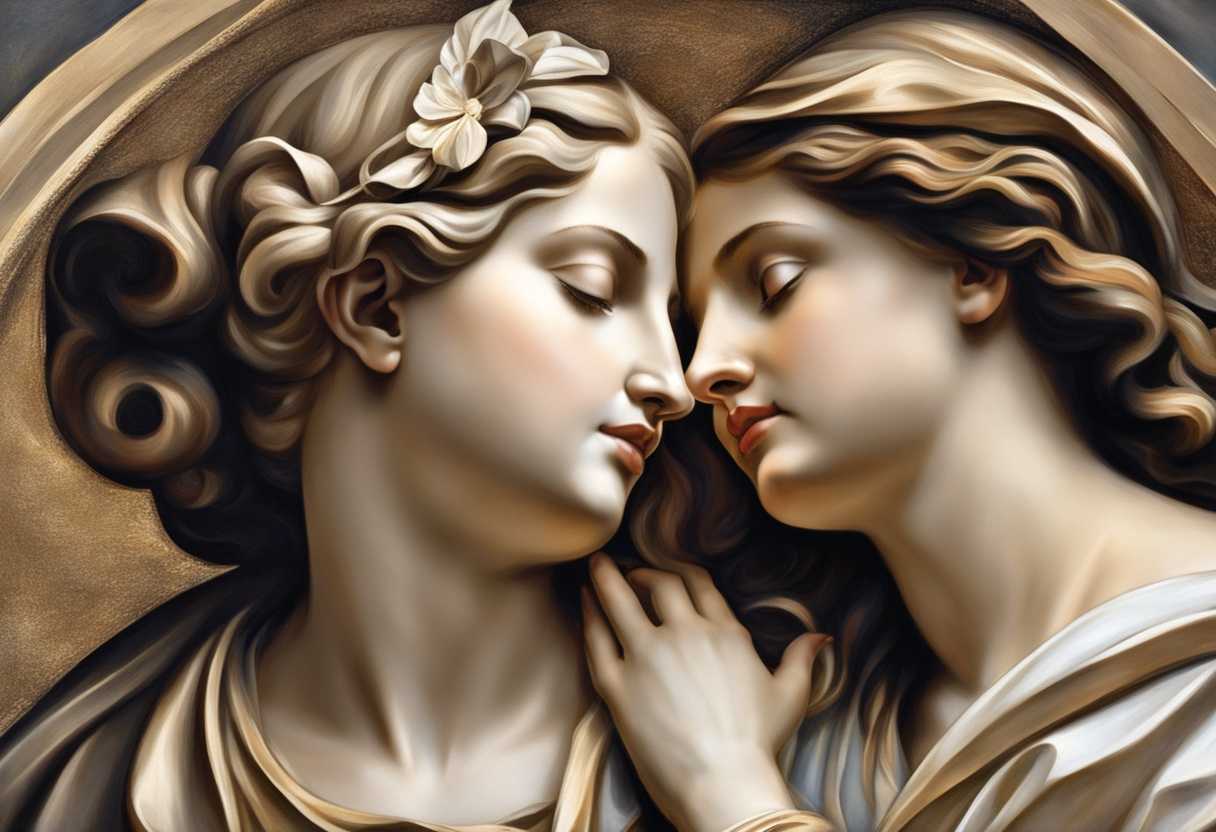
Setting the Scene for Luke 1:26-55
In Luke chapter 1, we find the scene where the angel Gabriel visits Mary to announce that she will conceive and give birth to Jesus, the Son of God. The setting is a humble home in the town of Nazareth, a small village in Galilee. Mary, a young virgin engaged to Joseph, is going about her daily routine when suddenly the angel appears before her. The room is filled with a heavenly light, and Mary is both terrified and amazed at the sight of the angel.
Gabriel, with his majestic presence, delivers the message from God to Mary, telling her not to be afraid and that she has found favor with God. He explains to her that she will conceive a child by the Holy Spirit and that her son will be the long-awaited Messiah. Mary, in her humility and faith, accepts this incredible news and responds with a beautiful song of praise known as the Magnificat, expressing her willingness to serve God’s plan.
The encounter between Mary and the angel Gabriel is a pivotal moment in the biblical narrative, marking the beginning of the fulfillment of God’s promise to send a Savior to the world. The scene is filled with awe and wonder, as Mary grapples with the profound calling placed upon her life. The room is charged with divine presence, and Mary’s response of faith and surrender sets the stage for the miraculous birth of Jesus, the Savior of the world.
What is Luke 1:26-55 about?
The angel Gabriel appears to Mary in this verse to announce that she has been chosen to conceive and bear Jesus, the Son of God, marking a profound moment in Christian theology. This moment is significant as it marks the beginning of the Incarnation, where God becomes human in the form of Jesus. Mary’s response to this incredible news is captured in her prayer of praise known as the Magnificat. Mary, in her humility and faith, recognizes the magnitude of what God is doing through her and offers praise and gratitude. We reflect on this verse, considering the profound implications of God’s plan for salvation. Mary’s willingness to say yes to God’s call exemplifies trust and obedience in the face of the unknown. Through her example, we are encouraged to reflect on our own responses to God’s invitations in our lives. How willing are we to surrender control and allow God to work through us for the greater good? The Annunciation and the Magnificat remind us of the power of God’s grace and the transformative impact of saying yes to His will. Mary’s words can inspire us to embrace God’s plans for us with faith and joy as we ponder them.
Understanding what Luke 1:26-55 really means
In Luke 1:26-55, we encounter the powerful narrative of the Annunciation and Mary’s Song, known as The Magnificat. This passage unfolds with the angel Gabriel visiting Mary to announce the miraculous conception of Jesus, followed by Mary’s visit to her relative Elizabeth. The context of these events sets the stage for profound revelations and expressions of faith that continue to inspire believers today.
One of the key phrases in this passage is when Gabriel greets Mary with the words, “Greetings, you who are highly favored! The Lord is with you.” This greeting signifies God’s special favor and presence with Mary, echoing similar instances in the Bible such as when the angel of the Lord greeted Gideon in Judges 6:12, indicating divine favor and a specific mission. Mary is reassured by the angel, “Do not be afraid, Mary; you have found favor with God,” highlighting divine reassurance and selection, akin to Noah finding favor in Genesis 6:8, indicating a unique role in God’s plan.
The proclamation that “He will be great and will be called the Son of the Most High” emphasizes the divine nature and mission of Jesus, echoing the prophecy in Isaiah 9:6 about a child who will be called Mighty God. Mary’s declaration, “For no word from God will ever fail,” underscores the certainty and reliability of God’s promises, resonating with Isaiah 55:11, which speaks of God’s word accomplishing His purposes. Mary’s exultation, “My soul glorifies the Lord and my spirit rejoices in God my Savior,” reflects her profound praise and acknowledgment of God’s greatness and salvation, akin to Hannah’s prayer in 1 Samuel 2:1-10, which exalts God for His mighty deeds.
The themes in this passage resonate with people today, calling us to trust in God’s plan even when it seems daunting or unclear, reminding us that divine favor is a result of God’s grace, not our merit, and encouraging us to find hope and strength in the reliability of God’s promises, especially in uncertain times. Just as Mary exemplified faith and obedience, we are challenged to emulate her trust in God’s providence and sovereignty.
Consider a modern-day anecdote of someone who, like Mary, felt unworthy or afraid but chose to trust in God’s plan and witnessed His promises fulfilled. This narrative could illustrate how faith can empower individuals to overcome challenges and achieve success in alignment with God’s purposes, mirroring Mary’s journey of surrender and exaltation.
In conclusion, the passage in Luke 1:26-55 invites us to contemplate the themes of trusting in God’s plan, embracing divine favor as a gift of grace, and anchoring our hope in the unwavering reliability of God’s promises. As we reflect on Mary’s profound response to God’s call, may we too seek to align our lives with His will, finding strength and assurance in His faithfulness as we navigate our own journeys of faith and obedience.
How can we embody humility and faith like Mary?
We can embody humility like Mary by recognizing our own limitations and placing our complete trust in God’s plan for our lives. We can also surrender our own will and desires to God, trusting that He knows what is best for us, just as Mary accepted her role in God’s plan with humility. This requires letting go of our own pride and ego, and acknowledging that we are mere vessels for God’s work.
Furthermore, embodying faith like Mary involves having unwavering trust in God’s promises, even when we may not fully understand how they will come to fruition. Mary’s response to the angel Gabriel showed her strong faith in God’s ability to do the impossible. We can follow her example by believing in God’s word and relying on His power to work miracles in our lives, even in the face of uncertainty or challenges. We can open ourselves up to God’s grace and allow His plan to unfold in our lives by cultivating a spirit of humility and faith like Mary.
Application
Let’s dive into the inspiring story of Mary and the angel Gabriel. Take a moment to absorb Mary’s pure heart and unwavering faith in the face of the divine. Let’s mirror Mary’s trust and openness to God’s will in our own journey. Just like her, let’s allow God to guide us and use us for greater purposes. Are you ready to embrace God’s plan with the same humility and commitment as Mary did?

Reverend Michael Johnson is an experienced Church Minister with a profound expertise in spirituality and guidance. With a serene presence and a compassionate heart, he has faithfully served his congregation for over 20 years, leading them on a spiritual journey towards inner peace and enlightenment. Reverend Johnson’s extensive knowledge of religious philosophies and profound understanding of human nature have made him a trusted confidant and mentor to many, as he seamlessly weaves his profound wisdom into life teachings. Reverend Johnson’s calming demeanor and empathetic nature continue to uplift and heal souls, nurturing a sense of unity and tranquility within his community.