
Luke 20:1-20 is about Jesus’ authority being questioned by the religious leaders as they try to trap him with questions about paying taxes to Caesar, highlighting the tension between religious and secular authority.
1 One day, as Jesus was teaching the people in the temple and preaching the gospel, the chief priests and the scribes with the elders came up
2 They said to him, “Tell us by what authority you do these things, or who it is that gave you this authority.”
3 He answered them, “I also will ask you a question. Now tell me, was the baptism of John from heaven or from man?”
4 Was the baptism of John from heaven or from man?”
5 And they discussed it with one another, saying, “If we say, ‘From heaven,’ he will say, ‘Why did you not believe him?’
6 But if we say, ‘From man,’ all the people will stone us to death, for they are convinced that John was a prophet.”
7 So they answered that they did not know where it came from.
8 And Jesus said to them, “Neither will I tell you by what authority I do these things.”
9 And he began to tell the people this parable: “A man planted a vineyard and let it out to tenants and went into another country for a long while.
10 When the time came, he sent a servant to the tenants, so that they would give him some of the fruit of the vineyard. But the tenants beat him and sent him away empty-handed.
11 He sent yet another, and they wounded him and cast him out.
12 And he sent yet a third. This one also they wounded and cast out.
13 Then the owner of the vineyard said, ‘What shall I do? I will send my beloved son; perhaps they will respect him.’
14 But when the tenants saw him, they said to themselves, ‘This is the heir. Let us kill him, so that the inheritance may be ours.’
15 So they cast him out of the vineyard and killed him. What then will the owner of the vineyard do to them?
16 He will come and destroy those tenants and give the vineyard to others.” When they heard this, they said, “Surely not!”
17 But he looked directly at them and said, “What then is this that is written: “‘The stone that the builders rejected has become the cornerstone’?
18 Everyone who falls on that stone will be broken to pieces, and when it falls on anyone, it will crush him.”
19 The scribes and the chief priests sought to lay hands on him at that very hour, for they perceived that he had told this parable against them, but they feared the people.
20 So they watched him and sent spies, who pretended to be sincere, that they might catch him in something he said, so as to deliver him up to the authority and jurisdiction of the governor.
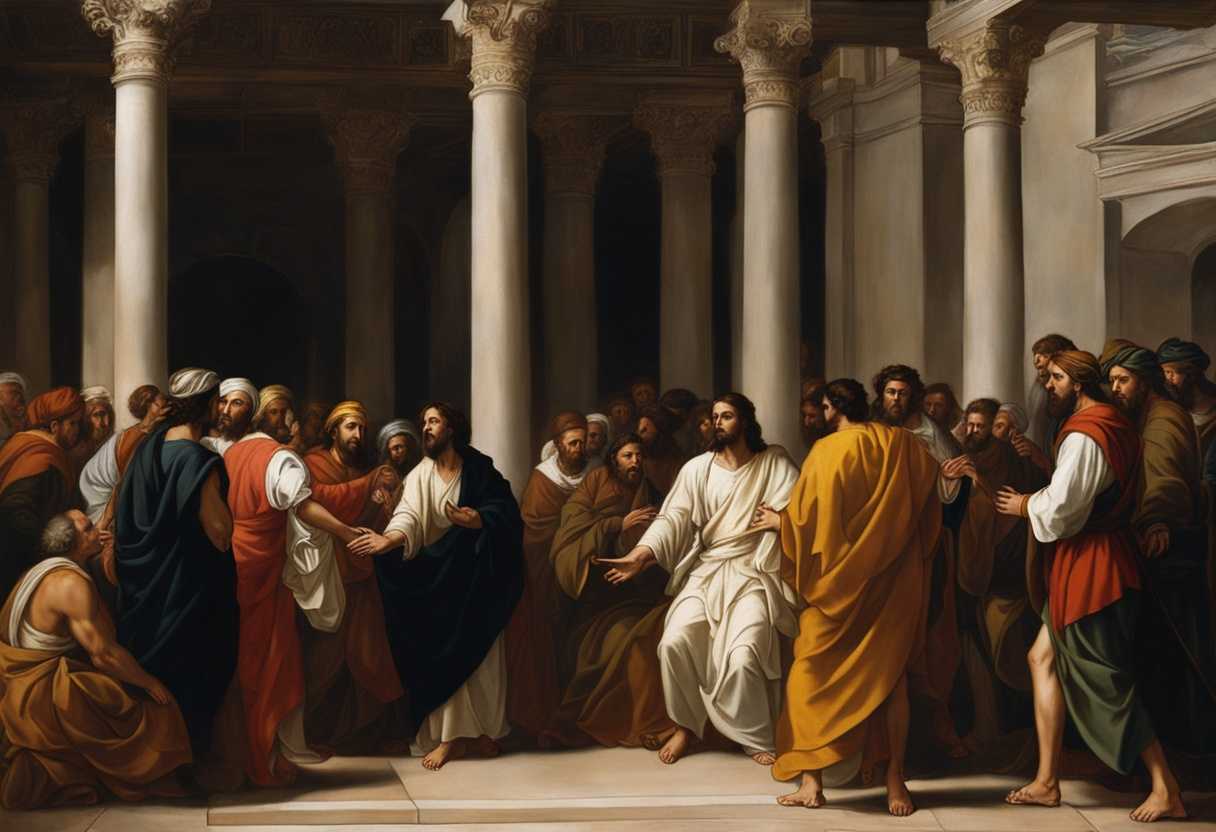
Setting the Scene for Luke 20:1-20
In Luke chapter 20, we find Jesus teaching in the temple in Jerusalem. The scene is bustling with people from all walks of life – Pharisees, scribes, priests, and ordinary citizens have gathered to listen to Jesus speak. The temple courtyard is filled with the sound of voices, the smell of incense, and the sight of people coming and going.
As Jesus is teaching, a group of chief priests and scribes approach Him, challenging His authority and questioning the source of His power. They are trying to trap Him with their questions, hoping to find a way to discredit Him in front of the crowd. Jesus, in His wisdom, responds with a parable that exposes their motives and leaves them speechless.
Among the crowd are also Jesus’ disciples, who are watching and listening intently to His every word. They are learning from His interactions with the religious leaders and gaining a deeper understanding of His teachings. The atmosphere is tense as Jesus navigates the tricky questions thrown at Him, but His wisdom and authority shine through, leaving a profound impact on all who are present in the temple that day.
What is Luke 20:1-20 about?
Religious leaders confront Jesus in this verse, questioning his authority. Despite their attempts to trap him, Jesus responds with a parable about wicked tenants who do not honor their responsibilities. This parable serves as a metaphor for the religious leaders themselves, highlighting their failure to recognize and acknowledge the true authority of Jesus.
Furthermore, Jesus’s instruction to “render to Caesar what is Caesar’s” emphasizes the importance of respecting earthly authority while also prioritizing spiritual values. Jesus is teaching his followers the importance of discerning their duties to both the physical world and the kingdom of God by acknowledging both the secular and divine realms. This verse challenges us to reflect on where we place our ultimate allegiance and how we navigate our responsibilities in both the earthly and spiritual realms. How do we honor both human authority and divine authority in our daily lives? How can we ensure that we are acting in alignment with God’s will while also fulfilling our earthly obligations? Jesus’s words here remind us of the complexity of our dual roles as citizens of this world and children of God.
Understanding what Luke 20:1-20 really means
In Luke 20:1-20, we witness a powerful confrontation between Jesus and the religious leaders within the temple walls. The leaders, questioning His authority, set the stage for a profound exchange. Jesus responds with a poignant parable about a vineyard owner and wicked tenants, shedding light on the leaders’ rejection of God’s messengers and, ultimately, His Son. This narrative serves as a stark reminder of the consequences of denying divine authority and the importance of recognizing Jesus as the cornerstone of our faith.
The inquiry posed by the religious leaders, “By what authority are you doing these things?” encapsulates their challenge to Jesus’ divine authority. It unveils their failure to acknowledge Him as the awaited Messiah, blinding them to the truth standing before them. Furthermore, the reference to “The stone the builders rejected has become the cornerstone” echoes Psalm 118:22, emphasizing Jesus as the pivotal foundation of God’s grand design, despite facing rejection from those who should have recognized Him.
Parallel passages such as Matthew 21:33-46 reinforce the message of rejection and impending judgment, while Isaiah 5:1-7, the Song of the Vineyard, provides a backdrop to the parable, illustrating God’s care juxtaposed with the people’s inability to bear good fruit. Acts 4:11-12 echoes the sentiment, with Peter boldly proclaiming Jesus as the cornerstone through whom salvation is found. These interconnected passages deepen our understanding of the themes of rejection, judgment, and the pivotal role of Jesus in God’s redemptive plan.
The relevance of this narrative to contemporary audiences is striking. Just as the religious leaders grappled with recognizing Jesus’ authority, many today struggle with submitting to divine authority in their lives. The parable serves as a poignant mirror, urging us to reflect on how we respond to God’s messengers and His Son. It prompts introspection on our willingness to accept or reject His guidance and teachings.
Consider a modern-day analogy: envision a company where employees consistently disregard the CEO’s directives, convinced of their superior knowledge. The company inevitably falters due to their refusal to acknowledge the CEO’s authority. Similarly, our lives can suffer when we reject God’s authority and wisdom, leading to spiritual stagnation and turmoil.
As we contemplate this passage, it beckons us to examine areas in our lives where we may resist God’s authority. Are there teachings or commands of His that we find challenging to accept or follow? How can we realign our actions with the cornerstone of our faith, Jesus Christ, ensuring that He remains the foundation of our lives? This reflection calls for a deep examination of our hearts and a commitment to wholeheartedly embrace Jesus’ authority in every aspect of our lives.
In conclusion, Luke 20:1-20 serves as a poignant reminder of the paramount importance of recognizing and submitting to Jesus’ authority. It challenges us to evaluate our responses to God’s messengers and His Son, urging us to produce good fruit in our lives by aligning ourselves with the cornerstone of our faith. Let us heed this call to introspection and realignment, ensuring that Jesus Christ remains the unshakable foundation upon which we build our lives.
What is the fruit of our spiritual labor?
The fruit of our spiritual labor is the Kingdom of God. We are building up His Kingdom on earth when we work diligently in the vineyard of the Lord, as illustrated in the parable in Luke 20. Our efforts in spreading the Gospel, living out our faith with integrity, and serving others in love all contribute to the growth of God’s Kingdom and bring glory to His name.
Furthermore, the fruit of our spiritual labor is also the transformation and renewal of our own hearts. We labor in the Lord’s vineyard, pruning and refining ourselves, becoming more like Christ in character and bearing the fruits of the Spirit. Our spiritual growth and maturation are evidence of the work God is doing in us as we partner with Him in His Kingdom work. The fulfillment of God’s purposes and the advancement of His Kingdom is the fruit of our spiritual labor in the end. Our faithfulness and obedience to His calling bear eternal consequences, impacting not only our present circumstances but also the lives of those around us and generations to come. Our labor in all things should be done with a sincere heart, knowing that our work in the Lord is not in vain.
Application
Are you truly giving God the rightful authority in your life, or are you allowing other influences to take control? Take a moment today, like a CEO reviewing the operations of a company, to assess who is truly leading your decisions. Just as a loving parent guides their children, allow God to guide you in every aspect of your life. Let’s make a conscious effort to prioritize God above all else. Will you make that commitment today, to align your life with His divine will?

Reverend Michael Johnson is an experienced Church Minister with a profound expertise in spirituality and guidance. With a serene presence and a compassionate heart, he has faithfully served his congregation for over 20 years, leading them on a spiritual journey towards inner peace and enlightenment. Reverend Johnson’s extensive knowledge of religious philosophies and profound understanding of human nature have made him a trusted confidant and mentor to many, as he seamlessly weaves his profound wisdom into life teachings. Reverend Johnson’s calming demeanor and empathetic nature continue to uplift and heal souls, nurturing a sense of unity and tranquility within his community.