
Luke 2:1-22 is about the birth of Jesus in Bethlehem, fulfilling the prophecy of the Messiah’s arrival, bringing hope and salvation to all humanity.
2 In those days a decree went out from Caesar Augustus that all the world should be registered.
2 This was the first registration when Quirinius was governor of Syria.
3 And all went to be registered, each to his own town.
4 And Joseph also went up from Galilee, from the town of Nazareth, to Judea, to the city of David, which is called Bethlehem, because he was of the house and lineage of David,
5 to be registered with Mary, his betrothed, who was with child.
6 And while they were there, the time came for her to give birth.
7 And she gave birth to her firstborn son and wrapped him in swaddling cloths and laid him in a manger, because there was no place for them in the inn.
8 And in the same region there were shepherds out in the field, keeping watch over their flock by night.
9 And an angel of the Lord appeared to them, and the glory of the Lord shone around them, and they were filled with great fear.
10 And the angel said to them, “Fear not, for behold, I bring you good news of great joy that will be for all the people.
11 For unto you is born this day in the city of David a Savior, who is Christ the Lord.
12 And this will be a sign for you: you will find a baby wrapped in swaddling cloths and lying in a manger.
13 And suddenly there was with the angel a multitude of the heavenly host praising God and saying,
14 “Glory to God in the highest, and on earth peace among those with whom he is pleased!”
15 When the angels went away from them into heaven, the shepherds said to one another, “Let us go over to Bethlehem and see this thing that has happened, which the Lord has made known to us.”
16 And they went with haste and found Mary and Joseph, and the baby lying in a manger.
17 And when they saw it, they made known the saying that had been told them concerning this child.
18 And all who heard it wondered at what the shepherds told them.
19 But Mary treasured up all these things, pondering them in her heart.
20 And the shepherds returned, glorifying and praising God for all they had heard and seen, as it had been told them.
21 And at the end of eight days, when he was circumcised, he was called Jesus, the name given by the angel before he was conceived in the womb.
22 And when the time came for their purification according to the Law of Moses, they brought him up to Jerusalem to present him to the Lord.
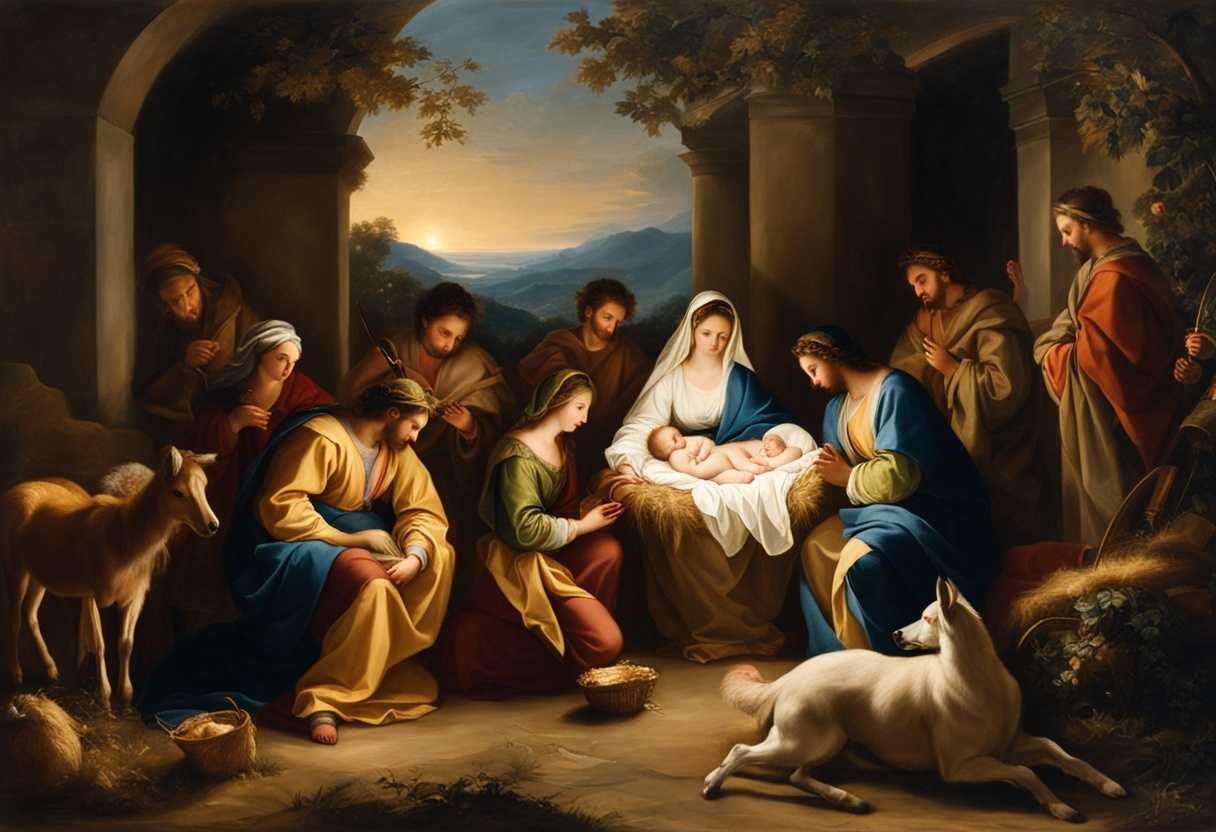
Setting the Scene for Luke 2:1-22
The scene in Luke chapter 2 opens with Joseph, a carpenter from Nazareth, and his betrothed wife Mary, who is heavily pregnant with the child that the angel Gabriel had foretold would be the Son of God. They are making their way to Bethlehem, Joseph’s ancestral town, to comply with the Roman decree of a census. The journey is long and arduous, with Mary riding on a donkey while Joseph walks alongside her, the weight of their impending parenthood and the significance of the child Mary carries weighing heavily on their minds.
Upon reaching Bethlehem, they find the town bustling with people who have also come to register for the census. The inns are full, and they are forced to seek shelter in a humble stable, where Mary gives birth to Jesus, wrapping him in swaddling clothes and laying him in a manger. The surroundings are simple and rustic, with the soft glow of a single oil lamp illuminating the scene, casting a warm light on the holy family and the animals that share their makeshift shelter.
As the night progresses, shepherds in the nearby fields are visited by a host of angels who proclaim the birth of the Savior. Overwhelmed with awe and wonder, the shepherds hurry to the stable to witness the miracle for themselves, their faces aglow with reverence and joy as they kneel before the newborn King. The scene is one of profound humility and divine grace, as the world welcomes the arrival of its long-awaited Messiah in the most humble of settings.
What is Luke 2:1-22 about?
This verse encapsulates a pivotal moment in Christian theology and a core component of the Christmas story. It signifies the miraculous birth of Jesus Christ in the humble town of Bethlehem, as foretold by prophets and awaited by the Jewish people. The angels’ announcement to the shepherds underscores the significance of this event, emphasizing Jesus’ divine nature and mission to bring salvation and hope to the world.
Reflecting on this verse, we are reminded of the profound impact of Jesus’ birth on humanity. It prompts us to ponder the humility and love embedded in the story of a savior born in lowly circumstances, destined to bring light and redemption to all. The powerful symbolism of angels heralding the news to simple shepherds highlights God’s inclusive love and his desire to reach out to the marginalized and the humble. How does this scene challenge our perceptions of power and privilege, inviting us to embrace humility and compassion in our own lives? Let this verse inspire us to reflect on the true essence of Christmas beyond the festivities and materialism as we revisit it. Let us dwell on the message of hope, peace, and redemption that Jesus’ birth represents, and strive to embody these virtues in our interactions with others. How can we, like the shepherds, respond to the good news of Christ’s birth with reverence, joy, and a renewed sense of purpose in spreading love and kindness in the world? We should carry the spirit of Christmas in our hearts all year round, seeking to emulate the values of humility, compassion, and grace exemplified in the birth of Jesus in Bethlehem.
Understanding what Luke 2:1-22 really means
The passage in Luke 2:1-22 recounts the significant event of Jesus Christ’s birth, a cornerstone in Christian belief. It commences with a decree from Caesar Augustus, illustrating the historical backdrop that places Jesus’ birth within a specific timeframe, fulfilling prophecies regarding the Messiah’s birth in Bethlehem. The humble circumstances of Jesus’ birth, laid in a manger due to the lack of space in the inn, emphasize God’s identification with the lowly and marginalized, setting the tone for His ministry among the oppressed.
An angel’s appearance to the shepherds, accompanied by the glory of the Lord shining around them, signifies the divine announcement of Jesus’ birth, highlighting the extraordinary nature of this momentous event. The specific instructions given to the shepherds to find the baby wrapped in swaddling cloths and lying in a manger underscore the accessibility and humility of Jesus, inviting all, regardless of social status, to approach the Savior.
The passage resonates with other biblical prophecies, such as Micah 5:2 foretelling the Messiah’s birth in Bethlehem and Isaiah 7:14 predicting a virgin giving birth to Immanuel. John 1:14 emphasizes the incarnation of Christ, underscoring the profound truth that the Word became flesh and dwelt among us. Additionally, Philippians 2:6-8 portrays Jesus’ humility and obedience, culminating in His sacrificial death on the cross for humanity’s redemption.
Today, the narrative of Jesus’ birth serves as a poignant reminder of God’s love and humility, demonstrating His deliberate choice to enter the world in the most unassuming manner, aligning with the downtrodden and marginalized. It encourages individuals to find solace and joy in modest circumstances, knowing that God’s presence is steadfast and unwavering. The shepherds’ receptive response to the angel’s message teaches us to remain open to divine encounters and to share the good news of salvation with others, embodying the spirit of inclusivity and compassion.
Consider a scenario where a struggling family, feeling forgotten and desolate during the holiday season, receives an unexpected visit from a compassionate neighbor bearing gifts and a warm meal. This act of kindness serves as a beacon of hope, reminding them of their worth and the enduring presence of love even in challenging times. Similarly, Jesus’ birth in a humble manger symbolizes hope and assurance that God is intimately present with us, especially in our darkest moments, offering comfort and redemption.
In conclusion, the birth of Jesus encapsulates a profound narrative of humility, divine love, and hope, urging individuals to contemplate God’s active role in their lives and to extend that hope to others, particularly those on the fringes of society. May this timeless story inspire us to embody compassion, inclusivity, and the transformative power of God’s love in our interactions with those around us.
How can we cultivate a spirit of reverence?
We can cultivate a spirit of reverence by reflecting on the significance of spiritual truths and events. Meditating on the profound mysteries and marvels of our faith can help us develop a sense of awe and respect for the divine. It is in quiet contemplation and prayerful reflection that we can deepen our understanding and appreciation for the sacred.
Furthermore, by honoring and cherishing the sacredness of life and creation, we can foster a spirit of reverence. Recognizing the beauty and interconnectedness of all things can inspire in us a sense of humility and wonder. We demonstrate our reverence for the Creator and the divine presence that dwells within all beings by treating every person, creature, and element with respect and compassion. Approaching life with a humble and grateful heart ultimately nurtures a spirit of reverence. We can cultivate a deep sense of appreciation and devotion by acknowledging the blessings and grace that surround us. Through acts of gratitude and praise, we can cultivate a reverential attitude towards the divine and all that is sacred in our lives.
Application
Let’s invite Jesus into our hearts like a warm embrace, making room for Him in the chaos of our daily grind. Be like the shepherds, eager and elated to welcome the birth of Christ. Will you also pause amidst the clamor of modern life and seek Him with your whole being?

Reverend Michael Johnson is an experienced Church Minister with a profound expertise in spirituality and guidance. With a serene presence and a compassionate heart, he has faithfully served his congregation for over 20 years, leading them on a spiritual journey towards inner peace and enlightenment. Reverend Johnson’s extensive knowledge of religious philosophies and profound understanding of human nature have made him a trusted confidant and mentor to many, as he seamlessly weaves his profound wisdom into life teachings. Reverend Johnson’s calming demeanor and empathetic nature continue to uplift and heal souls, nurturing a sense of unity and tranquility within his community.