
Luke 2:7-16 is about the humble birth of Jesus in a manger, announced by angels to the shepherds, signifying the universality of the message of salvation and the importance of recognizing and honoring the presence of God in simplicity and humility.
7 And she gave birth to her firstborn son and wrapped him in swaddling cloths and laid him in a manger, because there was no place for them in the inn.
8 And in the same region there were shepherds out in the field, keeping watch over their flock by night.
9 And an angel of the Lord appeared to them, and the glory of the Lord shone around them, and they were filled with great fear.
10 And the angel said to them, “Fear not, for behold, I bring you good news of great joy that will be for all the people.
11 For unto you is born this day in the city of David a Savior, who is Christ the Lord.
12 And this will be a sign for you: you will find a baby wrapped in swaddling cloths and lying in a manger.
13 And suddenly there was with the angel a multitude of the heavenly host praising God and saying,
14 “Glory to God in the highest, and on earth peace among those with whom he is pleased!”
15 When the angels went away from them into heaven, the shepherds said to one another, “Let us go over to Bethlehem and see this thing that has happened, which the Lord has made known to us.”
16 And they went with haste and found Mary and Joseph, and the baby lying in a manger.
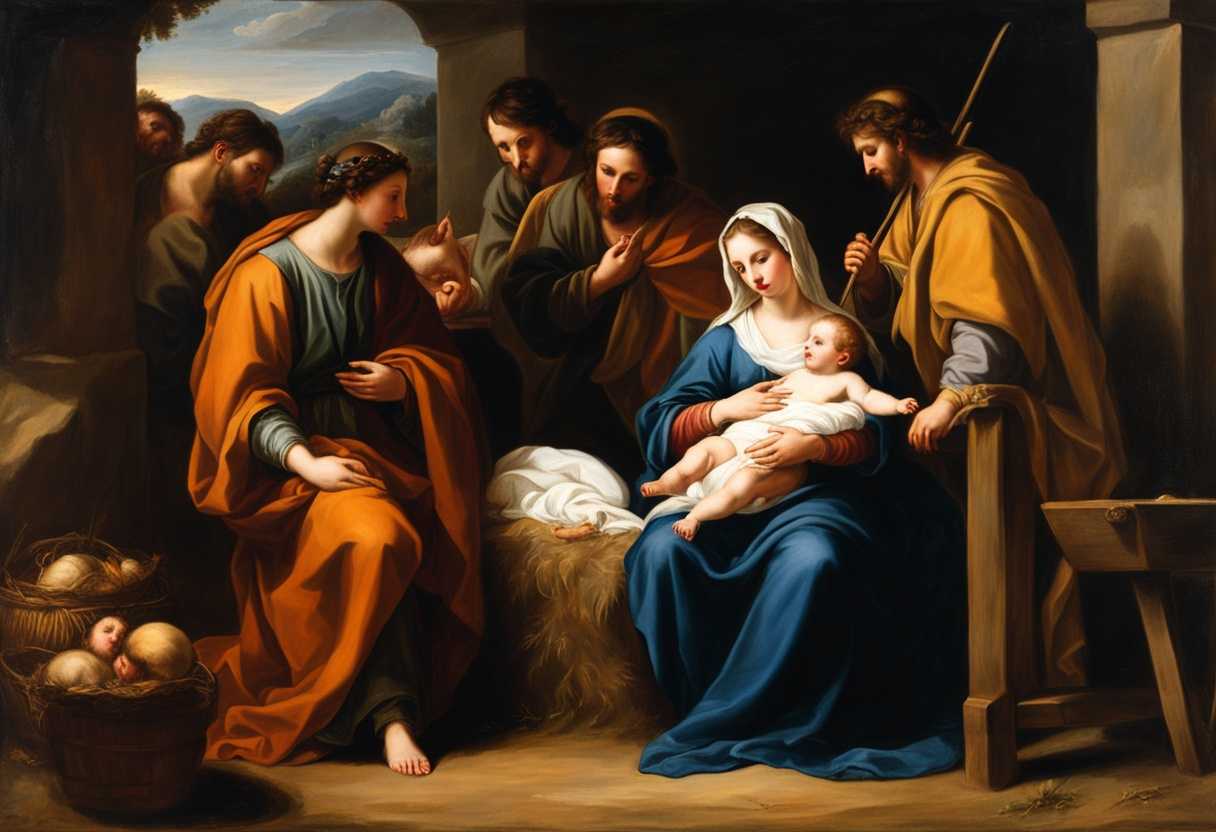
Setting the Scene for Luke 2:7-16
In Luke chapter 2, we find the scene of the birth of Jesus in Bethlehem. Mary and Joseph, a young couple from Nazareth, had traveled to Bethlehem due to a census decreed by Caesar Augustus. The journey was long and arduous, and upon their arrival, they found no room at the inn. They were offered a humble stable as a place to stay, where Mary gave birth to Jesus, the Son of God, and laid Him in a manger.
In this humble setting, surrounded by animals and the rustic simplicity of a stable, the miraculous event of the birth of Jesus took place. The night sky outside was illuminated by a bright star, guiding shepherds from the nearby fields to witness the newborn Savior. These shepherds, who were considered lowly in society, were the first to receive the news of Jesus’ birth from a host of angels who appeared to them, proclaiming peace on earth and goodwill towards all.
As the shepherds arrived at the stable, they found Mary, Joseph, and the baby Jesus, just as the angels had described. Overwhelmed with joy and wonder, they knelt before the newborn King, offering Him their humble gifts and spreading the good news of His arrival to all who would listen. This momentous occasion marked the beginning of the fulfillment of God’s promise to send a Savior to the world, bringing hope and salvation to all who would believe.
What is Luke 2:7-16 about?
This verse is a powerful portrayal of the humble and miraculous birth of Jesus Christ, the central figure in Christianity. The image of Jesus being born in a manger, a feeding trough for animals, demonstrates the humility and simplicity with which his life began. It signifies that Jesus came not as a powerful ruler or king but as a humble servant to all people. The verse emphasizes the message that Jesus came for all people, regardless of their status or background, by being visited by shepherds, who were considered lowly and marginalized in society at that time. This moment also fulfills the prophecy in the Old Testament that the Messiah would be born in Bethlehem, showcasing the divine plan and fulfillment of God’s promises.
Reflecting on this verse, we are reminded of the profound love and grace that God extends to all people through the birth of Jesus. It challenges us to consider the true meaning of Christmas beyond the materialistic aspects and to focus on the spiritual significance of Jesus’ birth. The story of Jesus being born in a manger and visited by shepherds invites us to reflect on the values of humility, inclusivity, and faith that he embodies. It prompts us to ponder how we can live out these values in our own lives and relationships, following the example set by Jesus in his birth and throughout his ministry. This verse encapsulates the timeless message of hope, redemption, and love that the Christmas story brings to the world.
Understanding what Luke 2:7-16 really means
The birth of Jesus Christ, as depicted in Luke 2:7-16, holds profound significance in the Christian faith. In this passage, we witness the humble beginnings of the Savior of the world. Mary gives birth to her firstborn, a son, fulfilling the prophecy of Isaiah 7:14, which foretold the coming of Immanuel. This detail emphasizes the humanity of Jesus, born to a young mother in a simple setting, wrapped in cloths and placed in a manger. The juxtaposition of his divine nature with his humble birth is a powerful reminder of God’s willingness to enter into the world in the most unassuming manner, as echoed in Philippians 2:6-7, where Jesus humbles himself for humanity’s sake.
The absence of a guest room for Mary and Joseph symbolizes the rejection and lack of recognition Jesus would face throughout his life, as seen in John 1:10-11. Yet, it is in this lowly place that the shepherds, often marginalized in society, receive the divine announcement of Jesus’ birth. The shepherds’ presence in the narrative is significant, reflecting the theme of God as a shepherd in Psalm 23:1, caring for His flock. When the angel of the Lord appears to them, proclaiming peace and goodwill, it echoes the prophecy of Isaiah 9:6 about the Prince of Peace, emphasizing the message of reconciliation and hope that Jesus brings.
Today, the story of Jesus’ birth continues to resonate with people from all walks of life. His humble beginnings remind us of the accessibility of his message to everyone, regardless of status. Just as the shepherds were chosen to witness the divine birth, God often reveals Himself to the humble and lowly, bringing unexpected good news and hope in the midst of challenging circumstances. The timeless message of peace and goodwill proclaimed by the angels remains relevant in our world today, where conflicts and divisions persist. Stories of reconciliation and peace-making in communities serve as modern-day examples of the transformative power of Jesus’ message.
The phrases in this passage, such as Jesus being placed in a manger and the lack of a guest room, carry deep symbolic meanings. They signify Jesus’ identification with the poor and marginalized, reflecting his mission to bring salvation to all. The angel’s appearance to the shepherds highlights that God’s message is inclusive, meant for everyone, not just the privileged or elite. The proclamation of glory to God and peace on earth underscores the dual focus of worshiping God and promoting peace among humanity, inviting us to embody these values in our daily lives.
In conclusion, the birth of Jesus Christ encapsulates themes of humility, accessibility, and peace that continue to inspire and challenge us today. As we reflect on this foundational event, may we embrace the humility of Christ, seek to reach out to the marginalized, and strive to promote peace and goodwill in our communities. Let us ponder how we can embody these values in our interactions with others, following the example set by the birth of the Prince of Peace in a humble manger.
How can we recognize when God is near us?
We can recognize that God is near us when we are surrounded by signs and symbols that are familiar to us, such as a manger and swaddling clothes. These tangible elements can serve as reminders of the presence of God in our lives and in our surroundings. Additionally, the appearance of angels or messengers can be a clear indication of God’s proximity, as they bring messages of peace, joy, and guidance.
Furthermore, when we feel a sense of awe, wonder, and reverence in our hearts, it can be a sign that God is near us. This deep inner feeling is often accompanied by a sense of peace and love that emanates from the divine presence. It is in these moments of spiritual connection and divine encounter that we can truly feel the nearness of God in our lives.
Application
Let’s act swiftly like the shepherds did when they rushed to find baby Jesus. Today, let’s actively search for Him in our lives without delay. Let’s not hesitate but move quickly to embrace Jesus and spread His message to others. Will you choose to embark on this exciting pursuit of Christ with joy and determination?

Reverend Michael Johnson is an experienced Church Minister with a profound expertise in spirituality and guidance. With a serene presence and a compassionate heart, he has faithfully served his congregation for over 20 years, leading them on a spiritual journey towards inner peace and enlightenment. Reverend Johnson’s extensive knowledge of religious philosophies and profound understanding of human nature have made him a trusted confidant and mentor to many, as he seamlessly weaves his profound wisdom into life teachings. Reverend Johnson’s calming demeanor and empathetic nature continue to uplift and heal souls, nurturing a sense of unity and tranquility within his community.