
Mark 11:7-10 is about the triumphant entry of Jesus into Jerusalem, where he is hailed as the Messiah and King by the crowd who laid their cloaks and palm branches on the road, symbolizing their recognition of his authority and kingship.
7 And they brought the colt to Jesus and threw their cloaks on it, and he sat on it.
8 And many spread their cloaks on the road, and others spread leafy branches that they had cut from the fields.
9 And those who went before and those who followed were shouting, “Hosanna! Blessed is he who comes in the name of the Lord!
10 Blessed is the coming kingdom of our father David! Hosanna in the highest!
Setting the Scene for Mark 11:7-10
In Mark chapter 11, we find Jesus and his disciples approaching Jerusalem during the time of the Passover festival. As they near the city, Jesus instructs two of his disciples to go ahead and find a colt tied up in a village. He tells them that if anyone questions them, they are to say that the Lord needs it and will return it shortly. The disciples do as Jesus instructed, and sure enough, they find the colt just as he said.
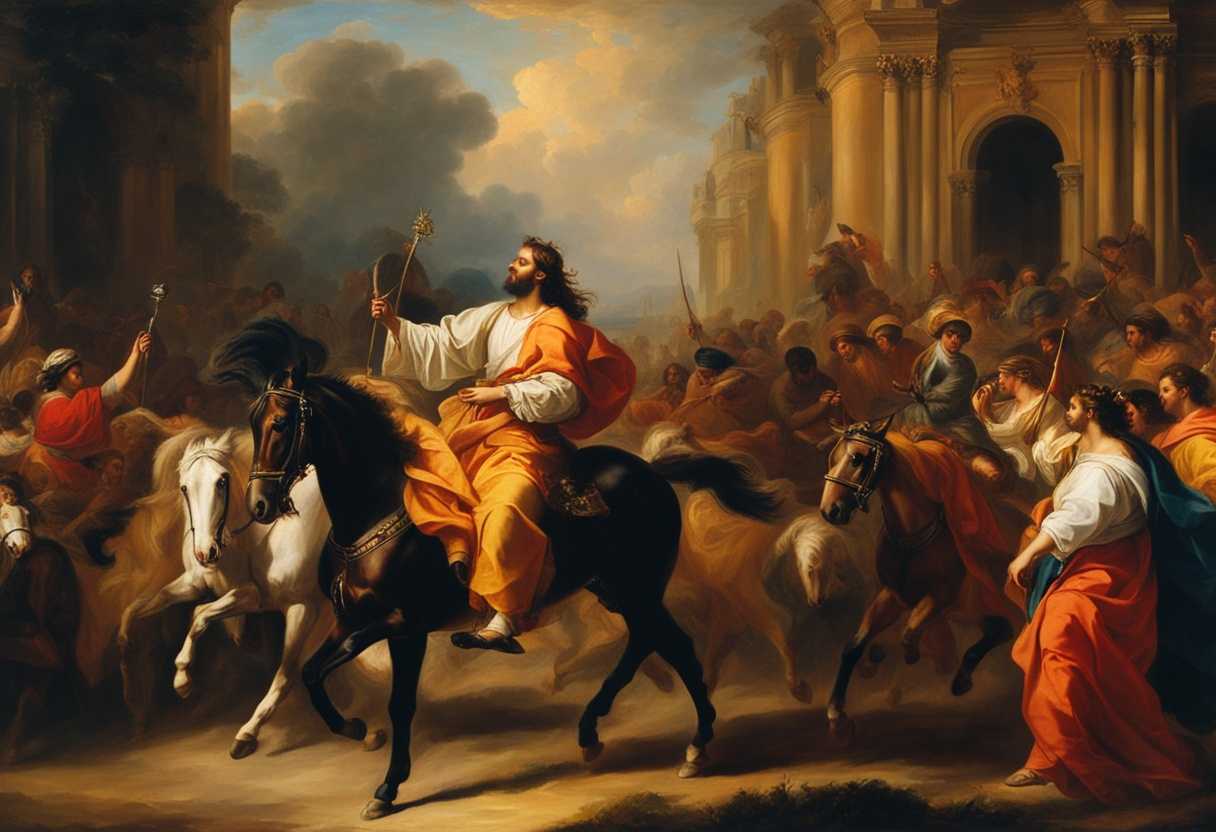
The disciples bring the colt to Jesus, and he mounts it, riding into Jerusalem as the people spread their cloaks and leafy branches on the road before him. The crowd begins to shout, “Hosanna! Blessed is he who comes in the name of the Lord! Blessed is the kingdom of our father David that is coming! Hosanna in the highest!” The atmosphere is filled with excitement and anticipation as the people recognize Jesus as the long-awaited Messiah, the one who comes in the name of the Lord.
The scene is one of jubilation and reverence as Jesus enters Jerusalem, fulfilling the prophecy of Zechariah 9:9. The disciples, the crowd, and even the onlookers are caught up in the moment, acknowledging Jesus as the promised King. The streets are lined with people waving palm branches and shouting praises, creating a festive and joyous atmosphere as Jesus makes his triumphant entry into the holy city.
What is Mark 11:7-10 about?
This verse signifies the fulfillment of the prophecy in the Old Testament that predicted the Messiah would enter Jerusalem riding on a colt. Jesus deliberately presents himself as a humble and peaceful King, in contrast to the traditional image of a conquering ruler on a horse. This act demonstrates Jesus’ humility and love for his people, showing that he came not to dominate or oppress, but to offer salvation and grace.
Imagine the scene of Jesus riding into Jerusalem on a colt, surrounded by cheering crowds and waving palms. What message is he sending through this humble yet powerful gesture? Jesus is proclaiming his identity as the long-awaited Messiah who brings peace and salvation to all who believe in him by choosing to enter the city in this manner. This event sets the stage for the events of Holy Week, leading to Jesus’ ultimate sacrifice on the cross for the redemption of humanity. Jesus displayed profound love and humility as he fulfilled prophecy and embraced his role as the King of Kings; let us reflect on the significance of this moment.
Understanding what Mark 11:7-10 really means
The passage in Mark 11:7-10 captures the momentous occasion of Jesus’ triumphal entry into Jerusalem, setting the stage for the events of the Passion Week. As Jesus rides into the city on a colt, the disciples and the crowd demonstrate their recognition of His kingship and their willingness to honor Him. This act of humility and peace fulfills the prophecy in Zechariah 9:9, emphasizing the purity and significance of Jesus’ mission.
The gestures of spreading cloaks and branches on the road symbolize homage and respect, akin to rolling out a red carpet for royalty. The people’s actions reflect their acknowledgment of Jesus as a revered figure, shouting “Hosanna” and recognizing Him as the one who comes in the name of the Lord. The cries of “Hosanna” echo the plea for salvation in Psalm 118, linking Jesus to the messianic expectations of the Jewish people and affirming His role as the promised Messiah.
This passage holds relevance for us today by reminding us of the importance of recognizing and honoring Jesus in our lives. Just as the people laid down their cloaks and branches for Jesus, we are called to lay down our own “cloaks” of pride, fear, and doubt, making way for Jesus in our hearts. The humility and service displayed by Jesus choosing a humble colt over a grand horse challenge us to emulate His example in our daily lives.
Consider a small town preparing for the visit of a beloved leader, where the townspeople clean the streets, decorate their homes, and gather to welcome the leader with cheers and gifts. The leader arrives not in grandeur but on a simple bicycle, symbolizing humility and connection to the people. This anecdote illustrates how we can welcome Jesus into our lives with genuine acts of love, humility, and service, reflecting our deep respect and love for Him.
In conclusion, Mark 11:7-10 serves as a poignant reminder of Jesus’ kingship, humility, and the fulfillment of God’s promises. It challenges us to recognize Jesus’ presence in our lives and respond with reverence and devotion. By delving into the deeper meanings and related scriptures, we can draw closer to the heart of this passage and apply its timeless lessons to our daily walk with Christ.
What does it mean to sincerely praise God?
Sincerely praising God means acknowledging His greatness with humility and gratitude. It involves recognizing His power and authority over all things, expressing thankfulness for His blessings and mercy, and surrendering our own will to His divine plan. When we praise God sincerely, we come before Him with reverence and awe, magnifying His name and proclaiming His goodness to others. The crowd spreads their cloaks on the road and waves palm branches as they joyfully shout praises to Jesus in this passage. Their actions and words reflect a genuine outpouring of adoration and acknowledgment of Jesus as the Messiah. Sincere praise involves not just lip service, but a heartfelt response to God’s presence and work in our lives. It is an expression of our faith and trust in His sovereignty and a declaration of His worthiness to be glorified.
Therefore, to sincerely praise God is to offer our worship in spirit and in truth, to exalt Him above all else, and to proclaim His majesty and righteousness. It is an act of love and obedience that flows from a heart that truly believes in His power and goodness. Through our sincere praise, we can draw closer to God and experience the fullness of His presence in our lives.
Application
Let’s be like dedicated colleagues at work, offering our best efforts to our tasks. Like loving family members, let’s be selfless in our actions toward one another. Let’s discard our pride and selfish desires, opening our hearts to welcome the divine presence into our lives. Will you answer the call to embrace Jesus completely, the ultimate source of salvation for our souls?

Reverend Michael Johnson is an experienced Church Minister with a profound expertise in spirituality and guidance. With a serene presence and a compassionate heart, he has faithfully served his congregation for over 20 years, leading them on a spiritual journey towards inner peace and enlightenment. Reverend Johnson’s extensive knowledge of religious philosophies and profound understanding of human nature have made him a trusted confidant and mentor to many, as he seamlessly weaves his profound wisdom into life teachings. Reverend Johnson’s calming demeanor and empathetic nature continue to uplift and heal souls, nurturing a sense of unity and tranquility within his community.