
1 And as he came out of the temple, one of his disciples said to him, “Look, Teacher, what wonderful stones and what wonderful buildings!”
2 And Jesus said to him, “Do you see these great buildings? There will not be left here one stone upon another that will not be thrown down.”
3 And as he sat on the Mount of Olives opposite the temple, Peter and James and John and Andrew asked him privately,
4 “Tell us, when will these things be, and what will be the sign when all these things are about to be accomplished?”
5 And Jesus began to say to them, “See that no one leads you astray.
6 Many will come in my name, saying, ‘I am he!’ and they will lead many astray.
7 And when you hear of wars and rumors of wars, do not be alarmed. This must take place, but the end is not yet.
8 For nation will rise against nation, and kingdom against kingdom. There will be earthquakes in various places; there will be famines. These are but the beginning of the birth pains.
9 “But be on your guard. For they will deliver you over to councils, and you will be beaten in synagogues, and you will stand before governors and kings for my sake, to bear witness before them.
10 And the gospel must first be proclaimed to all nations.
11 And when they bring you to trial and deliver you over, do not be anxious beforehand what you are to say, but say whatever is given you in that hour, for it is not you who speak, but the Holy Spirit.
12 And brother will deliver brother over to death, and the father his child, and children will rise against parents and have them put to death.
13 And you will be hated by all for my name’s sake. But the one who endures to the end will be saved.
14 “But when you see the abomination of desolation standing where he ought not to be (let the reader understand), then let those who are in Judea flee to the mountains.”
15 Let the one who is on the housetop not go down, nor enter his house, to take anything out,
16 And let the one who is in the field not turn back to take his cloak.
17 And alas for women who are pregnant and for those who are nursing infants in those days!
18 And pray that it may not happen in winter.
19 For in those days there will be such tribulation as has not been from the beginning of the creation that God created until now, and never will be.
20 And if the Lord had not cut short the days, no human being would be saved. But for the sake of the elect, whom he chose, he shortened the days.
21 And then if anyone says to you, ‘Look, here is the Christ!’ or ‘Look, there he is!’ do not believe it.
22 For false christs and false prophets will arise and perform signs and wonders, to lead astray, if possible, the elect.
23 But be on guard; I have told you all things beforehand.
24 “But in those days, after that tribulation, the sun will be darkened, and the moon will not give its light,
25 And the stars will be falling from heaven, and the powers in the heavens will be shaken.
26 And then they will see the Son of Man coming in clouds with great power and glory.
27 And then he will send out the angels and gather his elect from the four winds, from the ends of the earth to the ends of heaven.
28 “From the fig tree learn its lesson: as soon as its branch becomes tender and puts out its leaves, you know that summer is near.
29 So also, when you see these things taking place, you know that he is near, at the very gates.
30 Truly, I say to you, this generation will not pass away until all these things take place.
31 Heaven and earth will pass away, but my words will not pass away.
32 “But concerning that day or that hour, no one knows, not even the angels in heaven, nor the Son, but only the Father.
33 Be on guard, keep awake. For you do not know when the time will come.
34 It is like a man going on a journey, when he leaves home and puts his servants in charge, each with his work, and commands the doorkeeper to stay awake.
35 Therefore stay awake—for you do not know when the master of the house will come, in the evening, or at midnight, or when the rooster crows, or in the morning—
36 lest he come suddenly and find you asleep.
37 And what I say to you I say to all: Stay awake.
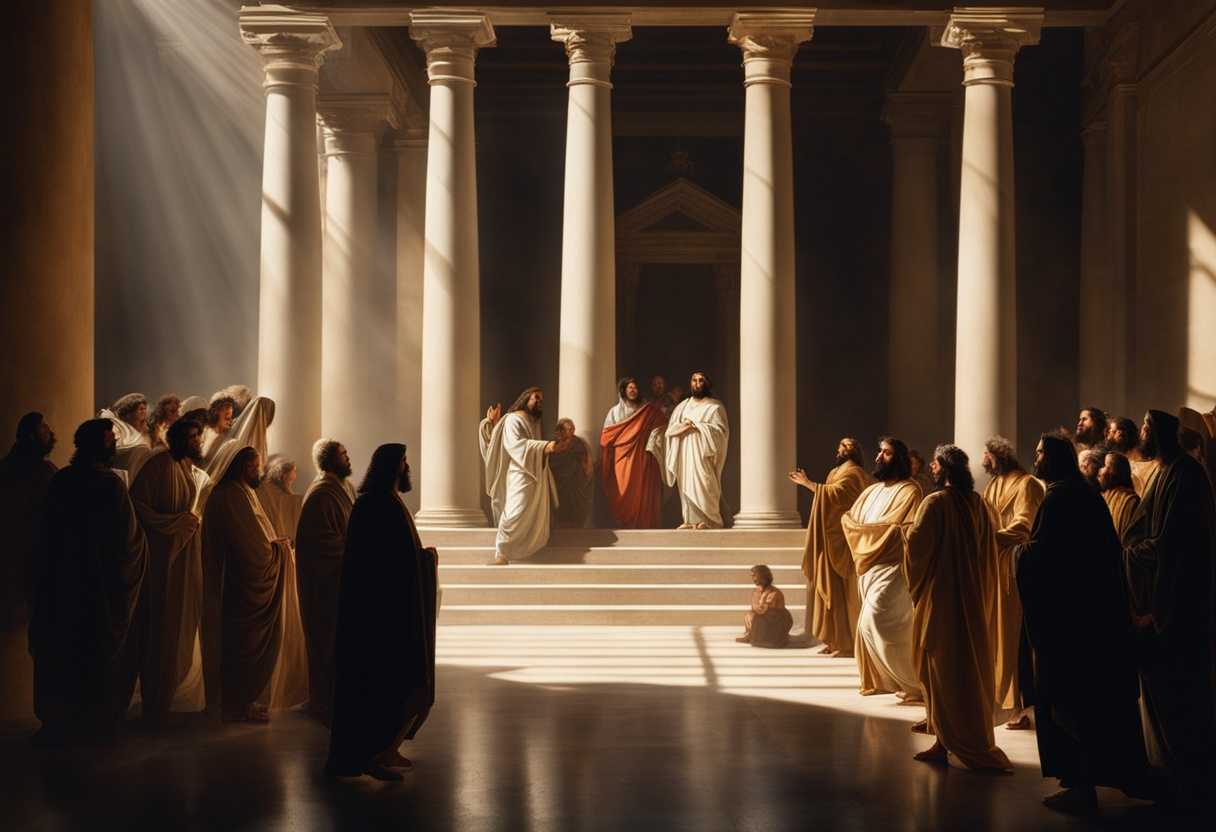
The True Meaning of Mark 13
The Gospel of Mark was written by John Mark, a companion of the apostle Peter. Mark’s account provides a vivid and concise narrative of the life, ministry, death, and resurrection of Jesus Christ. Jesus imparts crucial teachings to his disciples regarding the future destruction of the temple and the signs of his second coming in this particular chapter. As we delve into this passage, we will witness Jesus’ sobering predictions about the trials and tribulations that his followers will face, emphasizing the importance of remaining steadfast in their faith. The chapter also foreshadows the ultimate triumph of Christ’s kingdom, even amidst the chaos and upheaval that will precede it. These teachings echo the words of the prophet Daniel, who spoke of a time of great distress before the establishment of God’s eternal kingdom (Daniel 12:1).
The events described in this chapter serve as a powerful reminder to the faithful that, despite the challenges they may encounter, they can find hope and strength in the promises of God. We may be inspired by the unwavering faith and endurance of those who have gone before us as we navigate the complexities of our own time, and we may cling to the assurance that, in the end, the kingdom of God will prevail.
Mark 13:1-8
Jesus and his disciples leave the temple in Jerusalem at the beginning of Mark 13:1-8. One of the disciples marvels at the grandeur of the temple’s buildings as they depart. Jesus responds by foretelling the destruction of the temple. This prophecy is significant as the temple held immense religious and cultural importance for the Jewish people. The destruction of the temple was a monumental event, symbolizing the end of the old covenant and the emergence of the new covenant through Jesus Christ.
Jesus then goes on to speak about the signs of the end times. He warns the disciples about false messiahs who will come and deceive many. This serves as a cautionary message, advising believers to be discerning and not easily swayed by false teachings. This warning remains relevant even today, reminding Christians to stay rooted in the truth of the Gospel and to test all spirits as advised in 1 John 4:1. Jesus mentions wars and rumors of wars, along with natural disasters like earthquakes. These calamities are described as “birth pains,” implying that they are the precursor to something greater. This analogy highlights the idea that these events are part of a process leading to the ultimate fulfillment of God’s plan. Just as birth pains intensify before the birth of a child, these signs will escalate before the second coming of Christ.
It is essential to note the overarching theme of vigilance and preparedness emphasized in this passage. Jesus urges his followers to be watchful and ready for his return, as no one knows the exact time when it will occur. This call for readiness is echoed throughout the New Testament, emphasizing the importance of living a life of faithfulness and obedience to God at all times. Mark 13:1-8 delivers a powerful message about the inevitable fulfillment of prophecy, the rise of deception, the signs of the end times, and the call to be alert for the return of Christ. This passage serves as a reminder for believers to stay steadfast in their faith, discern truth from falsehood, and be prepared for the glorious return of the Lord.
Mark 13:9-13
Jesus is giving a discourse to his disciples about the signs of the end times and what they can expect to face before his second coming in Mark 13:9-13. He begins by warning them that they will be handed over to local councils and flogged in the synagogues, standing before governors and kings as witnesses to them. This prophecy was fulfilled in the lives of the apostles and early Christians who faced persecution and martyrdom for their faith. This section highlights the reality of persecution that believers may face for standing up for their faith and preaching the Gospel.
Jesus encourages the disciples not to worry about how to defend themselves when they face these trials, but to trust in the Holy Spirit to give them the words to speak. This promise is a reminder that God will never leave nor forsake his children, and that he will equip them with what they need to endure difficult circumstances. This message is applicable to all believers throughout history who have faced opposition and persecution for their faith, reminding them to rely on the strength and guidance of the Holy Spirit.
Furthermore, Jesus foretells that even family members will betray each other because of Him. This division caused by faith in Christ is a painful reality that has been experienced by many believers through the ages. This warning serves as a reminder of the cost of discipleship and the need to prioritize loyalty to Christ above all else. This concept echoes Jesus’ teaching in Luke 14:26, where he says, “If anyone comes to me and does not hate father and mother, wife and children, brothers and sisters—yes, even their own life—such a person cannot be my disciple.”
Jesus concludes this passage by assuring his followers that those who stand firm in their faith until the end will be saved. This promise of salvation highlights the importance of perseverance and endurance in the face of trials and tribulations. Throughout the Bible, we see the theme of perseverance in faith being rewarded, such as in James 1:12, where it says, “Blessed is the one who perseveres under trial because, having stood the test, that person will receive the crown of life that the Lord has promised to those who love him. Believers are reminded in Mark 13 of the challenges they may face for their faith, the promise of the Holy Spirit’s guidance and strength, the cost of discipleship, and the assurance of salvation for those who endure to the end. It emphasizes the call to remain faithful to Christ despite the difficulties that may arise, knowing that our ultimate reward is found in him.
Mark 13:14-23
Jesus is speaking about a future event known as the “abomination of desolation” in Mark 13:14-23, a pivotal moment when a significant desecration will take place in the holy place. This specific event is closely linked to prophecies found in the Old Testament, particularly in the book of Daniel (Daniel 9:27, 11:31, 12:11). The prophet in the book of Daniel foretold of a time when an abomination would be set up in the temple and cause desolation. Jesus’ mention of this event serves as a warning to his disciples and followers about the tribulations that will occur before the coming of the Son of Man.
This warning by Jesus underscores the importance of being vigilant and spiritually prepared for the trials and tribulations that will precede the end times. The abomination of desolation serves as a symbol of the ultimate act of sacrilege that will defile all that is holy. It signifies a pivotal moment in history when evil will seemingly triumph over righteousness before the final judgment. This passage reinforces the biblical message of the ongoing spiritual warfare between good and evil, where believers are called to stand firm in their faith even in the face of intense persecution and deception.
Jesus’ instruction for his followers to flee when they see the abomination of desolation, particularly to the mountains, emphasizes the urgency and seriousness of the situation. This advice echoes similar calls to escape judgment found in the Old Testament, such as the story of Lot fleeing Sodom and Gomorrah before their destruction (Genesis 19). It highlights the importance of discernment and obedience to God’s warnings, even if it means leaving behind possessions or comforts to secure one’s spiritual safety.
The false messiahs and prophets that Jesus warns about in this passage are significant figures who will deceive many during these tumultuous times. They will perform signs and wonders that are so convincing that, if possible, they would lead even the elect astray. This highlights the power of deception and the need for discernment among believers. Throughout the Bible, false prophets have been a constant threat to God’s people, luring them away from the truth and towards falsehood. Jesus’ words serve as a cautionary tale, emphasizing the necessity of testing every spirit and holding fast to the genuine teachings of Christ (1 John 4:1). Mark 13:14-23 presents a sobering message about the trials and deceptions that will precede the second coming of Christ. It serves as a call to readiness, vigilance, and discernment for believers in the face of spiritual warfare and tribulations. Christians can be better equipped to navigate the tumultuous times that will come before the ultimate triumph of God’s kingdom by understanding the significance of the abomination of desolation, the importance of fleeing from danger, and the threat of false prophets.
Mark 13:24-27
Jesus speaks to his disciples about the signs of the end times in Mark 13:24-27. This section can be broken down into a few important parts: the celestial signs, the coming of the Son of Man, and the gathering of the elect.
Firstly, the celestial signs mentioned in verse 24, the darkening of the sun, moon losing its light, stars falling from the sky – these are powerful symbolic images that signal the dramatic events that will precede the second coming of Christ. These cosmic disturbances point to a time of great upheaval and judgment, reflecting the apocalyptic language often used in the Bible. Throughout the Bible, celestial events are often associated with the sovereignty of God and the coming of major events. Similar language used in prophecies such as Isaiah 13:10 and Joel 2:31 can be seen in the Old Testament.
Secondly, in verse 26, Jesus speaks of the coming of the Son of Man in clouds with great power and glory. This refers to the return of Jesus in his full divine majesty to establish his kingdom and bring judgment. The title “Son of Man” harkens back to Daniel 7:13-14 where a figure, the Son of Man, is given dominion and glory by God. This imagery is significant as it emphasizes Jesus’ authority and role as the Messiah. This event will be visible to all, unmistakable and awe-inspiring, signaling the completion of God’s plan for redemption. It serves as a reminder of the sovereignty and power of Christ as the central figure in God’s plan for salvation.
Thirdly, in verse 27, Jesus speaks of the gathering of the elect from the four winds, from the ends of the earth to the ends of heaven. This emphasizes the universal scope of the gathering of believers at the end times. The “elect” refers to those chosen by God for salvation, a theme that runs throughout the Bible. God’s sovereignty in choosing those who will be saved is a recurring theme, seen in verses like Ephesians 1:4-5 and Romans 8:33. This gathering signifies the culmination of God’s redemptive plan, where believers from all corners of the earth will be brought together in the presence of Christ. This passage in Mark 13:24-27 emphasizes the certainty of Christ’s return, the final judgment, and the ultimate victory of God’s kingdom. It serves as a reminder to believers to stay vigilant, be prepared, and have faith in the promises of God, knowing that the events foretold will come to pass. The imagery used here is meant to evoke a sense of awe, reverence, and anticipation for the glorious return of Christ, reinforcing the central themes of redemption, judgment, and the ultimate triumph of good over evil in the Bible.
Mark 13:28-31
Jesus uses the example of the fig tree to teach a powerful lesson to His disciples in Mark 13:28-31. He tells them to learn from the parable of the fig tree: when its branches become tender and it puts out leaves, they know that summer is near. They will know that the end is near when they see these signs happening, such as wars, earthquakes, and famines.
This teaching is significant as it emphasizes the importance of being aware of the signs that indicate the coming of the end times. Throughout the Bible, there are several references to the importance of being watchful and prepared for Christ’s return. For example, in Matthew 24:42, Jesus tells His disciples to “Therefore keep watch, because you do not know on what day your Lord will come.”
The analogy of the fig tree is particularly poignant because the fig tree was often used in the Old Testament as a symbol of Israel. Israel is likened to a fig tree in various scriptures, and its flourishing or withering was a metaphor for the spiritual condition of the nation. Therefore, in using the fig tree as an example, Jesus may be alluding to the restoration and redemption of Israel that will occur in the end times. Jesus emphasizes the need for vigilance, readiness, and faithfulness in the face of uncertainty by urging His disciples to pay attention to the signs of the times. This message is not only relevant to the disciples of Jesus’ time but also to believers in every generation. It serves as a reminder that we should always be spiritually alert and prepared for Christ’s return, living in a way that honors God and reflects our hope in His promises.
Mark 13:32-37
Jesus speaks to his disciples about the uncertainty of the timing of his return in Mark 13:32-37, emphasizing the need for continual vigilance and readiness.
Firstly, in verse 32, Jesus states that no one, not even the Son or the angels in heaven, knows the exact day or hour of his return, except the Father. This highlights the divine mystery surrounding the timing of the Second Coming and emphasizes the importance of trusting in God’s sovereign plan. It also underscores the humility of Jesus as the Son, acknowledging that there are some aspects of God’s plan that are beyond his human knowledge. Jesus uses the analogy of a master going on a journey and instructing his servants to stay alert and watchful in verses 33-37. He emphasizes the need for readiness, as the master could return at any time, day or night. This message is a call for believers to always be prepared for the return of Christ, living in a state of spiritual readiness and anticipation. It echoes similar teachings in other parts of the Bible, such as Matthew 24:42-44, where Jesus warns about the unexpected nature of his return and the need to be watchful.
The imagery of the master returning echoes other parables Jesus told, such as the Parable of the Ten Virgins (Matthew 25:1-13), where the wise virgins were prepared with enough oil for their lamps while the foolish virgins were caught unprepared. This parable underscores the importance of being spiritually prepared and vigilant for the coming of Christ. This passage in Mark 13 serves as a reminder of the faithfulness and sovereignty of God, as well as the importance of living a life of readiness and anticipation for the return of Christ. It challenges believers to prioritize their spiritual lives and always be prepared for the unknown timing of Jesus’ return.
After Mark 13
The disciples had been awestruck by the grandeur of the temple, but Jesus warned them that it would one day be destroyed. The disciples asked when this would happen and what signs would precede it as they sat on the Mount of Olives. Jesus responded with a sobering prophecy, foretelling the trials and tribulations that would come before the end.
Though the future may seem bleak, we must remember that God’s plan is greater than our own. The Lord will guide us through the darkness, and those who remain steadfast in their faith will be saved. We must strengthen our resolve and prepare our hearts for the trials that lie ahead as we approach the end times. For the Lord has promised that he will return, and his kingdom will reign eternal.

Reverend Michael Johnson is an experienced Church Minister with a profound expertise in spirituality and guidance. With a serene presence and a compassionate heart, he has faithfully served his congregation for over 20 years, leading them on a spiritual journey towards inner peace and enlightenment. Reverend Johnson’s extensive knowledge of religious philosophies and profound understanding of human nature have made him a trusted confidant and mentor to many, as he seamlessly weaves his profound wisdom into life teachings. Reverend Johnson’s calming demeanor and empathetic nature continue to uplift and heal souls, nurturing a sense of unity and tranquility within his community.