
Mark 15:3 is about the false accusations and malicious intent of the chief priests and elders towards Jesus, highlighting the contrast between the innocence of Jesus and the corruption of those in power.
3 And the chief priests accused him of many things.
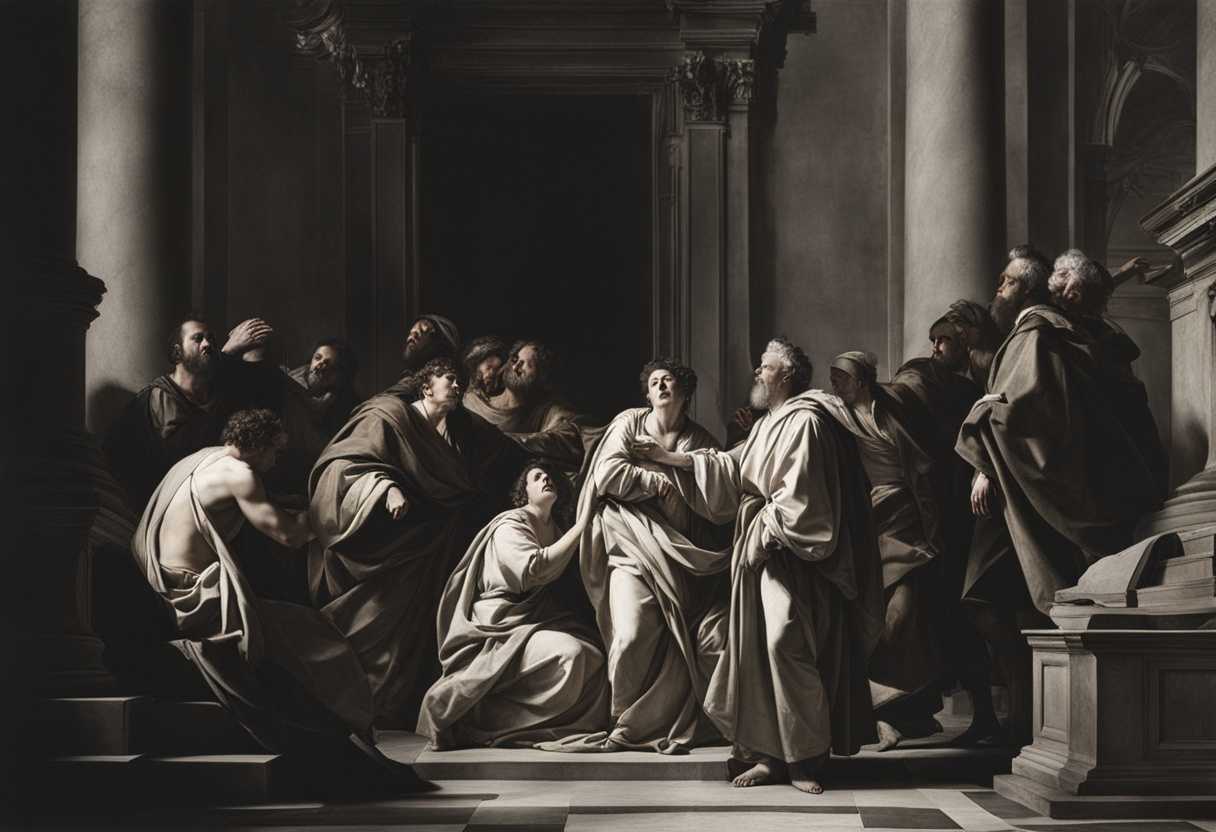
Setting the Scene for Mark 15:3
In Mark chapter 15, we find Jesus standing before Pontius Pilate, the Roman governor of Judea. The scene is tense as the Jewish religious leaders, including the chief priests and scribes, have brought Jesus to Pilate, accusing Him of claiming to be the King of the Jews and inciting rebellion against Rome. Pilate, a powerful and somewhat conflicted figure, questions Jesus about these accusations.
Surrounded by a crowd that has gathered in the courtyard of the governor’s residence, Pilate listens to the accusations and witnesses the silent demeanor of Jesus. The atmosphere is charged with political intrigue and religious tension, as the Jewish leaders press Pilate to condemn Jesus to death, while Pilate struggles with the decision, feeling unsure about the charges brought against Jesus.
As the dialogue unfolds between Pilate, Jesus, and the Jewish leaders, the fate of Jesus hangs in the balance, setting the stage for the dramatic events that will soon follow, leading to the crucifixion of Jesus. The scene captures the clash of powers and the unfolding of God’s redemptive plan through the sacrifice of Jesus on the cross.
What is Mark 15:3 about?
The silence of Jesus in the face of false accusations by the chief priests and elders in this verse holds profound significance. It reflects Jesus’ humility, self-control, and willingness to endure unjust suffering for a greater purpose. Jesus exemplifies a profound inner strength and trust in God’s plan, even in the midst of cruelty and betrayal by choosing silence. His silence speaks volumes about his character and his mission on earth. Silence holds power in moments of conflict or adversity. How often do we feel the need to defend ourselves or prove our innocence when faced with untrue accusations? Jesus’ quiet composure challenges us to reevaluate our responses and consider the strength that lies in silence. Jesus fulfills the prophecies that foretold his suffering and sacrifice by remaining silent. His actions remind us of the transformative power of enduring hardships with grace and faith. We should reflect on Jesus’ example in our own lives, finding inspiration and guidance in moments of unjust criticism or persecution.
Understanding what Mark 15:3 really means
In the midst of the intense political and religious turmoil of Jesus’ trial before Pilate, Mark 15:3 captures a pivotal moment where the chief priests hurl numerous accusations at Jesus, seeking His condemnation. This verse serves as a window into the unjust treatment and false accusations faced by Jesus, setting the stage for His ultimate sacrifice on the cross. The gravity of the situation becomes apparent when we delve into the historical and spiritual backdrop of the events unfolding.
Drawing parallels from other biblical passages like Isaiah 53:7, we see a prophecy fulfilled as Jesus, like a silent lamb led to slaughter, chooses not to defend Himself against the onslaught of accusations. Matthew 27:12-14 further emphasizes Jesus’ composed demeanor in the face of false charges, showcasing His unwavering commitment to His mission. 1 Peter 2:23 echoes this sentiment, urging believers to emulate Jesus’ response to suffering by entrusting themselves to God’s just judgment.
The relevance of Mark 15:3 extends beyond its historical context, offering timeless lessons for contemporary audiences. In a world where false accusations and unjust treatment abound, Jesus’ example teaches us the virtues of patience, trust in God, and maintaining integrity amidst adversity. His silent endurance underscores the importance of facing trials with faith and without retaliation, mirroring His trust in divine justice.
Consider a scenario where a professional is wrongly accused at work. Instead of reacting impulsively, they choose to emulate Jesus’ calm demeanor, trusting in their integrity and allowing the truth to prevail. This approach, inspired by Jesus’ response in Mark 15:3, often leads to a more peaceful resolution and upholds their dignity in the face of adversity.
The phrase “The chief priests accused him of many things” in Mark 15:3 highlights the relentless barrage of false claims Jesus endured, showcasing the depth of opposition He faced. His choice to remain silent speaks volumes about His strength, self-control, and unwavering faith in God’s plan. This silence serves as a powerful protest against the injustice He faced, fulfilling the prophetic imagery of the suffering servant in Isaiah.
By reflecting on Mark 15:3 and its broader implications, we can glean valuable insights for navigating our own trials with grace and faith. Just as Jesus stood firm in the face of false accusations, may we draw strength from His example to endure hardships with unwavering trust in God’s ultimate justice.
What is truth and how do we recognize it?
Truth is something that stands firm and unwavering, allowing it to be recognized through its consistency and authenticity. Pilate questions Jesus in search of the truth, portraying truth through their interactions in the verse. Pilate is seeking clarity and understanding amidst the conflicting information presented to him.
Recognizing truth involves aligning oneself with integrity and honesty, as depicted by Jesus in this verse. Jesus remains steadfast in his beliefs and does not waver in the face of questioning, embodying a clear example of truth. One can identify the authenticity of individuals’ claims and intentions by observing their actions and words and comparing them against a standard of truth. Genuine alignment between what is spoken and what is lived out in actions ultimately transcends mere words.
Application
When you see injustice in your world, will you rise to challenge it with courage and conviction? Stand up for what is right, speak out against oppression, and fight for equality like Jesus did in the face of adversity. Let your actions reflect your values, and be a beacon of light in a world that often feels dark. Will you heed the call to make a difference in the lives of those in need?

Reverend Michael Johnson is an experienced Church Minister with a profound expertise in spirituality and guidance. With a serene presence and a compassionate heart, he has faithfully served his congregation for over 20 years, leading them on a spiritual journey towards inner peace and enlightenment. Reverend Johnson’s extensive knowledge of religious philosophies and profound understanding of human nature have made him a trusted confidant and mentor to many, as he seamlessly weaves his profound wisdom into life teachings. Reverend Johnson’s calming demeanor and empathetic nature continue to uplift and heal souls, nurturing a sense of unity and tranquility within his community.