
Mark 9:34 is about a discussion among the disciples regarding who among them is the greatest, highlighting the importance of humility and servanthood in the kingdom of God.
34 But they kept silent, for on the way they had argued with one another about who was the greatest.
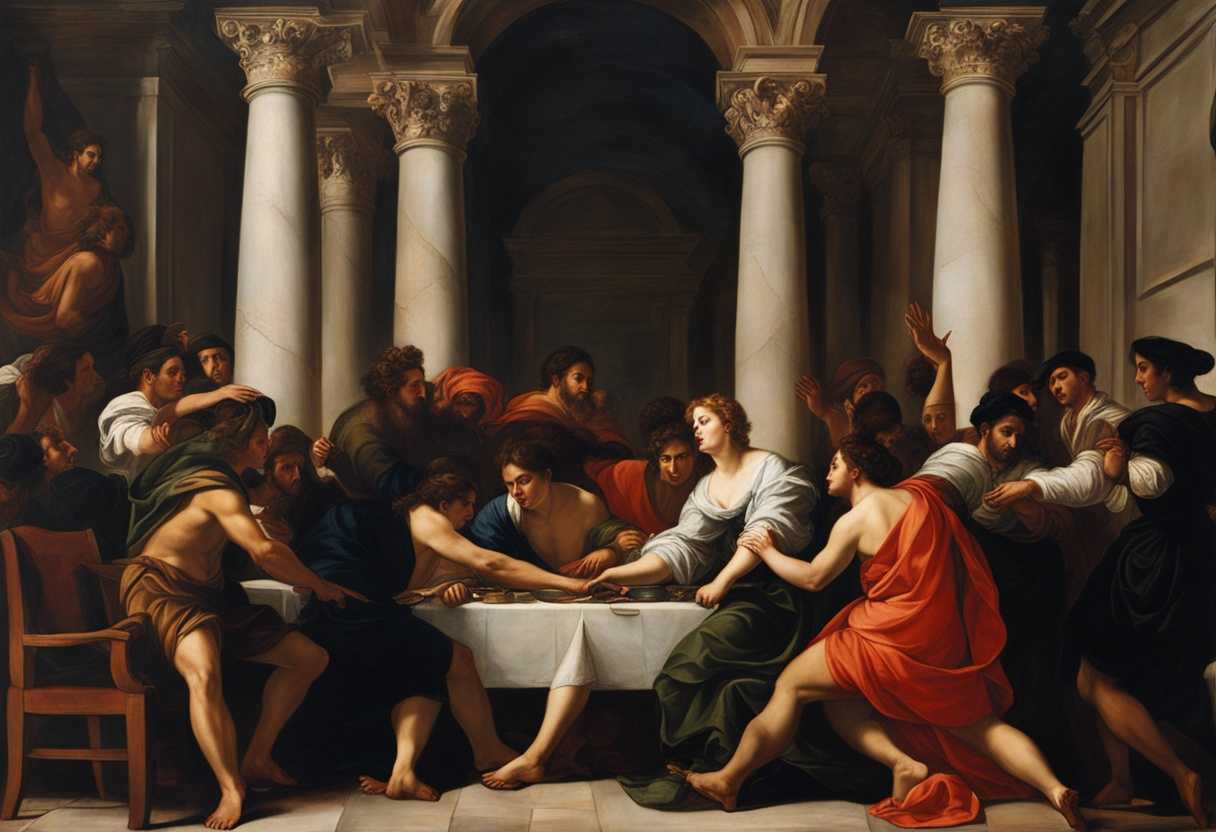
Setting the Scene for Mark 9:34
In Mark chapter 9, we find Jesus and his disciples traveling through Galilee. As they journey, Jesus takes the opportunity to teach his disciples about humility and servanthood. The disciples, still grappling with their understanding of Jesus’ teachings, find themselves in a heated discussion about who among them is the greatest.
The scene unfolds with the disciples gathered around Jesus, their faces reflecting a mix of confusion and pride. Peter, James, John, and the others are engaged in a spirited debate, each one trying to assert their importance and position in the group. Jesus, sensing the tension in the air, sits calmly amidst them, his gaze filled with compassion and wisdom.
The setting is a dusty road, with the sun beating down on the group as they walk. The disciples’ voices rise and fall as they argue, their footsteps kicking up small clouds of dust. Jesus, the embodiment of humility and grace, uses this moment to impart a powerful lesson on the true meaning of greatness in the kingdom of God.
What is Mark 9:34 about?
This verse reminds us of the importance of humility and service in our lives. Just like Jesus welcomed a child with open arms, we are called to approach others with kindness and acceptance. Children possess a simple and genuine faith, free from doubts and complexities. Jesus wants us to embrace this childlike faith in our relationship with Him and others, trusting in His guidance and love without reservation.
Have you ever reflected on your own attitude towards others? Do you approach them with humility and kindness, like Jesus did with the child? We can truly embody the teachings of Jesus by serving others selflessly and with a heart full of love. Let us strive to cultivate a childlike faith and embrace a spirit of humility and service in all aspects of our lives, just as Jesus did.
Understanding what Mark 9:34 really means
In Mark 9:34, we find a poignant moment in the teachings of Jesus as He addresses His disciples’ misguided notions of greatness. The context reveals a scene where the disciples, perhaps influenced by societal norms, were embroiled in a debate about who among them was the greatest. This incident serves as a stark reminder of our innate tendency to seek recognition and status, even in the presence of the ultimate example of humility, Jesus Christ.
The key phrases in this verse shed light on the disciples’ reactions and motivations. When it says, “They kept silent,” it signifies a moment of introspection and acknowledgment of their error. Their silence speaks volumes about their realization of the discrepancy between their actions and the teachings of Jesus. The phrase “On the way they had argued” underscores the human inclination towards self-promotion and the pursuit of personal glory, even in the company of the Son of God. “Who was the greatest” encapsulates their misunderstanding of greatness in the Kingdom of God, emphasizing that true greatness is not measured by worldly standards but by a heart of service and humility.
Drawing parallels from related Bible passages such as Matthew 20:26-28, Philippians 2:3-4, and John 13:14-15, we see a consistent theme of servant leadership and humility exemplified by Jesus and encouraged in His followers. These passages reinforce the idea that true greatness is found in selfless service and putting others’ needs above our own desires for recognition and status.
The relevance of this verse to contemporary society is striking. In a world that often glorifies power and prestige, the call to redefine greatness through the lens of Jesus’ teachings challenges us to examine our motives and priorities. It prompts us to consider whether we are seeking self-aggrandizement or striving to emulate the humility and sacrificial love modeled by Christ.
An anecdote illustrating this principle could be that of a successful business leader who, despite holding a lofty position, chooses to engage in acts of service and mentorship towards their team. This leader’s humility and willingness to perform menial tasks alongside their employees exemplify the essence of true greatness – a concept diametrically opposed to the world’s definition of success based on titles and accolades.
In conclusion, Mark 9:34 serves as a poignant reminder for us to evaluate our aspirations and behaviors. Are we pursuing greatness as defined by the world, or are we embracing the counter-cultural ethos of servant leadership espoused by Jesus? By aligning our values with the teachings of Christ, we have the opportunity to impact our relationships and communities positively, fostering a culture of love, humility, and service that transcends worldly notions of greatness.
How can we cultivate humility in our daily lives?
We can cultivate humility in our daily lives by shifting our focus from ourselves to others. This means practicing acts of service and kindness with a genuine heart, without seeking recognition or praise in return. We can truly embody the essence of humility in our daily actions by putting others’ needs before our own and approaching interactions with a spirit of humility and empathy.
Another way to cultivate humility is by embracing a mindset of learning and growth. Recognizing that we do not have all the answers and that there is always room for improvement allows us to be open to feedback, new perspectives, and personal development. We can humble ourselves in a way that fosters growth and connection with those around us by acknowledging our limitations and being willing to listen and learn from others.
Finally, practicing gratitude and acknowledging the contributions of others can also help us cultivate humility. We are reminded of our interconnectedness and interdependence by expressing appreciation for the support, guidance, and love we receive from others. This cultivates a sense of humility as we recognize the value of each individual’s contributions to our lives and our journey.
Application
Think of your life as a busy office or a bustling family gathering. In both spaces, success and harmony come from working together and putting others first. Jesus’ humility is the ultimate example of teamwork and love. Are you ready to bring that spirit into your daily grind and your home life, serving with genuine care and without needing applause? How will you show that selfless love today?

Reverend Michael Johnson is an experienced Church Minister with a profound expertise in spirituality and guidance. With a serene presence and a compassionate heart, he has faithfully served his congregation for over 20 years, leading them on a spiritual journey towards inner peace and enlightenment. Reverend Johnson’s extensive knowledge of religious philosophies and profound understanding of human nature have made him a trusted confidant and mentor to many, as he seamlessly weaves his profound wisdom into life teachings. Reverend Johnson’s calming demeanor and empathetic nature continue to uplift and heal souls, nurturing a sense of unity and tranquility within his community.