
Matthew 12:13 is about Jesus healing a man with a withered hand on the Sabbath, demonstrating his compassion and challenging the legalistic interpretation of the Sabbath law by the Pharisees.
13 Then he said to the man, “Stretch out your hand.” And the man stretched it out, and it was restored, healthy like the other.
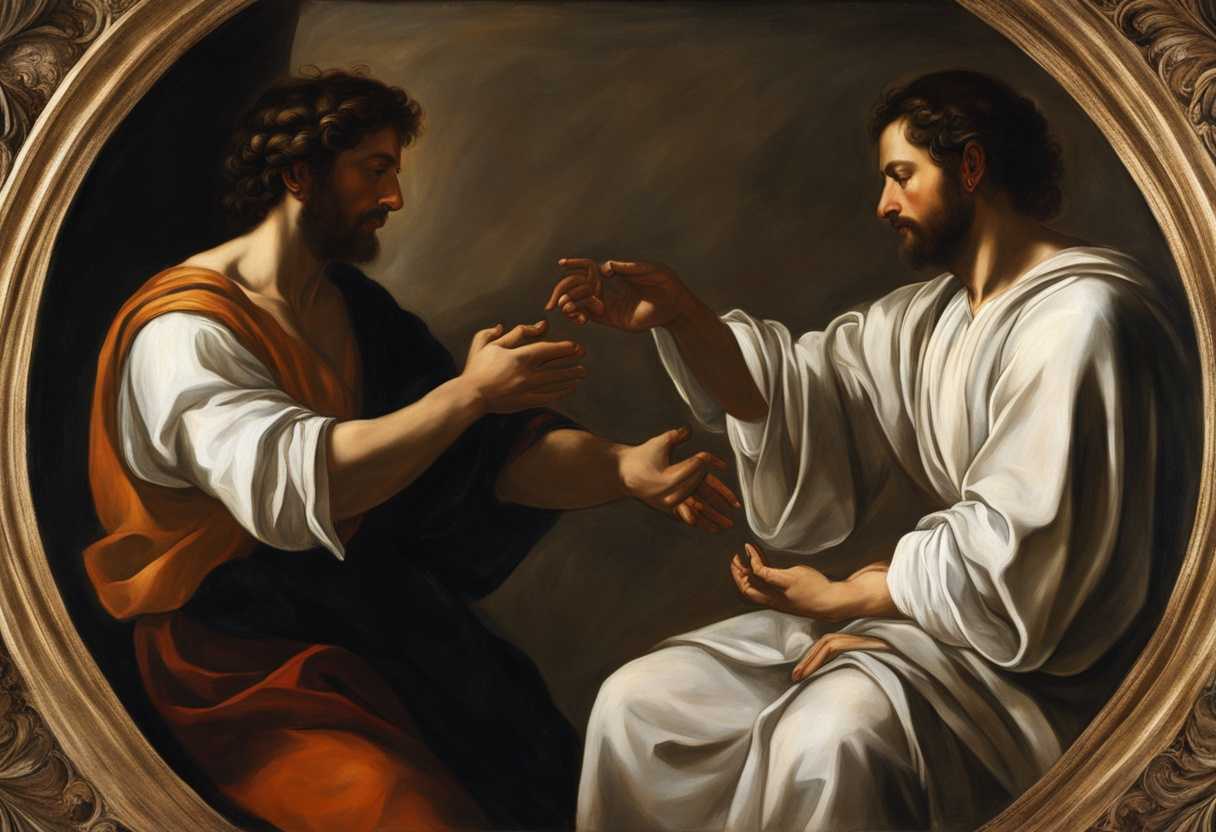
Setting the Scene for Matthew 12:13
In Matthew chapter 12, we find Jesus in a synagogue on the Sabbath day. As he enters the synagogue, he notices a man with a withered hand. The man is standing there, perhaps feeling self-conscious about his condition, yet hopeful for a miracle. The Pharisees, who are also present in the synagogue, are watching Jesus closely, looking for any reason to accuse him of breaking the Sabbath laws.
The atmosphere in the synagogue is tense as Jesus calls the man with the withered hand to come forward. The man hesitantly steps forward, unsure of what will happen next. Jesus, filled with compassion, asks the man to stretch out his hand. As the man obeys, his hand is miraculously restored, causing amazement and awe among the onlookers. The Pharisees, however, are not pleased and immediately begin to plot against Jesus.
The scene is set in a simple yet sacred space, with the synagogue filled with people seeking spiritual guidance and healing. Jesus, the man with the withered hand, and the Pharisees are the central figures in this moment, each playing a crucial role in the unfolding events. The contrast between Jesus’ compassion and the Pharisees’ legalism is stark, highlighting the central theme of mercy and love that runs throughout the Gospels.
What is Matthew 12:13 about?
An incredible act of compassion and defiance against the rigid legalism of the time is witnessed in this verse. Jesus, in healing a man’s withered hand on the Sabbath, not only demonstrated his immense love and mercy for those in need but also challenged the narrow-minded beliefs that prioritized rules over human well-being. Jesus boldly stood against the oppressive structures that had lost sight of the true intent of God’s laws by choosing to heal on the Sabbath, a day traditionally reserved for rest and religious observance.
Through this powerful moment, we are reminded of the importance of empathy, kindness, and putting the needs of others above religious conventions. Jesus’ actions serve as a poignant example for us to examine our own values and priorities. Are we more concerned with following rules to the letter, or do we strive to emulate the compassion and understanding that Jesus embodied? We can reflect on how to break free from rigid legalism and live out our faith with a spirit of grace, love, and humility, just as Jesus did in this transformative encounter.
Understanding what Matthew 12:13 really means
In the Gospel of Matthew, we encounter a powerful account where Jesus heals a man with a withered hand on the Sabbath. The Pharisees, known for their strict adherence to the law, were closely observing Jesus, waiting to see if He would break their Sabbath regulations by performing a healing. However, Jesus challenges their legalistic mindset by demonstrating that mercy and compassion take precedence over rigid rules. This confrontation between Jesus and the Pharisees sheds light on the deeper meaning of the Sabbath and the importance of prioritizing love and kindness towards others.
When Jesus instructs the man to “stretch out your hand,” it symbolizes not only physical healing but also an act of faith and obedience. Despite the man’s withered hand, he had to trust Jesus and take a step of faith by obeying His command. This simple yet profound act highlights the significance of believing in Jesus’ power to bring about transformation in our lives, even in the face of seemingly insurmountable challenges.
The phrase “It was restored, whole like the other” underscores the completeness of Jesus’ healing. The man’s hand was not merely partially healed but fully restored, emphasizing the miraculous nature of Jesus’ touch. This restoration serves as a powerful reminder of Jesus’ ability to bring wholeness and restoration to every aspect of our being, whether physical, emotional, or spiritual.
In today’s context, this passage challenges us to embody faith and obedience in our walk with Christ. Just as the man had to trust and act on Jesus’ words, we are called to step out in faith, believing in His power to heal and restore. Moreover, Jesus’ emphasis on mercy over legalism urges us to prioritize compassion and understanding in our interactions with others, rather than rigidly adhering to rules or traditions.
Reflecting on this story, we are reminded of the timeless relevance of Jesus’ healing ministry. His power to bring about wholeness and restoration transcends time and circumstances, offering hope and renewal to all who seek Him. Like the man with the withered hand, we are invited to trust in Jesus’ transformative power and experience the fullness of His healing touch in our lives.
Consider a scenario where someone facing a prolonged illness decides to pray for healing despite doubts and uncertainties. Through an act of faith, they experience a miraculous recovery, echoing the man’s journey in the Gospel narrative. This anecdote illustrates the profound impact of faith and Jesus’ ability to bring about restoration in the midst of adversity, inspiring us to trust in His healing grace.
In conclusion, Matthew 12:13 challenges us to embrace faith, prioritize mercy over legalism, and trust in Jesus’ power to heal and restore. It serves as a poignant reminder of Christ’s unwavering love and compassion towards humanity, inviting us to walk in faith and experience the transformative work of His healing touch in our lives.
How can we bring healing to others?
We can bring healing to others by reaching out to them with compassion and a desire to help. We can also offer our support and understanding to those who are in need of healing, just as Jesus healed the man with the withered hand out of a place of love and compassion. We can listen to their struggles, provide a comforting presence, and offer assistance in whatever way we can.
We can also bring healing to others by using our own gifts and abilities to make a positive impact in their lives. We can use our own skills, talents, and resources to help alleviate the suffering of those around us, just as Jesus used his power to heal the man’s hand. Whether it’s through acts of kindness, words of encouragement, or practical help, each of us has the ability to be a source of healing to those in need. We ultimately bring healing to others by being willing to step outside of ourselves and our own concerns to focus on the well-being of others. We can show love, compassion, and selflessness in our interactions with those who are hurting by following the example set by Jesus in this verse, bringing healing and wholeness to their lives.
Application
Just as Jesus healed and restored in Matthew 12:13, we too can seek His transformative touch in our lives. Let’s trust in His power to mend our broken pieces and bring light to our darkest corners. Don’t overlook the miracles He can perform in our daily battles and hardships. Will you take that leap of faith today and reach out to Him for the healing and restoration you long for?

Reverend Michael Johnson is an experienced Church Minister with a profound expertise in spirituality and guidance. With a serene presence and a compassionate heart, he has faithfully served his congregation for over 20 years, leading them on a spiritual journey towards inner peace and enlightenment. Reverend Johnson’s extensive knowledge of religious philosophies and profound understanding of human nature have made him a trusted confidant and mentor to many, as he seamlessly weaves his profound wisdom into life teachings. Reverend Johnson’s calming demeanor and empathetic nature continue to uplift and heal souls, nurturing a sense of unity and tranquility within his community.