
Matthew 18:1-10 is about Jesus teaching his disciples the importance of humility, innocence, and protecting the vulnerable in order to enter the kingdom of heaven.
1 At that time the disciples came to Jesus, saying, “Who is the greatest in the kingdom of heaven?”
2 And calling to him a child, he put him in the midst of them
3 and said, “Truly, I say to you, unless you turn and become like children, you will never enter the kingdom of heaven.
4 Whoever humbles himself like this child is the greatest in the kingdom of heaven.
5 “Whoever receives one such child in my name receives me,
6 but whoever causes one of these little ones who believe in me to sin, it would be better for him to have a great millstone fastened around his neck and to be drowned in the depth of the sea.
7 “Woe to the world for temptations to sin! For it is necessary that temptations come, but woe to the one by whom the temptation comes!
8 And if your hand or your foot causes you to sin, cut it off and throw it away. It is better for you to enter life crippled or lame than with two hands or two feet to be thrown into the eternal fire.
9 And if your eye causes you to sin, tear it out and throw it away. It is better for you to enter life with one eye than with two eyes to be thrown into the hell of fire.
10 “See that you do not despise one of these little ones. For I tell you that in heaven their angels always see the face of my Father who is in heaven.
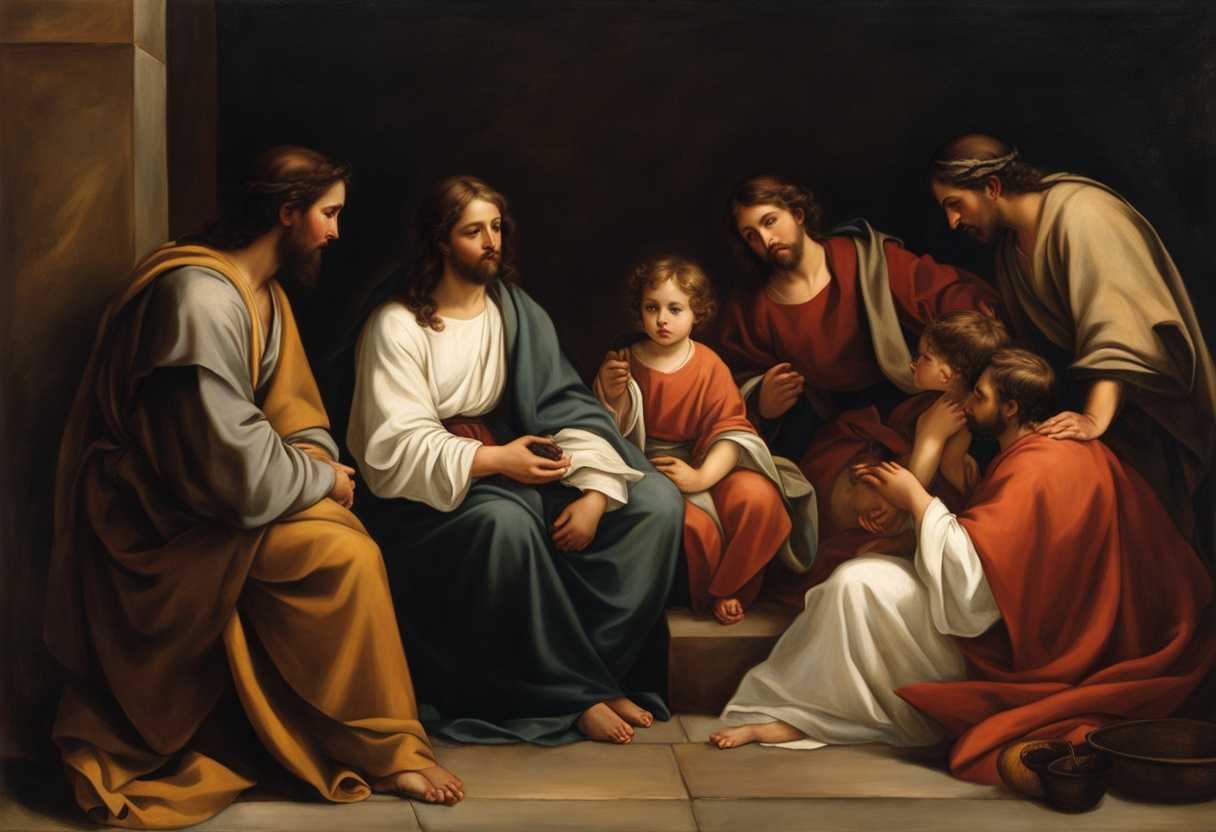
Setting the Scene for Matthew 18:1-10
The scene in Matthew 18:1-10 takes place in a humble dwelling in Capernaum, where Jesus is gathered with his disciples. The room is dimly lit by oil lamps, casting a warm glow on the faces of those present. The disciples are seated on the floor, their eyes fixed on Jesus as he begins to teach them.
As the disciples listen intently, Jesus notices a shift in their demeanor, sensing a spirit of competitiveness among them. He sees that they are vying for positions of power and authority in his kingdom. In response, Jesus calls a little child to him, placing the child in the midst of the group. The child’s innocent and trusting presence serves as a powerful visual aid for Jesus’ lesson on humility and the true nature of greatness in the kingdom of God.
Surrounded by his disciples, Jesus begins to speak, his voice gentle yet firm as he imparts timeless wisdom about the importance of humility and childlike faith. The disciples, humbled by Jesus’ words and the presence of the child, listen with open hearts, ready to learn and grow in their understanding of what it means to be a follower of Christ.
What is Matthew 18:1-10 about?
Jesus is emphasizing the importance of humility and the seriousness of causing harm to others in this verse. He uses the imagery of a millstone tied around one’s neck and being thrown into the sea to illustrate the severity of leading others astray or causing them to sin. Jesus is urging his followers to be mindful of their behavior and to prioritize the well-being of others by highlighting the consequences of such actions.
Imagine carrying a heavy stone around your neck, weighing you down and pulling you under. This is the imagery Jesus uses to convey the gravity of leading others into temptation. He is reminding us of the impact our actions can have on those around us and the responsibility we have to act in ways that uplift and support one another. Jesus is urging humility and warning against causing others to stumble, calling us to be mindful of our influence and to prioritize love and compassion in all that we do.
So, let us internalize this teaching of Jesus and strive to walk in humility, always mindful of how our actions and words may impact those around us. Let us always seek to build others up rather than tearing them down, and to always act in ways that reflect the love and grace of God. May we embody the spirit of humility and empathy in all of our interactions, remembering the profound impact we have on the lives of others.
Understanding what Matthew 18:1-10 really means
In Matthew 18:1-10, we delve into Jesus’ teachings on the nature of greatness in the Kingdom of Heaven. The disciples, seeking to understand who is the greatest, reveal their misunderstanding of true greatness. Jesus, in His response, uses a child as an example, emphasizing that humility and dependence on God are the hallmarks of greatness in God’s kingdom. This challenges us to reevaluate our perspectives on success and status, shifting our focus towards humility and servanthood, as exemplified by children who embody trust and innocence.
Welcoming and protecting children is a central theme in these verses. Jesus equates welcoming a child in His name to welcoming Him, highlighting the importance of valuing and protecting the vulnerable in society. Moreover, Jesus issues a stern warning against causing harm to the innocent, emphasizing the severity of leading others, especially the vulnerable, into sin. This underscores our responsibility to safeguard and nurture those who are most susceptible to harm and exploitation.
The seriousness of sin is another crucial aspect addressed in this passage. Jesus acknowledges the presence of sin in the world but condemns those who contribute to it. His use of hyperbolic language, such as cutting off a hand or foot that causes stumbling, underscores the radical measures required to deal with sin. This challenges us to confront and remove sin from our lives decisively, recognizing its destructive nature and the need for radical action to maintain holiness.
Each individual’s worth is emphasized in verse 10, where Jesus warns against despising even the most vulnerable among us. This highlights the value God places on every person, especially those society may overlook or undervalue. Just as the Parable of the Lost Sheep illustrates God’s care for each individual, we are called to recognize and cherish the worth of every person, particularly those in need of protection and support.
In applying these teachings to our lives today, we are called to embrace humility and dependence on God in a world that often exalts self-promotion and independence. Protecting the vulnerable remains a timeless imperative, requiring us to rally around those in need and uphold their dignity and well-being. Confronting sin seriously demands that we take proactive steps to remove its influence from our lives, acknowledging its destructive power and the necessity of living righteously.
As we reflect on these lessons of humility, protection of the vulnerable, and the seriousness of sin, may we be inspired to embody these principles in our daily lives. Let us strive to emulate the innocence and trust of children, to advocate for the marginalized and vulnerable, and to confront sin with courage and determination. In doing so, we align ourselves more closely with the values of God’s Kingdom and contribute to a world where humility, compassion, and righteousness prevail.
How can we become like little children in faith?
To become like little children in faith means approaching God with simplicity, humility, and trust. Children are known for their innocence, dependence, and willingness to believe without question. Similarly, in our faith journey, we should come to God with open hearts, free from doubt and cynicism, and trust in His guidance and goodness without reservation.
Emulating the faith of a child also involves letting go of pride and self-sufficiency. Children rely on their parents for everything, trusting that they will provide and protect. Likewise, we should surrender our desire for control and self-reliance, recognizing our need for God’s provision and care in every aspect of our lives. This requires a humble attitude of submission and dependence on God, acknowledging that we cannot navigate life’s challenges on our own.
Furthermore, being childlike in faith means maintaining a sense of wonder and awe in our relationship with God. Children often approach the world with curiosity, excitement, and a sense of amazement. We should cultivate a similar attitude of wonder and awe towards the mysteries of God’s love, grace, and power in our faith journey. We can experience a deeper intimacy with God and a renewed sense of joy and excitement in our spiritual walk by embracing this childlike faith.
Application
Embrace the humility and trust in God, just like a child with pure innocence. Let us navigate our faith with the same simplicity and trust. Let’s protect the innocence and faith of those around us, especially the vulnerable. How will you apply these teachings in your everyday life and interactions with others?

Reverend Michael Johnson is an experienced Church Minister with a profound expertise in spirituality and guidance. With a serene presence and a compassionate heart, he has faithfully served his congregation for over 20 years, leading them on a spiritual journey towards inner peace and enlightenment. Reverend Johnson’s extensive knowledge of religious philosophies and profound understanding of human nature have made him a trusted confidant and mentor to many, as he seamlessly weaves his profound wisdom into life teachings. Reverend Johnson’s calming demeanor and empathetic nature continue to uplift and heal souls, nurturing a sense of unity and tranquility within his community.