
Matthew 18:1-7 is about the importance of humility and the warning against causing others, especially the vulnerable, to stumble in their faith.
1 At that time the disciples came to Jesus, saying, “Who is the greatest in the kingdom of heaven?”
2 And calling to him a child, he put him in the midst of them
3 and said, “Truly, I say to you, unless you turn and become like children, you will never enter the kingdom of heaven.
4 Whoever humbles himself like this child is the greatest in the kingdom of heaven.
5 “Whoever receives one such child in my name receives me,
6 but whoever causes one of these little ones who believe in me to sin, it would be better for him to have a great millstone fastened around his neck and to be drowned in the depth of the sea.
7 “Woe to the world for temptations to sin! For it is necessary that temptations come, but woe to the one by whom the temptation comes!
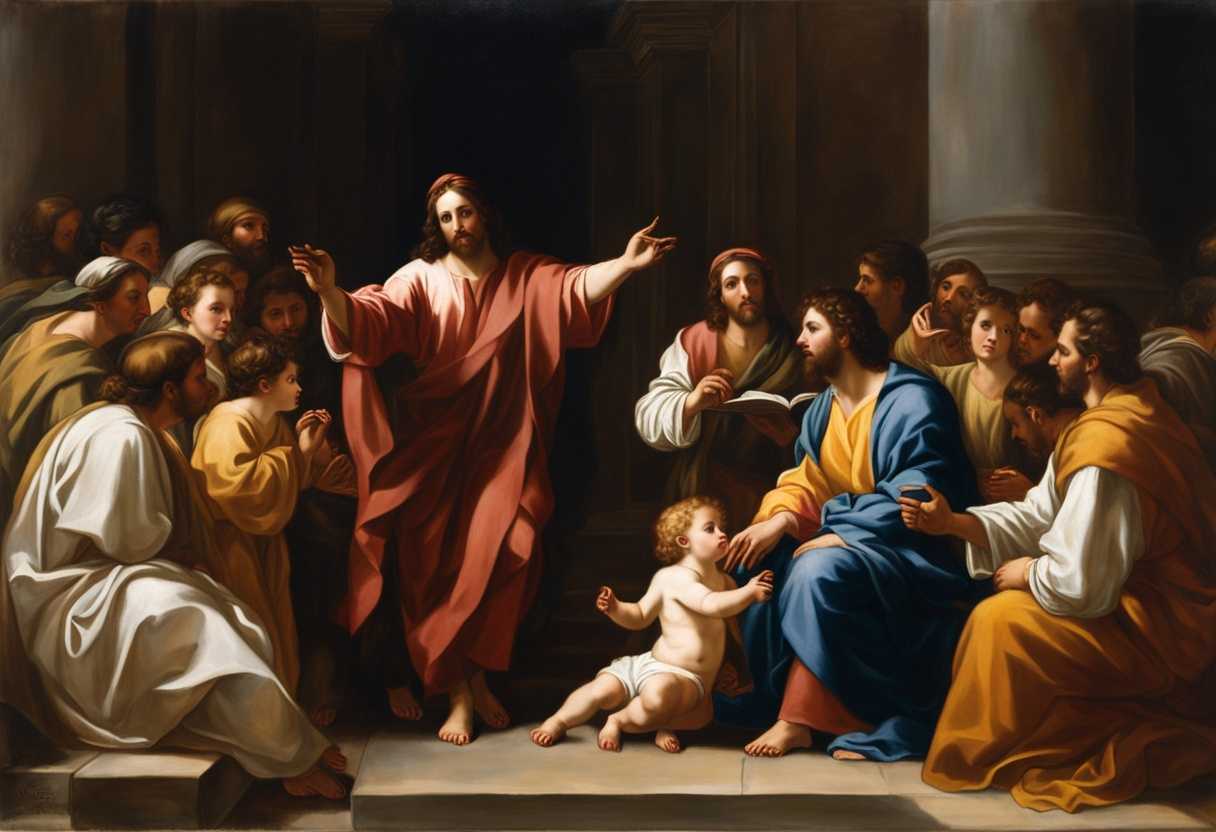
Setting the Scene for Matthew 18:1-7
In Matthew chapter 18, we find Jesus sitting down with his disciples on a hillside overlooking the Sea of Galilee. The disciples had been traveling with Jesus, witnessing his miracles and teachings, and they were eager to learn more about his kingdom. As they gathered around him, the disciples were filled with curiosity and anticipation, eager to hear what Jesus had to say.
Among the disciples present were Peter, James, John, Andrew, and the others who had left everything to follow Jesus. They had seen the crowds flock to Jesus, seeking healing and wisdom, and they were beginning to understand the true depth of his teachings. Jesus, knowing their thoughts, began to speak to them about humility and the importance of becoming like little children in order to enter the kingdom of heaven.
The scene was peaceful and serene, with the gentle breeze from the sea rustling through the grass as Jesus imparted his wisdom to his disciples. The disciples listened intently, their hearts open to receive the profound truths that Jesus was sharing with them. It was a moment of intimacy and learning, as Jesus guided his disciples on the path to spiritual growth and understanding.
What is Matthew 18:1-7 about?
Jesus offers a profound lesson on humility and the importance of treating others with compassion and kindness in this verse. Jesus emphasizes the responsibility we have towards our fellow human beings by using the imagery of causing someone to stumble. He reminds us that our actions can have a significant impact on those around us, and it is crucial to conduct ourselves with humility and awareness.
Jesus calls us to reflect on our behavior and consider how our actions might influence others. Are we lifting others up with our words and deeds, or are we causing them to stumble and fall? This verse serves as a powerful reminder to approach interactions with empathy and understanding, always mindful of the impact we have on those we encounter. Jesus’s message ultimately underscores the importance of humility in our relationships and interactions. By cultivating a spirit of humility and compassion, we uplift others and create a more harmonious and loving community. We should strive to follow Jesus’s teachings and treat others with the respect and dignity they deserve, always mindful of the influence we have on those around us.
Understanding what Matthew 18:1-7 really means
In the passage from Matthew 18:1-7, we find Jesus addressing His disciples’ question about greatness in the kingdom of heaven. The disciples, like many of us, were preoccupied with status and rank, seeking recognition and importance. Jesus, in His response, challenges their perspective by using a child as a powerful symbol of humility and dependence. He emphasizes the need for a transformation in attitude, urging His followers to adopt childlike qualities such as innocence, trust, and humility. This call to change and become like little children is a profound invitation to reevaluate our approach to faith and life, prioritizing simplicity and trust in God over worldly complexities.
True greatness, Jesus teaches, is not found in power or status but in humility and lowliness. By taking the lowly position of a child, one becomes great in the kingdom of heaven. This counter-cultural message challenges societal norms that equate greatness with prestige, urging us to value others above ourselves and embrace a servant-hearted attitude. Moreover, Jesus emphasizes the importance of welcoming and valuing those who are humble and lowly, equating such acts with welcoming Him. This call to inclusivity and love reminds us of the intrinsic worth of every individual, especially those who are often marginalized or overlooked.
However, Jesus also issues a stark warning about causing others to stumble, particularly the vulnerable or those who believe in Him. The severe consequences He describes for leading others into sin serve as a sobering reminder of our responsibility towards one another. Our actions and words can profoundly impact the faith and well-being of those around us, highlighting the need for integrity and thoughtfulness in how we interact with others. While temptations and stumbling blocks may be inevitable, Jesus condemns those who actively contribute to others’ downfall, emphasizing the serious repercussions of such actions.
An anecdote from a church community illustrates the transformative power of valuing and nurturing the “little ones” among us. A quiet and shy young boy, often overlooked, was profoundly impacted when a church member took the time to engage with him, listen to his thoughts, and encourage him. This small act of kindness led to the boy’s growth in confidence and active participation in the church community. This story serves as a poignant reminder of the significant influence we hold in the lives of those around us, urging us to approach others with kindness, understanding, and a heart of service.
How can we cultivate childlike humility and trust?
One way to cultivate childlike humility and trust is by recognizing our own limitations and dependence on God. We should have a similar dependency on God for our needs and direction in life, just as a child relies on their parents for guidance and protection. This humility allows us to approach God with a childlike trust, knowing that He is loving and faithful.
Additionally, embracing a childlike faith involves letting go of our pride and self-sufficiency. Children are naturally trusting and quick to forgive, traits that we can cultivate in our own lives as we strive to have a deeper relationship with God. We can grow in humility and trust by surrendering our egos and acknowledging our need for God, paving the way for a closer walk with Him. We can experience the freedom that comes from letting go of control and fully trusting in God’s plan for our lives by imitating the faith of a child. This humble trust opens the door for a deeper intimacy with God, allowing Him to work in and through us in ways we never thought possible.
Application
Embrace the simplicity of a child’s heart as you navigate your spiritual journey. Let go of ego and deceit, and walk in humility and purity. Choose unity and understanding, lifting others up instead of causing them to fall. Will you commit to following in the footsteps of Christ, embodying humility and innocence in all you do?

Reverend Michael Johnson is an experienced Church Minister with a profound expertise in spirituality and guidance. With a serene presence and a compassionate heart, he has faithfully served his congregation for over 20 years, leading them on a spiritual journey towards inner peace and enlightenment. Reverend Johnson’s extensive knowledge of religious philosophies and profound understanding of human nature have made him a trusted confidant and mentor to many, as he seamlessly weaves his profound wisdom into life teachings. Reverend Johnson’s calming demeanor and empathetic nature continue to uplift and heal souls, nurturing a sense of unity and tranquility within his community.