
Matthew 26:6-16 is about the sinful act of betrayal for material gain, demonstrated by Judas’ decision to betray Jesus for thirty pieces of silver despite Jesus’ true worth and sacrificial love.
6 Now when Jesus was at Bethany in the house of Simon the leper,
7 a woman came up to him with an alabaster flask of very expensive ointment, and she poured it on his head as he reclined at table.
8 But when the disciples saw it, they were indignant, saying, “Why this waste?
9 For this ointment could have been sold for a large sum and given to the poor.
10 But Jesus, aware of this, said to them, “Why do you trouble the woman? For she has done a beautiful thing to me.
11 For you always have the poor with you, but you will not always have me.
12 in pouring this ointment on my body, she has done it to prepare me for burial.
13 Truly, I say to you, wherever this gospel is proclaimed in the whole world, what she has done will also be told in memory of her.
14 Then one of the twelve, whose name was Judas Iscariot, went to the chief priests
15 and said, “What will you give me if I deliver him over to you?” And they paid him thirty pieces of silver.
16 And from that moment he sought an opportunity to betray him.
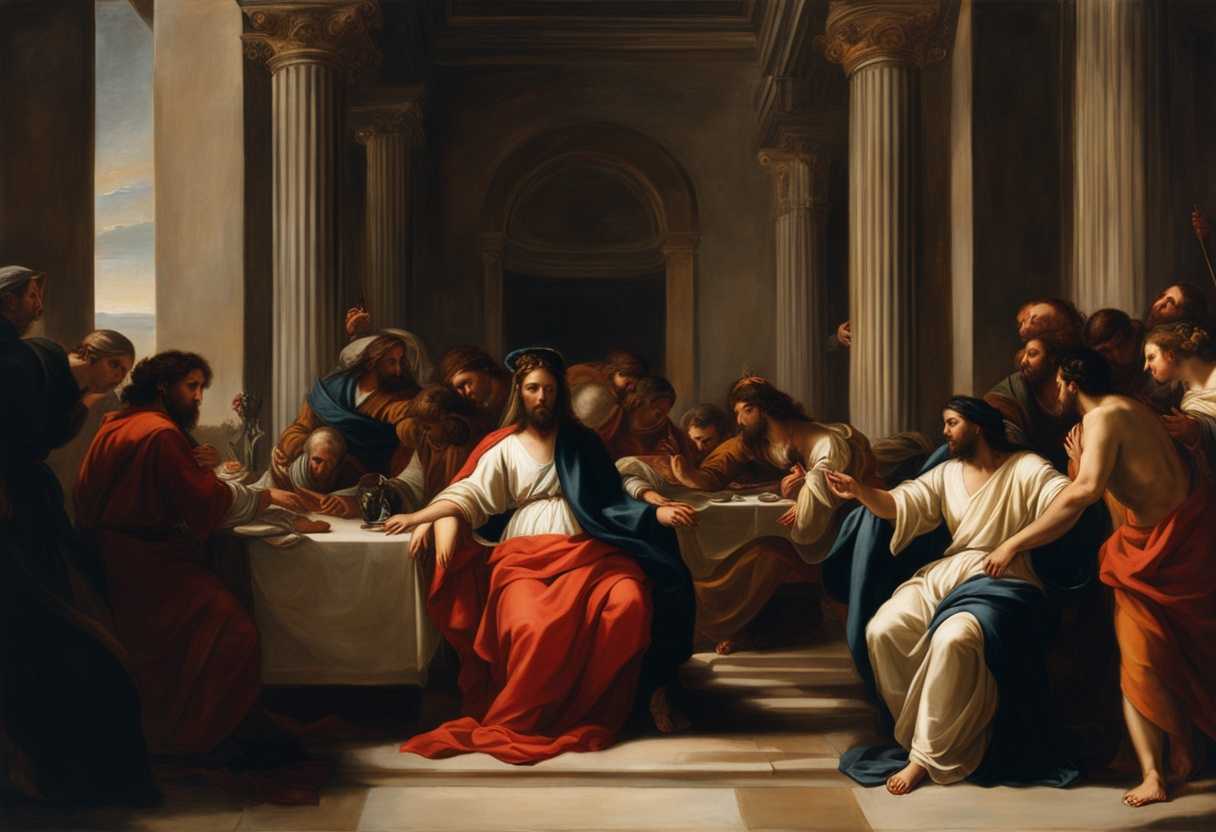
Setting the Scene for Matthew 26:6-16
The scene in Matthew 26:6-16 takes place in Bethany, at the home of Simon the leper. Jesus is reclining at the table with his disciples when a woman approaches Him with an alabaster jar of very expensive perfume. This woman is Mary, the sister of Martha and Lazarus, whom Jesus had raised from the dead. Mary pours the perfume on Jesus’ head as an act of love and devotion, preparing Him for His burial.
The disciples are present in the room, including Judas Iscariot, who questions the wastefulness of the act, suggesting that the perfume could have been sold and the money given to the poor. However, Jesus defends Mary, commending her for her sacrificial gesture and prophesying that her actions will be remembered wherever the gospel is preached.
The atmosphere in the room is filled with a mixture of emotions – love, devotion, confusion, and betrayal. The fragrance of the perfume fills the air, creating a sensory experience that adds to the intensity of the moment. This scene serves as a poignant reminder of the impending events leading up to Jesus’ crucifixion and the ultimate sacrifice He will make for humanity.
What is Matthew 26:6-16 about?
Imagine the weight of a decision, the gravity of a betrayal for just thirty pieces of silver. This verse reveals a moment when Judas, one of Jesus’ disciples, chose to betray his teacher and friend for a sum of money. Can you fathom the inner turmoil, the conflict of values, and the moral dilemma Judas must have faced in that pivotal moment? What drives someone to trade their integrity and loyalty for material gain?
This verse challenges us to reflect on our own actions and choices. It prompts us to consider the true worth of our principles and relationships. How much is our integrity worth to us? What price would we put on our loyalty and values? Through Judas’ betrayal, we are reminded of the timeless struggle between greed and righteousness, between material gain and spiritual fulfillment. It serves as a cautionary tale, urging us to examine our motives and priorities in our own lives. We should learn from Judas’ mistake and strive to uphold our values, even in the face of temptation.
Understanding what Matthew 26:6-16 really means
In Bethany, at the house of Simon the Leper, a poignant scene unfolds as a woman approaches Jesus with an alabaster jar of very expensive perfume. This act of pouring the costly perfume on Jesus symbolizes deep love and sacrifice, reflecting the woman’s profound reverence and devotion to Him. However, the disciples, particularly Judas Iscariot, react negatively, questioning the worth of such an extravagant gesture. Their materialistic perspective contrasts sharply with the spiritual depth of the woman’s act, highlighting a fundamental misunderstanding of the value of worship and devotion.
Jesus, in His response, defends the woman’s actions, recognizing them as a beautiful expression of love and preparation for His impending death. He acknowledges the significance of her gesture, emphasizing the importance of honoring Him in unique and meaningful ways. Jesus’s words, “The poor you will always have with you, but you will not always have me,” underscore the fleeting nature of opportunities to show love and devotion, urging us to seize such moments before they pass.
Parallel accounts in John 12:1-8 and Mark 14:3-9 further emphasize the themes of sacrifice, devotion, and the preparation for Jesus’s burial. These passages provide additional insights into the significance of the woman’s act and the reactions it elicited. Proverbs 19:17 complements the narrative by highlighting the balance between caring for the poor and engaging in acts of worship, reinforcing the idea that both are valuable in the eyes of the Lord.
Today, this story challenges us to reevaluate our priorities and perspectives on worship and devotion. In a world often consumed by material concerns, it reminds us of the profound value of spiritual acts and the need to recognize the true worth of our actions. By seizing opportunities to show love and devotion, we can honor God in unique and irreplaceable ways, enriching our spiritual lives and deepening our relationship with Him.
Consider a scenario where a person donates a significant sum to adorn their church with a beautiful stained-glass window. While some may view this as extravagant, the donor sees it as an act of worship, a tangible expression of reverence and devotion to God. Similarly, the woman’s anointing of Jesus challenges us to appreciate acts of devotion that transcend material value, enriching our spiritual journey and strengthening our connection with the divine.
In conclusion, the passage from Matthew 26:6-16 serves as a powerful reminder of the transformative impact of acts of worship and devotion. It prompts us to reflect on the spiritual significance of our actions, encouraging us to seize opportunities to honor and show love to God in ways that are meaningful and profound. Let us heed the lessons from this narrative, embracing the beauty of sacrificial love and the depth of devotion as we navigate our own spiritual journeys.
How can we demonstrate our devotion to Christ?
We can demonstrate our devotion to Christ by following the example of the woman in the passage who anointed Jesus with expensive perfume. We can pour out our hearts and lives in worship and surrender to Jesus, just as she poured out her costly perfume. This act of humility and sacrifice shows our love and devotion to Christ, acknowledging His worthiness of all that we have to offer.
Furthermore, like the woman in the passage, we can choose to prioritize Christ above all else, even when others may question or criticize our actions. We show that our love for Christ is unwavering and more valuable than anything the world has to offer by standing firm in our faith and devotion to Him. Our devotion to Christ should be evident in our actions, words, and choices, reflecting a deep and personal relationship with Him. We can show our devotion to Christ by recognizing His sacrifice for us on the cross and living a life that honors and glorifies Him. We can honor Christ by living in a way that reflects His love, grace, and teachings, just as Jesus commended the woman in the passage for preparing Him for His burial. Our devotion to Him should lead us to serve others, spread His message of salvation, and seek to bring glory to His name in all that we do.
Application
Let’s take a moment to dive into the powerful message in Matthew 26:6-16. Picture the love and sacrifice poured out by the woman who anointed Jesus with costly perfume. Just as she showed her devotion, we too can express our dedication to Christ in our daily lives. Let’s embody her selflessness in our actions and words, spreading love and faith around us. Will you heed the call to bring love and devotion into your own life?

Reverend Michael Johnson is an experienced Church Minister with a profound expertise in spirituality and guidance. With a serene presence and a compassionate heart, he has faithfully served his congregation for over 20 years, leading them on a spiritual journey towards inner peace and enlightenment. Reverend Johnson’s extensive knowledge of religious philosophies and profound understanding of human nature have made him a trusted confidant and mentor to many, as he seamlessly weaves his profound wisdom into life teachings. Reverend Johnson’s calming demeanor and empathetic nature continue to uplift and heal souls, nurturing a sense of unity and tranquility within his community.