
Matthew 26:6-9 is about the anointing of Jesus by a woman with expensive perfume, showcasing an act of deep adoration and preparation for his impending death and burial.
6 Now when Jesus was at Bethany in the house of Simon the leper,
7 a woman came up to him with an alabaster flask of very expensive ointment, and she poured it on his head as he reclined at table.
8 But when the disciples saw it, they were indignant, saying, “Why this waste?
9 For this ointment could have been sold for a large sum and given to the poor.
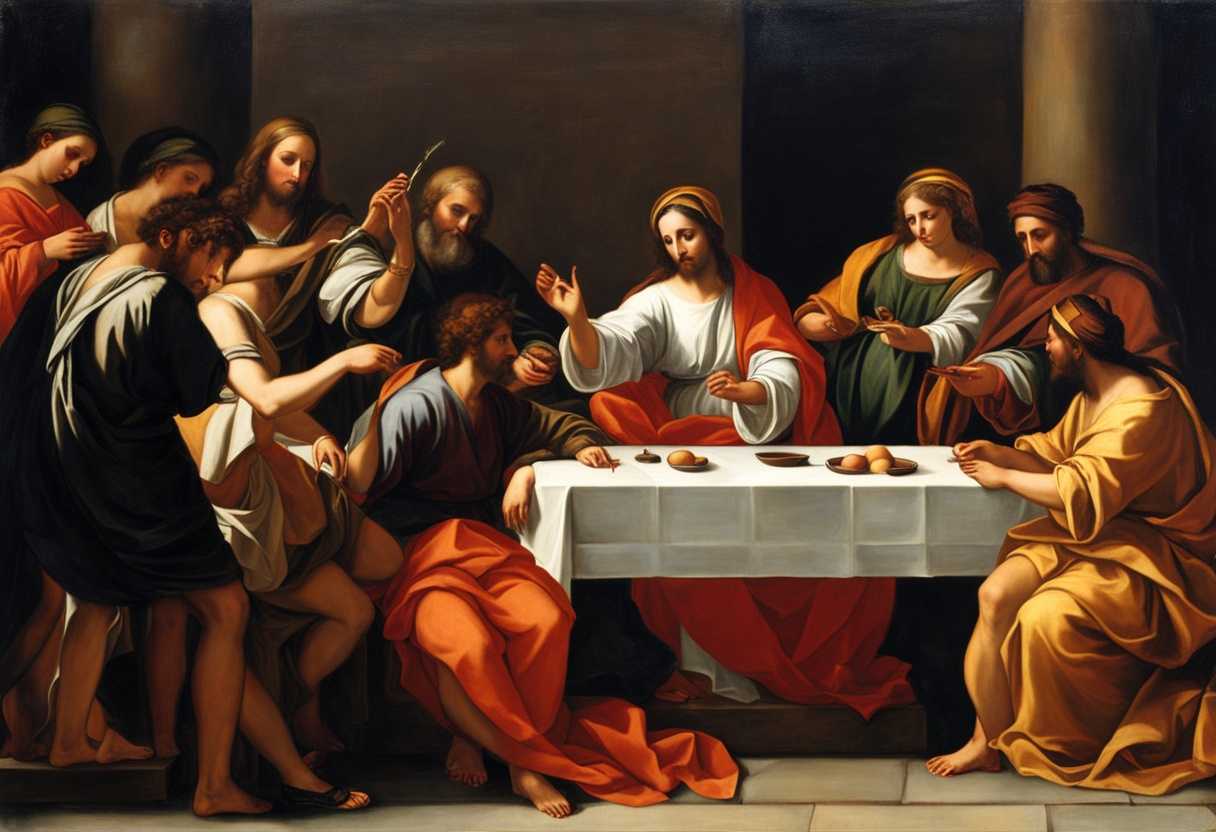
Setting the Scene for Matthew 26:6-9
In Matthew chapter 26, we find Jesus in Bethany, a village located on the eastern slope of the Mount of Olives. He is at the home of Simon the leper, who has been healed by Jesus in the past. As Jesus reclines at the table, a woman named Mary approaches Him with an alabaster jar of expensive perfume. Mary is the sister of Martha and Lazarus, whom Jesus had raised from the dead not long before.
The scene is intimate and filled with emotion as Mary breaks the jar and pours the fragrant oil over Jesus’ head. The disciples, including Judas Iscariot, who would later betray Jesus, are present and react with indignation at the perceived waste of the costly perfume. However, Jesus defends Mary’s actions, commending her for preparing Him for burial. The room is likely dimly lit, with the scent of the perfume filling the air, creating a poignant atmosphere as Jesus acknowledges the significance of Mary’s gesture in light of the events that are about to unfold.
What is Matthew 26:6-9 about?
A woman expresses her deep love and devotion to Jesus by anointing him with expensive perfume in this verse. Despite the beautiful and selfless gesture of the woman, the disciples criticize her, questioning the practicality and value of her actions. This situation challenges us to reflect on the true essence of love, sacrifice, and devotion. What is the value of extravagant gestures of love and worship? Does it matter more how we express our love and devotion rather than the cost or practicality of our actions?
The woman’s act of anointing Jesus with costly perfume symbolizes her reverence and adoration for him, transcending material worth. It serves as a reminder that love knows no bounds and should not be confined by societal norms or practical considerations. How often do we prioritize material or worldly concerns over genuine expressions of love and devotion? This verse invites us to ponder on our own attitudes towards acts of love and worship, urging us to shift our focus from external appearances or judgments to the sincerity and depth of our motivations. Let us contemplate the lesson this verse imparts and strive to cultivate a spirit of genuine love, sacrifice, and devotion in all that we do as we navigate through our own lives. Let us seek to understand the heartfelt intentions behind acts of love and worship rather than being quick to judge or criticize them. May we be inspired by the woman’s bold and extravagant gesture to express our love for others and for the divine without reservation or hesitation.
Understanding what Matthew 26:6-9 really means
In the narrative found in Matthew 26:6-9, we are transported to Bethany, specifically to the house of Simon the Leper. Here, a poignant scene unfolds as a woman approaches Jesus with an alabaster jar of very expensive perfume. This act of presenting such a valuable item signifies not only devotion but also a willingness to sacrifice something precious for the sake of honoring Jesus. The choice of the alabaster jar and the costly perfume underscores the depth of the woman’s reverence and love for the Lord.
As Jesus reclines at the table, the woman pours the perfume on his head, a gesture laden with symbolism. Anointing was a significant ritual associated with kingship and burial rites, signifying honor and preparation. The woman’s action goes beyond mere hospitality; it is a profound expression of her recognition of Jesus’ divine nature and her role in preparing him for his impending sacrifice.
The disciples’ reaction, encapsulated in the question, “Why this waste?” reveals their misunderstanding of the situation. They fail to grasp the spiritual and symbolic significance of the woman’s act, viewing it through a lens of material value rather than appreciating its deeper meaning. This prompts Jesus to enlighten them about the true essence of the woman’s gesture and its eternal significance.
Parallel accounts in John 12:1-8 and Mark 14:3-9 provide additional layers to the narrative, identifying the woman as Mary, the sister of Martha and Lazarus. These accounts offer a more comprehensive understanding of Mary’s devotion and the profound impact of her sacrificial act. Similarly, Luke 7:36-50, though a distinct event, echoes themes of forgiveness, devotion, and the potential for misunderstanding in acts of worship.
The relevance of this passage extends to contemporary audiences, challenging us to reflect on our own sacrificial giving, understanding of true value, and expressions of devotion and worship. Like the woman with the alabaster jar, we are called to offer our best to God, even when others may fail to comprehend the depth of our actions. This narrative prompts us to look beyond the material realm and recognize the spiritual significance of our deeds, emphasizing the personal and intimate nature of our worship.
In a modern context, imagine someone making a significant donation to a charitable cause, a gesture that may be perceived as extravagant by some. Similarly, the woman’s anointing of Jesus was a profound demonstration of love and reverence, illustrating the beauty of heartfelt devotion. Just as Jesus honored the woman’s act, we are reminded to value spiritual acts of love and sacrifice, acknowledging that their worth transcends earthly measures and societal norms.
In conclusion, the narrative of the woman anointing Jesus challenges us to evaluate the motivations behind our acts of devotion and the depth of our commitment to honoring God. It urges us to embrace sacrificial giving, appreciate the true value of spiritual expressions, and understand that acts of worship are deeply personal and may not always align with societal expectations. Let us heed the lesson of the alabaster jar, offering our most precious gifts to the Lord with hearts full of love and reverence.
Are we giving generously and selflessly to others?
The verse from Matthew encourages us to show generosity and selflessness towards others by giving without any hidden motives or seeking acknowledgment or praise. It teaches us the importance of giving from a place of genuine care and compassion, rather than for personal gain or recognition. True generosity lies in giving wholeheartedly without expecting anything in return, and with the sole intention of making a positive impact on the lives of others. The message of this verse reminds us to be generous in our actions towards others, whether through material possessions, our time, or our love and support. Our focus should be on how we can make a difference in someone else’s life rather than seeking approval or recognition for our charitable deeds. When we give selflessly and wholeheartedly, we not only bring joy and assistance to those in need but also cultivate a spirit of kindness and compassion within ourselves, leading to a more fulfilling and purposeful life.
Application
Are you ready to pour out your heart like Mary Magdalene poured out that perfume? Will you sacrifice your most valuable possessions to honor and serve the Lord with unwavering devotion? Let Mary’s actions guide you to show your love and reverence for Jesus every day. Take concrete steps to demonstrate your commitment and serve the Lord wholeheartedly. Are you prepared to give your all for the one who gave everything for you?

Reverend Michael Johnson is an experienced Church Minister with a profound expertise in spirituality and guidance. With a serene presence and a compassionate heart, he has faithfully served his congregation for over 20 years, leading them on a spiritual journey towards inner peace and enlightenment. Reverend Johnson’s extensive knowledge of religious philosophies and profound understanding of human nature have made him a trusted confidant and mentor to many, as he seamlessly weaves his profound wisdom into life teachings. Reverend Johnson’s calming demeanor and empathetic nature continue to uplift and heal souls, nurturing a sense of unity and tranquility within his community.