
Matthew 27:59 is about Joseph of Arimathea taking the body of Jesus, symbolizing his role in honoring and showing reverence for the death of Christ as well as foreshadowing the resurrection to come.
59 And Joseph took the body and wrapped it in a clean linen shroud
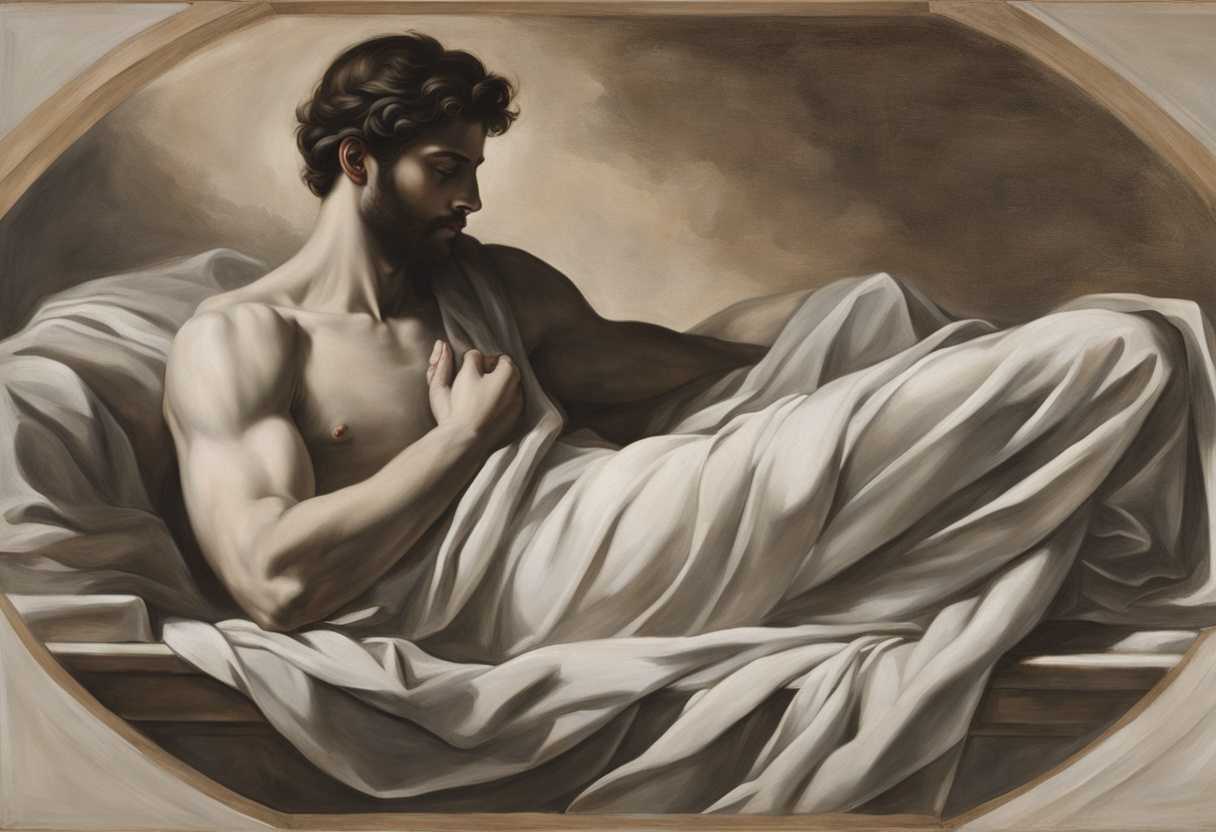
Setting the Scene for Matthew 27:59
In Matthew chapter 27, we find ourselves at the scene where Joseph of Arimathea, a wealthy disciple of Jesus, approaches Pontius Pilate to request the body of Jesus after His crucifixion. Joseph, a member of the Sanhedrin who had not consented to the council’s decision to put Jesus to death, had been a secret follower of Jesus. Filled with courage and compassion, Joseph takes a bold step by going to Pilate to ask for Jesus’ body so that he can give Him a proper burial.
Surrounded by a somber atmosphere, the scene unfolds in the courtyard of Pilate’s residence in Jerusalem. The air is heavy with the aftermath of the crucifixion, and the Roman soldiers stand guard as Joseph makes his plea. Pilate, surprised that Jesus had already died, grants Joseph’s request. Together with Nicodemus, another secret disciple of Jesus, Joseph takes down the body of Jesus from the cross and prepares Him for burial. The setting is poignant and filled with reverence as these two men, who had previously kept their faith hidden, now openly show their love and respect for their beloved teacher and Savior.
What is Matthew 27:59 about?
The verse you mentioned holds deep significance within the context of Christianity. Joseph of Arimathea’s act of providing his own tomb for Jesus’s burial shows great care, reverence, and honor towards Jesus, despite the circumstances surrounding His crucifixion. This act symbolizes an act of love, compassion, and respect for Jesus and His teachings.
It is a gesture of selflessness and sacrifice to offer one’s own final resting place for the body of another. It also serves as a powerful reminder of the importance of treating others with dignity, even in times of great distress or difficulty. Joseph of Arimathea’s actions demonstrate that in the face of tragedy and injustice, there is always an opportunity to show kindness and compassion.
Reflecting on this verse, we are reminded of the importance of empathy, generosity, and reverence for others, especially in times of hardship. It challenges us to consider how we can show kindness and respect towards those around us, even in the most challenging of circumstances. We are called to treat others with compassion and dignity, regardless of the situation, just as Joseph of Arimathea honored Jesus in His death.
Understanding what Matthew 27:59 really means
In the somber narrative of Jesus’ crucifixion and burial, Matthew 27:59 stands out as a poignant moment of care and reverence. Joseph of Arimathea, a figure of wealth and influence, takes it upon himself to ensure Jesus’ body is treated with dignity. This act of wrapping Jesus’ body in a clean linen cloth speaks volumes about the value of showing respect even in the face of adversity.
In exploring related Bible passages, we find additional layers of significance. John 19:38-42 delves deeper into Joseph of Arimathea’s role, shedding light on the meticulous preparations made for Jesus’ burial. Isaiah 53:9 prophesies the Messiah’s burial among the rich, aligning with Joseph’s provision of his own tomb. Mark 15:42-46 offers a different perspective on Joseph’s actions, emphasizing his courage in requesting Jesus’ body from Pilate.
The timeless relevance of this verse resonates with people today on various levels. It serves as a reminder of the importance of treating the deceased with respect and dignity, transcending cultural and temporal boundaries. Joseph’s courageous and devoted actions underscore the notion that faith is not merely a matter of belief but also of tangible deeds.
Consider a modern-day parallel to Joseph of Arimathea’s actions—a scenario where someone defies societal norms or financial constraints to honor a departed loved one. This contemporary act of love and respect mirrors Joseph’s sacrificial gestures, highlighting the enduring nature of virtues such as compassion and honor.
Delving into the meaningful phrases within the verse, we uncover layers of symbolism and significance. The act of wrapping Jesus’ body in a clean linen cloth symbolizes purity and reverence, while Joseph’s personal involvement in handling the body reflects a deep sense of responsibility and care. The decision to lay Jesus in his own new tomb speaks volumes about sacrifice and generosity, as Joseph relinquishes a valuable possession for the sake of honoring Jesus.
In conclusion, Matthew 27:59 serves as a profound reminder for us to emulate Joseph of Arimathea’s example of respect, courage, and devotion. It challenges us to honor others not only in life but also in death, urging us to embody these virtues in our actions and interactions with those around us.
How can we show courage in the face of adversity?
Courage can be demonstrated in the face of adversity by staying strong and resolute in our beliefs and convictions. Even when faced with challenging situations or opposition, we can choose to stand firm in what we know to be true and right, regardless of the circumstances. This unwavering commitment to what is right and just can be a powerful display of courage in times of adversity.
Furthermore, showing courage in the face of adversity involves facing our fears and overcoming them with strength and determination. It means not allowing fear to dictate our actions or decisions, but rather confronting our challenges head-on with a sense of bravery and confidence. We can inspire others to do the same and create a ripple effect of courage in our communities and beyond by standing tall in the midst of adversity. Demonstrating courage in the face of adversity ultimately requires a deep sense of faith and trust in something greater than ourselves. We can find the strength and resilience needed to persevere through difficult times by leaning on our beliefs and values. This unwavering faith can be a guiding light in moments of darkness, leading us to overcome obstacles with courage and grace.
Application
Just as Joseph of Arimathea treated Jesus with respect, let us honor Him in our daily lives. Let’s embody reverence and devotion, not just in words but in our actions too. Will you rise to the occasion and show your respect for Jesus today?

Reverend Michael Johnson is an experienced Church Minister with a profound expertise in spirituality and guidance. With a serene presence and a compassionate heart, he has faithfully served his congregation for over 20 years, leading them on a spiritual journey towards inner peace and enlightenment. Reverend Johnson’s extensive knowledge of religious philosophies and profound understanding of human nature have made him a trusted confidant and mentor to many, as he seamlessly weaves his profound wisdom into life teachings. Reverend Johnson’s calming demeanor and empathetic nature continue to uplift and heal souls, nurturing a sense of unity and tranquility within his community.