
Matthew 2:1-18 is about the fulfillment of Old Testament prophecies through the arrival of the wise men and the subsequent threat to Jesus’ life by King Herod, illustrating the divine protection and sovereignty over the life of Jesus despite earthly opposition.
Now after Jesus was born in Bethlehem of Judea in the days of Herod the king, behold, wise men from the east came to Jerusalem,
2 saying, “Where is he who has been born king of the Jews? For we saw his star when it rose and have come to worship him.”
3 When Herod the king heard this, he was troubled, and all Jerusalem with him;
4 and assembling all the chief priests and scribes of the people, he inquired of them where the Christ was to be born.
5 They told him, “In Bethlehem of Judea, for so it is written by the prophet:
6 “‘And you, O Bethlehem, in the land of Judah,
are by no means least among the rulers of Judah;
for from you shall come a ruler
who will shepherd my people Israel.’”
7 Then Herod summoned the wise men secretly and ascertained from them what time the star had appeared.
8 And he sent them to Bethlehem, saying, “Go and search diligently for the child, and when you have found him, bring me word, that I too may come and worship him.”
9 After listening to the king, they went on their way. And behold, the star that they had seen when it rose went before them until it came to rest over the place where the child was.
10 When they saw the star, they rejoiced exceedingly with great joy.
11 And going into the house, they saw the child with Mary his mother, and they fell down and worshiped him. Then, opening their treasures, they offered him gifts, gold and frankincense and myrrh.
12 And being warned in a dream not to return to Herod, they departed to their own country by another way.
13 Now when they had departed, behold, an angel of the Lord appeared to Joseph in a dream and said, “Rise, take the child and his mother, and flee to Egypt, and remain there until I tell you, for Herod is about to search for the child, to destroy him.”
14 And he rose and took the child and his mother by night and departed to Egypt.
15 and remained there until the death of Herod. This was to fulfill what the Lord had spoken by the prophet, “Out of Egypt I called my son.”
16 Then Herod, when he saw that he had been tricked by the wise men, became furious, and he sent and killed all the male children in Bethlehem and in all that region who were two years old or under, according to the time that he had ascertained from the wise men.
17 Then was fulfilled what was spoken by the prophet Jeremiah:
18 “A voice was heard in Ramah,
weeping and loud lamentation,
Rachel weeping for her children;
she refused to be comforted,
because they are no more.”
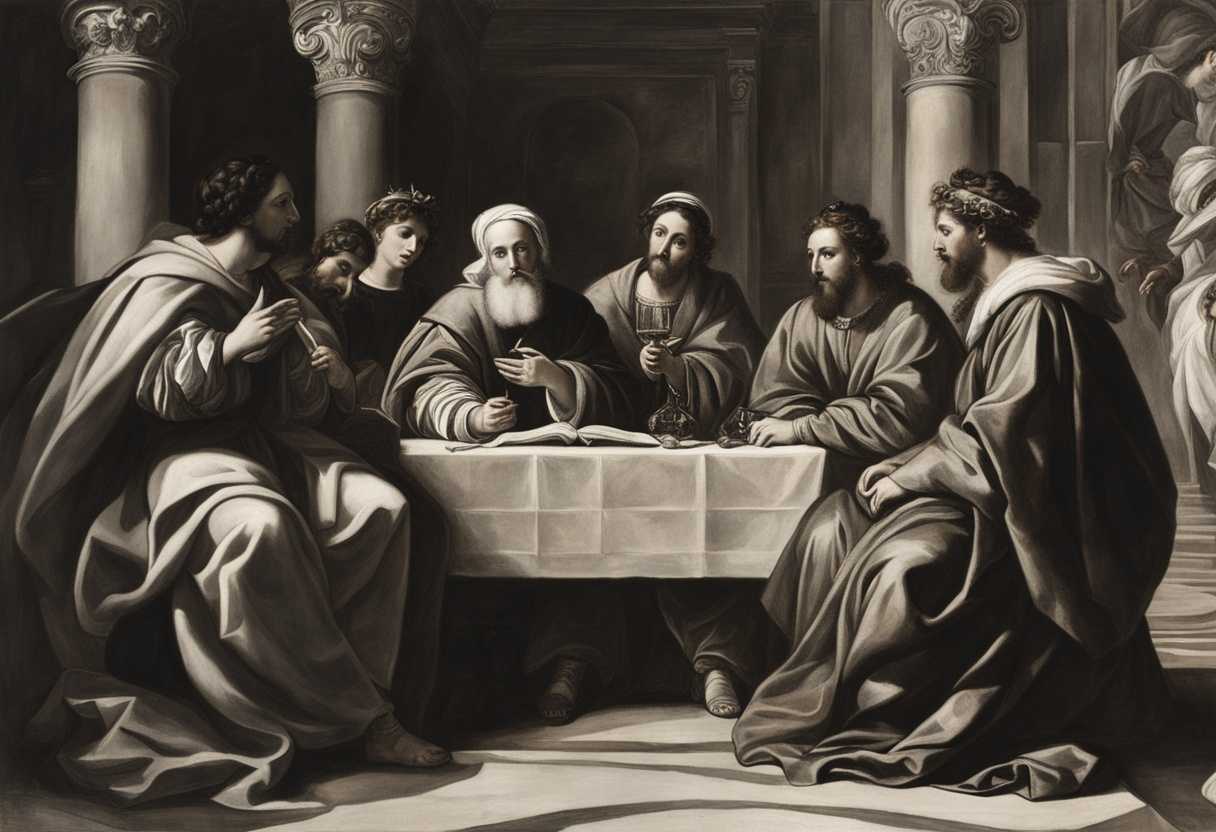
Setting the Scene for Matthew 2:1-18
The scene in Matthew chapter 2 opens with the arrival of the Magi, also known as the Wise Men, in Jerusalem. These men were astrologers from the East who had seen a star signifying the birth of the King of the Jews. Their journey led them to King Herod’s palace, where they inquired about the newborn king. Herod, feeling threatened by the news of a potential rival, consulted with the chief priests and scribes to learn where the Messiah was prophesied to be born.
The chief priests and scribes informed Herod that according to the prophet Micah, the Messiah was to be born in Bethlehem. Herod then summoned the Magi and instructed them to go to Bethlehem and search for the child. The Magi followed the guidance of the star and found the baby Jesus with Mary and Joseph in a humble dwelling. They presented gifts of gold, frankincense, and myrrh to the newborn king.
Meanwhile, Herod, who had deceitfully asked the Magi to report back to him after finding the child, became furious when he realized he had been outwitted. In his rage, he ordered the massacre of all male children in Bethlehem who were two years old and under, in an attempt to eliminate any potential threat to his reign. This tragic event fulfilled the prophecy of Jeremiah, highlighting the darkness and cruelty that surrounded the birth of the true King, Jesus.
What is Matthew 2:1-18 about?
This verse highlights two significant events surrounding the birth of Jesus in Bethlehem. First, the arrival of the Magi, also known as the Wise Men or Three Kings, who traveled from the East guided by a star to honor the newborn King of the Jews. Their journey symbolizes the inclusivity of Jesus’ message, as they were not part of the Jewish community but still recognized and worshipped him. Their offerings of gold, frankincense, and myrrh also foreshadow Jesus’ identity as a king, priest, and savior.
On the other hand, Herod’s ruthless reaction to the news of the newborn king exposes the threat Jesus posed to existing power structures. Herod demonstrates the lengths to which some are willing to go to maintain their power and control by ordering the massacre of infants in Bethlehem. This event also sets the stage for Jesus’ eventual conflict with earthly authorities and his role as a disruptor of traditional hierarchies. This verse challenges us to reflect on how we respond to the presence of Jesus in our lives and whether we are willing to acknowledge and follow him despite the challenges and opposition we may face.
Understanding what Matthew 2:1-18 really means
The passage in Matthew 2:1-18 unveils a captivating narrative of the Magi’s visit to see Jesus, the ensuing reaction of Herod, and the unfolding events that follow. This account holds profound significance as it underscores the acknowledgment of Jesus as the King by the Magi, the looming threat posed by Herod, and the meticulous fulfillment of ancient prophecies. As we delve into the key themes and phrases within this passage, we encounter the pivotal moment when “Magi from the east came to Jerusalem,” signifying the importance of their journey and their profound recognition of Jesus as the rightful King. Their inquiry, “Where is the one who has been born king of the Jews?” resonates with the acknowledgment of Jesus’ kingship by individuals outside the Jewish community, emphasizing the universal nature of His reign.
Moreover, the Magi’s declaration, “We saw his star when it rose and have come to worship him,” not only portrays divine guidance but also underscores the act of worship as a response to encountering the King of Kings. The subsequent disturbance felt by Herod and the inhabitants of Jerusalem when they learned of Jesus’ birth reflects the political tension and the perceived threat to Herod’s reign. The reference to the prophecy, “Out of Egypt I called my son,” not only highlights the fulfillment of ancient predictions but also unveils the intricate tapestry of God’s divine plan unfolding through these events.
In exploring related biblical passages, we find echoes of the Magi’s journey in prophecies such as Isaiah 60:3, which foretells the nations coming to the light, aligning with the Magi’s quest for the newborn King. Micah 5:2’s prophecy of a ruler coming from Bethlehem finds fulfillment in Jesus’ birthplace, emphasizing the meticulous orchestration of God’s plan. Hosea 11:1’s reference to calling His son out of Egypt, as mentioned in Matthew 2:15, further solidifies the intricate fulfillment of prophecies through Jesus’ life.
The relevance of this passage to people today is profound. Just as the Magi recognized Jesus’ kingship and worshiped Him, individuals are called to acknowledge and worship Him as the true King. The divine guidance symbolized by the star that led the Magi serves as a reminder of God’s guiding hand in our lives, directing our paths towards truth and purpose. The meticulous fulfillment of prophecies in Jesus’ birth and life underscores God’s faithfulness in fulfilling His promises, offering believers reassurance of His sovereignty and providence.
In a modern context, envision a contemporary journey mirroring that of the Magi, where individuals traverse great distances in search of truth and meaning. This quest for spiritual fulfillment, guided by faith and divine signs, parallels the Magi’s journey and serves as a metaphor for our own spiritual exploration. Ultimately, the passage of Matthew 2:1-18 beckons us to seek Jesus, trust in divine guidance, and find solace in the unwavering faithfulness of God’s promises, resonating across time and inviting us to partake in the timeless narrative of seeking and encountering the King of Kings.
How can we respond to the presence of evil?
We can respond to the presence of evil by seeking guidance and direction from God. We can turn to God for wisdom and discernment in the face of evil, just as the wise men consulted with King Herod to find the location of Jesus. We can navigate through challenging situations and overcome evil with His strength by staying connected to God through prayer and seeking His will.
Additionally, we can respond to evil by taking action, just as Joseph heeded the warning in a dream to flee to Egypt with Mary and Jesus to escape the wrath of Herod. We can trust in God’s leading and be courageous in following His instructions in times of adversity, even if we have to make difficult decisions or sacrifices. Through obedience and faith, we can find protection and refuge from the schemes of the enemy. God is sovereign and has a plan that surpasses the evil forces at work in the world; ultimately, we must remember that. We can have hope and assurance that He will ultimately triumph over evil and bring about justice and redemption by placing our trust in Him and relying on His power. We can cling to the light of God’s eternal truth and love in the face of darkness, knowing that He is in control and working all things for the good of those who love Him.
Application
Picture the wise men in your daily grind, striving to connect with Jesus while life’s noise tries to sidetrack you. Are you like them, determined and single-minded in pursuing His presence, or is Herod’s chaos pulling you away? Prioritize this pursuit in the hustle of work and the bustle of family. Be vigilant against distractions that threaten your spiritual journey. Are you ready to seek Him with undivided heart and focus?

Reverend Michael Johnson is an experienced Church Minister with a profound expertise in spirituality and guidance. With a serene presence and a compassionate heart, he has faithfully served his congregation for over 20 years, leading them on a spiritual journey towards inner peace and enlightenment. Reverend Johnson’s extensive knowledge of religious philosophies and profound understanding of human nature have made him a trusted confidant and mentor to many, as he seamlessly weaves his profound wisdom into life teachings. Reverend Johnson’s calming demeanor and empathetic nature continue to uplift and heal souls, nurturing a sense of unity and tranquility within his community.