
Matthew 2:1-6 is about the magi from the East who traveled to Bethlehem to worship and pay homage to the newborn King of the Jews, fulfilling the prophecy of Micah 5:2.
Now after Jesus was born in Bethlehem of Judea in the days of Herod the king, behold, wise men from the east came to Jerusalem,
2 saying, “Where is he who has been born king of the Jews? For we saw his star when it rose and have come to worship him.”
3 When Herod the king heard this, he was troubled, and all Jerusalem with him;
4 and assembling all the chief priests and scribes of the people, he inquired of them where the Christ was to be born.
5 They told him, “In Bethlehem of Judea, for so it is written by the prophet:
6 “‘And you, O Bethlehem, in the land of Judah,
are by no means least among the rulers of Judah;
for from you shall come a ruler
who will shepherd my people Israel.’”
Setting the Scene for Matthew 2:1-6
The scene in Matthew chapter 2 opens with a group of wise men, also known as the Magi, who have traveled a great distance from the east to Jerusalem. These wise men were scholars and astrologers who were well-versed in the study of the stars. They had observed a significant celestial event, a star that they believed signified the birth of a great king. This led them on a journey to find and worship the newborn King of the Jews.
Upon arriving in Jerusalem, the wise men seek an audience with King Herod, as they believed that the new king would be born in the royal city. Herod, troubled by the news of a potential rival to his throne, consults with the chief priests and scribes to inquire about the birthplace of the Messiah. They inform him that according to the prophet Micah, the Messiah is to be born in Bethlehem. Herod then secretly summons the wise men and instructs them to go to Bethlehem and report back to him once they have found the child, under the guise of wanting to worship him as well.
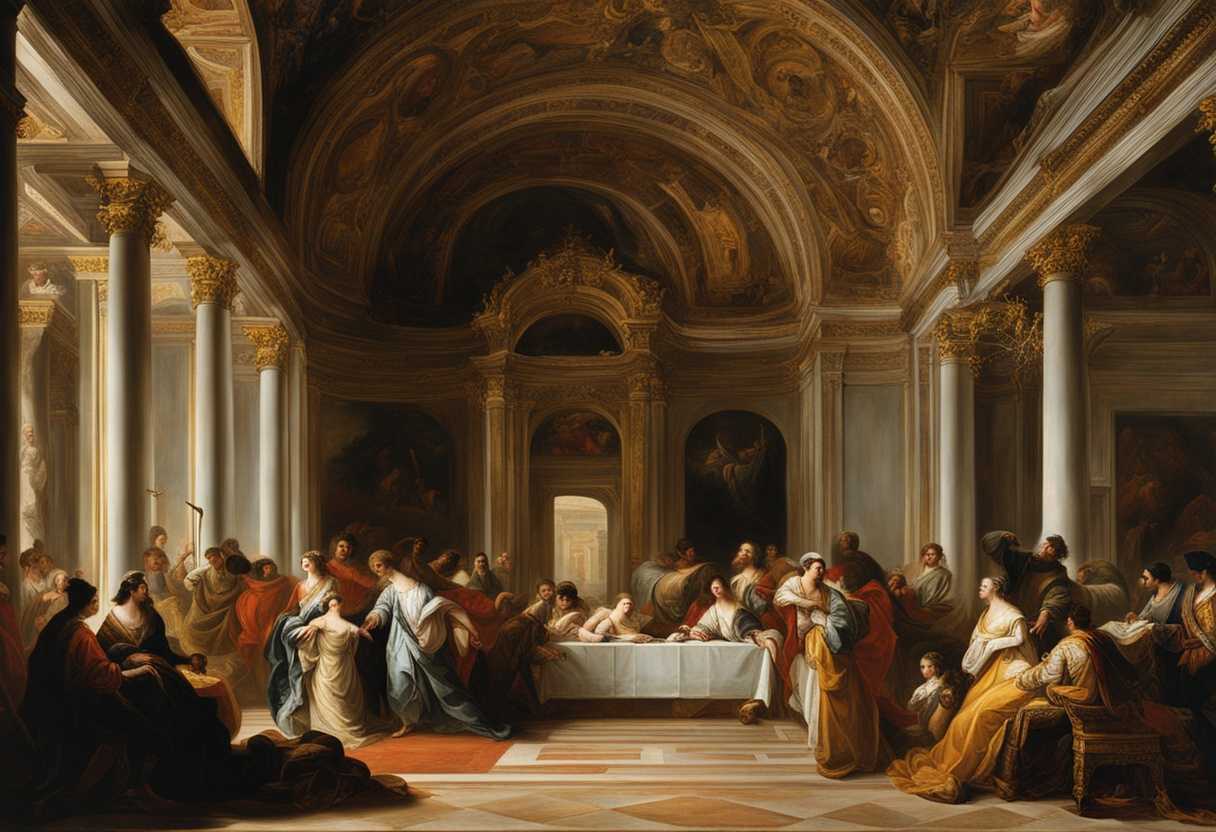
The scene is set in the opulent palace of King Herod in Jerusalem, with the wise men standing before him, sharing their knowledge of the star and their quest to find the newborn King of the Jews. The tension is palpable as Herod conceals his true intentions and the wise men continue on their journey to Bethlehem, guided by the miraculous star in the night sky.
What is Matthew 2:1-6 about?
Isn’t it fascinating how ancient prophecies were fulfilled through the birth of Jesus in Bethlehem? The wise men, also known as the Magi, were guided by a star to seek out the newborn King, following a path that ultimately led them to Jesus. This event not only showcases the importance of fulfilled prophecies but also highlights the universal nature of Jesus’ message, as the wise men came from afar to pay homage to him.
Furthermore, the actions of the wise men serve as an example for us today. We are encouraged to seek Jesus in our own lives just as they sought him diligently. We align ourselves with the truth and wisdom Jesus offers by seeking him, ultimately fulfilling our own spiritual journey. The story of the wise men reminds us of the power of faith, prophecy, and the profound impact of seeking Jesus in our lives.
Understanding what Matthew 2:1-6 really means
The passage in Matthew 2:1-6 recounts the intriguing visit of the Magi from the East to Jerusalem, guided by a star in search of the newborn King of the Jews. These wise men symbolize the acknowledgment of Jesus’ kingship by the Gentiles, emphasizing that His message transcends cultural boundaries and is meant for all people. Their declaration, “We saw his star when it rose and have come to worship him,” signifies divine guidance and the fulfillment of prophecy, underlining the significance of Jesus’ birth as a pivotal moment in history.
King Herod’s reaction to the news of a potential rival king reflects the political and social unrest that Jesus’ birth heralded. The disturbance in Jerusalem mirrors the tension between earthly powers and the divine kingdom that Jesus would establish. The specific mention of Bethlehem in Judea not only fulfills the prophecy from Micah 5:2 but also underscores the meticulous planning of God’s divine purposes, showcasing the seamless connection between Old Testament prophecies and the events surrounding Jesus’ birth.
The narrative in Matthew 2:1-6 resonates with various other biblical passages, such as Micah 5:2, Isaiah 60:3, and Psalm 72:10-11, which allude to the recognition of Jesus by the Gentiles and the homage paid to Him by kings. These connections highlight the universal significance of Jesus’ birth and the fulfillment of God’s promises throughout Scripture. Today, the journey of the Magi serves as a timeless reminder for individuals to seek truth, recognize divine authority, and trust in God’s faithfulness amidst life’s uncertainties.
Consider a modern-day parallel where an individual, much like the Magi, embarks on a quest for purpose and fulfillment. Through various pursuits, they eventually encounter Jesus, analogous to the star guiding the Magi to Bethlehem. In finding Christ, they experience a profound sense of peace, purpose, and belonging, mirroring the transformative journey of the Magi. This anecdote underscores the enduring relevance of seeking and encountering Jesus in our lives, offering hope, direction, and a deeper understanding of divine truth.
In conclusion, the account of the Magi’s visit in Matthew 2:1-6 encapsulates themes of divine guidance, prophecy fulfillment, and universal recognition of Jesus’ kingship. It challenges readers to reflect on their own spiritual journey, trust in God’s promises, and embrace the presence of the divine in their lives. Just as the Magi’s quest led them to worship the newborn King, may we too seek and honor Christ in our daily lives, finding fulfillment and purpose in His eternal truth.
How can we seek Jesus with sincere hearts today?
We can seek Jesus with sincere hearts today by displaying humility and a genuine desire to worship Him. Just like the wise men who sought Jesus diligently and were overjoyed when they found Him, we too can seek Him by setting aside our pride and seeking Him with all our hearts. We can experience the joy of encountering His presence in our lives by approaching Him with reverence and a pure desire to know Him more.
We can also seek Jesus with sincere hearts by being willing to make sacrifices for Him. The wise men traveled a great distance and offered precious gifts to honor Jesus. We can show our sincerity in seeking Him by being willing to give up our time, resources, and desires to follow Him wholeheartedly in our own lives. We demonstrate our genuine desire to seek Him and experience His presence in our lives by prioritizing our relationship with Him above all else.
Additionally, seeking Jesus with sincere hearts involves actively seeking Him in prayer, worship, and through His Word. We can seek direction and guidance from God through prayer and by meditating on His Word, just as the wise men were guided by a star to find Jesus. We can cultivate a genuine and sincere relationship with Him that will ultimately lead us closer to His heart by consistently seeking His presence and desiring to know Him more intimately.
Application
Think about how the wise men, guided by a star, sought the newborn King. Just as they were relentless, you need that same drive in your life to seek Jesus. Actively pursue a deeper relationship with Him every day, in work, in family, in all you do. Worship Him wholeheartedly. Will you chase Jesus with the same passion in your modern world?

Reverend Michael Johnson is an experienced Church Minister with a profound expertise in spirituality and guidance. With a serene presence and a compassionate heart, he has faithfully served his congregation for over 20 years, leading them on a spiritual journey towards inner peace and enlightenment. Reverend Johnson’s extensive knowledge of religious philosophies and profound understanding of human nature have made him a trusted confidant and mentor to many, as he seamlessly weaves his profound wisdom into life teachings. Reverend Johnson’s calming demeanor and empathetic nature continue to uplift and heal souls, nurturing a sense of unity and tranquility within his community.