
Matthew 5:24 is about the importance of seeking reconciliation and resolving conflicts with others before presenting offerings to God.
24 leave your gift there before the altar and go. First be reconciled to your brother, and then come and offer your gift.
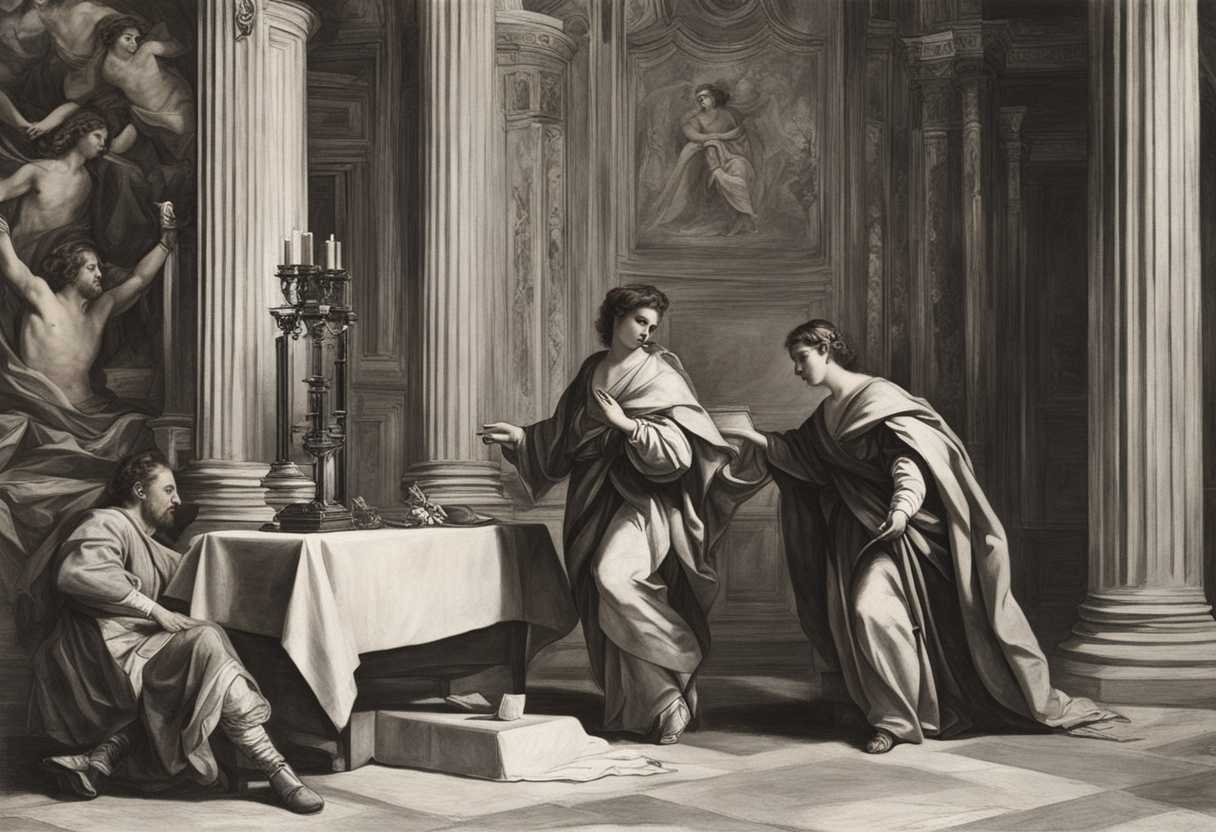
Setting the Scene for Matthew 5:24
In Matthew chapter 5, we find Jesus delivering the Sermon on the Mount to a large crowd gathered on a mountainside near the Sea of Galilee. The scene is serene, with the gentle breeze carrying the scent of wildflowers and the distant sound of waves lapping against the shore. The crowd is a mix of people from all walks of life, eagerly listening to Jesus’ teachings on various topics, including forgiveness and reconciliation.
In this particular verse, Jesus is speaking about the importance of reconciling with others before offering gifts at the altar. The scene includes a man named John who has come to the gathering seeking guidance. John has recently had a falling out with his brother over a family inheritance dispute. Feeling convicted by Jesus’ words, John is wrestling with the idea of reaching out to his brother to make amends before coming to worship. Jesus, with compassion in his eyes, gently urges John to go and be reconciled with his brother, emphasizing the significance of restoring relationships and living in harmony with others.
As the sun begins to set over the horizon, casting a warm golden glow over the crowd, John makes a decision to follow Jesus’ advice. With a renewed sense of purpose and determination, he sets off to seek out his brother and mend their broken relationship, understanding the profound impact of forgiveness and reconciliation in his spiritual journey.
What is Matthew 5:24 about?
This verse from the Bible, Matthew 5:24, emphasizes the importance of reconciliation and relationships over religious rituals and offerings. It conveys the message that our relationships with others, especially our brothers or sisters, should take precedence over any religious practices or material gifts we may offer. It suggests that true worship and righteousness are not just about external actions but are rooted in genuine love, forgiveness, and harmony with one another.
Imagine standing before the altar with a gift in hand, ready to make an offering, but realizing that there is unresolved conflict or tension with someone in your life. This verse challenges us to pause and reflect on the state of our relationships. Are there any fractures or misunderstandings that need to be addressed and healed before we can truly approach God with a clear conscience? It reminds us that our actions towards others are a reflection of our relationship with God, and that we must prioritize reconciliation and peace with those around us as an integral part of our spiritual worship.
Understanding what Matthew 5:24 really means
The verse Matthew 5:24 is nestled within the profound teachings of Jesus in the Sermon on the Mount, where He imparts wisdom on the attitudes and actions expected of His followers. It serves as a poignant reminder of the significance of reconciliation and the precedence of repairing relationships over mere religious rituals. The phrase “Leave your gift there before the altar” underscores the paramount importance of prioritizing reconciliation above religious offerings, indicating that God values our connections with others over ritualistic practices. “First be reconciled to your brother” emphasizes the essential nature of making peace and resolving conflicts with others before presenting offerings to God, highlighting the interconnectedness of our relationship with God and our relationships with fellow human beings. “Then come and offer your gift” signifies that true worship can only occur when we are at peace with others, showcasing that harmony in relationships is a prerequisite for genuine worship.
In Matthew 6:14-15, the importance of forgiveness and reconciliation is reiterated, emphasizing that our willingness to forgive others directly impacts how we receive forgiveness from our heavenly Father. 1 John 4:20 underscores the inseparable link between loving God and loving others, emphasizing that our love for God is evidenced through our love for those around us. Romans 12:18 encourages believers to actively pursue peace and reconciliation in their relationships, emphasizing the responsibility to live harmoniously with others as much as possible.
In today’s fast-paced and often disconnected world, relationships can easily become strained or fractured. This verse serves as a poignant reminder for us to prioritize reconciliation and peace in our interactions, urging us to introspect on our hearts and relationships before engaging in religious or spiritual practices. Consider the story of John, who, after a prolonged estrangement from his brother, realized the incompleteness of his worship due to the unresolved conflict. Prompted by this verse, he sought reconciliation, leading to not only the restoration of their relationship but also a newfound depth and authenticity in his worship and service to God.
In conclusion, Matthew 5:24 challenges us to place a premium on reconciliation and peace in our relationships, emphasizing that our worship and offerings to God are intricately intertwined with how we treat and interact with others. It beckons us to seek forgiveness, make amends, and ensure that our hearts are aligned with both God and our fellow human beings. Let us heed this call to prioritize reconciliation, recognizing that true worship emanates from a heart that is at peace with others.
Have I reconciled with others before worshipping God?
Jesus teaches in Matthew 5:24 that one should reconcile with others before worshiping God. This means that it is crucial to make amends and seek resolution in our relationships with others before we come before God in worship. This verse highlights the importance of reconciliation and forgiveness in our spiritual life. We demonstrate humility, grace, and a willingness to uphold the values of love and forgiveness that are central to the teachings of Jesus by reconciling with others before worshiping God. It also reflects our understanding of the interconnectedness of our relationships with others and our relationship with God. Through reconciliation, we not only mend broken relationships but also cultivate a spirit of unity and peace that aligns with God’s will for us.
Therefore, before approaching God in worship, we should take the time to reflect on our relationships, seek reconciliation where needed, and enter into worship with a clear conscience and a heart that is at peace with others. This practice allows us to fully engage in worship, knowing that we have done our part in fostering harmony and love within our communities.
Application
Think about Matthew 5:24 like addressing a lingering issue in your work or family. Isn’t it time to pick up the phone or send that message and bridge the gap with those you care about? Act now to heal old wounds and seek forgiveness, just as we’re taught. Taking this step can make a huge difference in your life and theirs. Will you choose to mend those relationships today?

Reverend Michael Johnson is an experienced Church Minister with a profound expertise in spirituality and guidance. With a serene presence and a compassionate heart, he has faithfully served his congregation for over 20 years, leading them on a spiritual journey towards inner peace and enlightenment. Reverend Johnson’s extensive knowledge of religious philosophies and profound understanding of human nature have made him a trusted confidant and mentor to many, as he seamlessly weaves his profound wisdom into life teachings. Reverend Johnson’s calming demeanor and empathetic nature continue to uplift and heal souls, nurturing a sense of unity and tranquility within his community.