
Matthew 9:15 is about Jesus explaining to the Pharisees that the time for fasting will come when He, the bridegroom, is taken away from His disciples, urging them to prepare themselves for that time with fasting and repentance.
9 And Jesus said to them, “Can the wedding guests mourn as long as the bridegroom is with them? The days will come when the bridegroom is taken away from them, and then they will fast.
Setting the Scene for Matthew 9:15
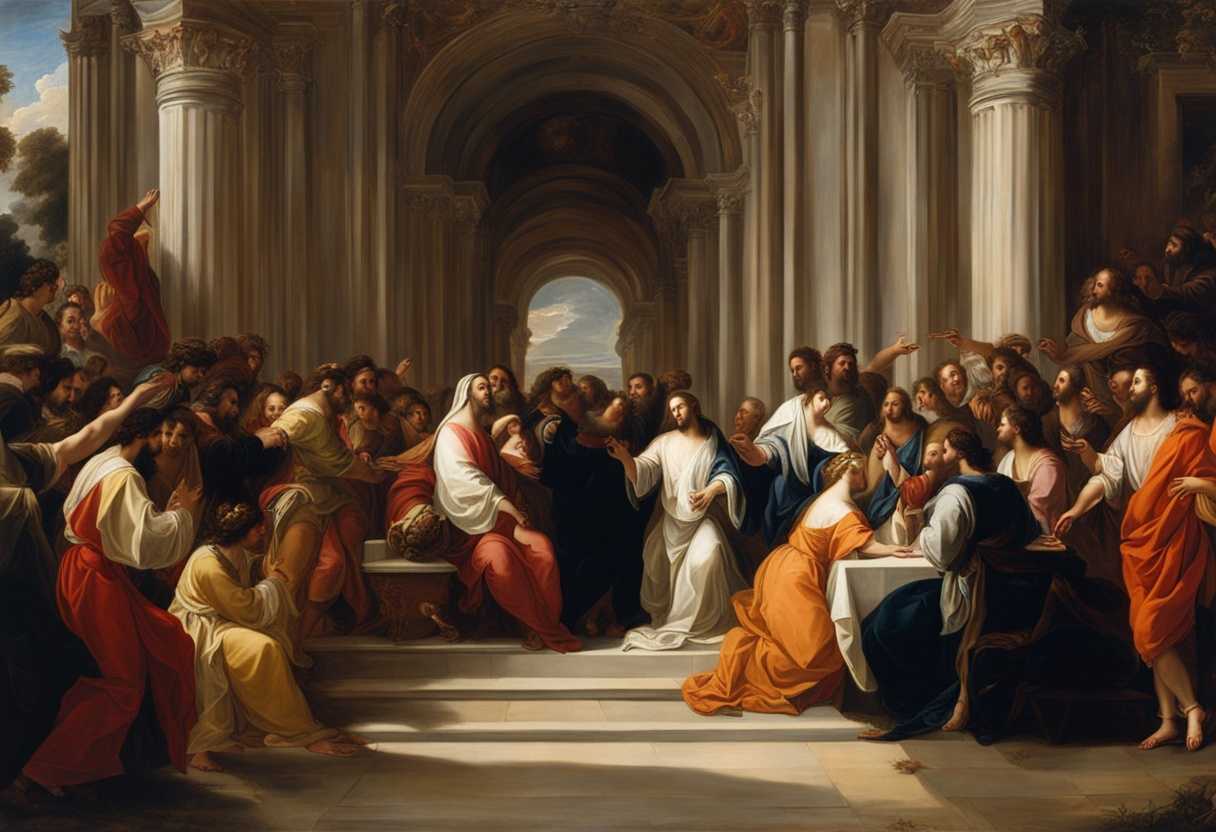
In Matthew chapter 9, we find Jesus having a meal with tax collectors and sinners at the house of Matthew, also known as Levi. The scene is set in a bustling town, with the aroma of food wafting through the air as the guests recline at the table. The room is filled with a mix of people from different walks of life – tax collectors, known for their corruption and greed, and sinners, who were likely outcasts in society.
Jesus, the central figure in the scene, is engaged in conversation with those gathered around Him, sharing words of wisdom and compassion. His presence exudes a sense of peace and acceptance, drawing people to Him despite societal norms. The Pharisees, the religious leaders of the time, are also present, looking on with disapproval at Jesus’ choice of company.
As the meal progresses, the disciples of John the Baptist approach Jesus, questioning Him about fasting. This interaction sparks a deeper conversation about the purpose of Jesus’ ministry and His role as the bridegroom, setting the stage for further teachings and revelations to come. The scene captures the essence of Jesus’ ministry – reaching out to the marginalized and challenging the religious norms of the time.
What is Matthew 9:15 about?
Jesus highlights the importance of fasting as a spiritual discipline in this verse. Fasting is not just about abstaining from food; it is a way to humble ourselves before God, to seek His guidance, and to deepen our relationship with Him. Jesus reminds us that our physical needs should not take precedence over our spiritual growth by emphasizing the need for spiritual preparation through fasting. Instead, we should prioritize our spiritual well-being and be ready for His return.
Have you ever thought about the true purpose of fasting? It’s not just about going without food, but about drawing closer to God and preparing our hearts for His presence. Jesus’ words remind us to focus on our spiritual nourishment and to cultivate a deep and meaningful connection with God. So, the next time you fast, let it be a time of true spiritual renewal and anticipation for the coming of our Lord.
Understanding what Matthew 9:15 really means
In Matthew 9:15, Jesus uses the metaphor of a wedding feast to explain the appropriateness of fasting and celebration in different contexts. The disciples of John the Baptist questioned why Jesus’ disciples did not fast like them and the Pharisees. Jesus responds by referring to Himself as the bridegroom, symbolizing joy and union in a wedding celebration. He foreshadows His crucifixion and ascension, indicating a future period of sorrow and separation for His disciples, during which fasting would be appropriate as they long for His return.
John the Baptist also refers to Jesus as the bridegroom in John 3:29, reinforcing the metaphor and the joy associated with His presence. Revelation 19:7-9 depicts the marriage supper of the Lamb, where Jesus is again portrayed as the bridegroom, symbolizing the ultimate union of Christ and the Church. Ecclesiastes 3:1-8 speaks about there being a time for everything, aligning with Jesus’ teaching on fasting and celebration, emphasizing the importance of recognizing the seasons in life.
Today, we can learn from Jesus’ words by understanding the different seasons in our lives. Just as there are times for joy and celebration, there are also times for reflection and mourning. Fasting remains a relevant spiritual discipline, helping believers draw closer to God, especially in times of need or when seeking guidance. By recognizing and respecting these spiritual seasons, we can deepen our faith and maintain a closer connection with God.
Consider a family celebrating a wedding, filled with joy and festivities, and contrast that with the same family mourning a loss, immersed in reflection and sorrow. Just as it would be inappropriate to fast during a wedding, it would be equally unfitting to celebrate during a time of mourning. This illustration underscores the importance of acknowledging and honoring the different seasons in our spiritual journey.
In conclusion, Jesus’ teaching in Matthew 9:15 prompts us to be mindful of the spiritual seasons in our lives. It reminds us that while there are times for celebration and joy in His presence, there are also times for fasting and reflection, especially as we await His return. This balance in recognizing the various seasons helps us grow in our faith and maintain a deeper connection with God.
What is the significance of fasting in Christianity?
Jesus explains the significance of fasting to his disciples in Matthew 9:15. Fasting in Christianity is a time of spiritual discipline and focus on prayer, seeking closeness with God, and obedience to His will. It involves abstaining from food or certain luxuries for a set period of time to show dedication and devotion to God. The act of fasting is seen as a way to humble oneself before God, to grow in faith, and to seek guidance and strength from Him. Christians encourage fasting to deny their physical needs and desires in order to nourish their spiritual life. It is a time to reflect on one’s relationship with God, repent of sins, and seek purification and renewal. Fasting is also a way to show dependence on God for sustenance and to deepen one’s understanding of the sacrifice that Christ made for humanity. Fasting holds a significant place in Christianity as a spiritual practice that helps believers grow closer to God and strengthen their faith.
Application
Just like we invest time in our careers and family, let’s invest in our spiritual growth by fasting. Imagine fasting as a tool to disconnect from life’s noise and reconnect with your inner peace. It’s not just a task, but a path to feel closer to God. So, how will you open your heart and embrace this journey today?

Reverend Michael Johnson is an experienced Church Minister with a profound expertise in spirituality and guidance. With a serene presence and a compassionate heart, he has faithfully served his congregation for over 20 years, leading them on a spiritual journey towards inner peace and enlightenment. Reverend Johnson’s extensive knowledge of religious philosophies and profound understanding of human nature have made him a trusted confidant and mentor to many, as he seamlessly weaves his profound wisdom into life teachings. Reverend Johnson’s calming demeanor and empathetic nature continue to uplift and heal souls, nurturing a sense of unity and tranquility within his community.