
1 In the month of Nisan, in the twentieth year of King Artaxerxes, when wine was before him, I took up the wine and gave it to the king. Now I had not been sad in his presence.
2 And the king said to me, “Why is your face sad, seeing you are not sick? This is nothing but sadness of the heart.”
3 I said to the king, “Let the king live forever! Why should not my face be sad, when the city, the place of my fathers’ graves, lies in ruins, and its gates have been destroyed by fire?”
4 Then the king said to me, “What are you requesting?” So I prayed to the God of heaven.
5 And I said to the king, “If it pleases the king, and if your servant has found favor in your sight, that you send me to Judah, to the city of my fathers’ graves, that I may rebuild it.”
6 And the king said to me (the queen sitting beside him), “How long will you be gone, and when will you return?” So it pleased the king to send me when I had given him a time.
7 And I said to the king, “If it pleases the king, let letters be given me to the governors of the province Beyond the River, that they may let me pass through until I come to Judah,
8 And the king granted me what I asked, for the good hand of my God was upon me.
9 Then I came to the governors of the province Beyond the River and gave them the king’s letters. Now the king had sent with me officers of the army and horsemen.
10 But when Sanballat the Horonite and Tobiah the Ammonite servant heard this, it displeased them greatly that someone had come to seek the welfare of the people of Israel.
11 So I went to Jerusalem and was there three days.
12 Then I arose in the night, I and a few men with me. And I told no one what my God had put into my heart to do for Jerusalem. There was no animal with me but the one on which I rode.
13 I went out by night by the Valley Gate to the Dragon Spring and to the Dung Gate, and I inspected the walls of Jerusalem that were broken down and its gates that had been destroyed by fire.
14 Then I went on to the Fountain Gate and to the King’s Pool, but there was no room for the animal that was under me to pass.
15 Then I went up in the night by the valley and inspected the wall, and I turned back and entered by the Valley Gate, and so returned.
16 And the officials did not know where I had gone or what I was doing, and I had not yet told the Jews, the priests, the nobles, the officials, and the rest who were to do the work.
17 Then I said to them, “You see the trouble we are in, how Jerusalem lies in ruins with its gates burned. Come, let us build the wall of Jerusalem, that we may no longer suffer derision.”
18 And I told them of the hand of my God that had been upon me for good, and also of the words that the king had spoken to me. And they said, “Let us rise up and build.” So they strengthened their hands for the good work.
19 But when Sanballat the Horonite and Tobiah the Ammonite servant and Geshem the Arab heard of it, they jeered at us and despised us and said, “What is this thing that you are doing? Are you rebelling against the king?”
20 Then I replied to them, “The God of heaven will make us prosper, and we his servants will arise and build, but you have no portion or right or claim in Jerusalem.”
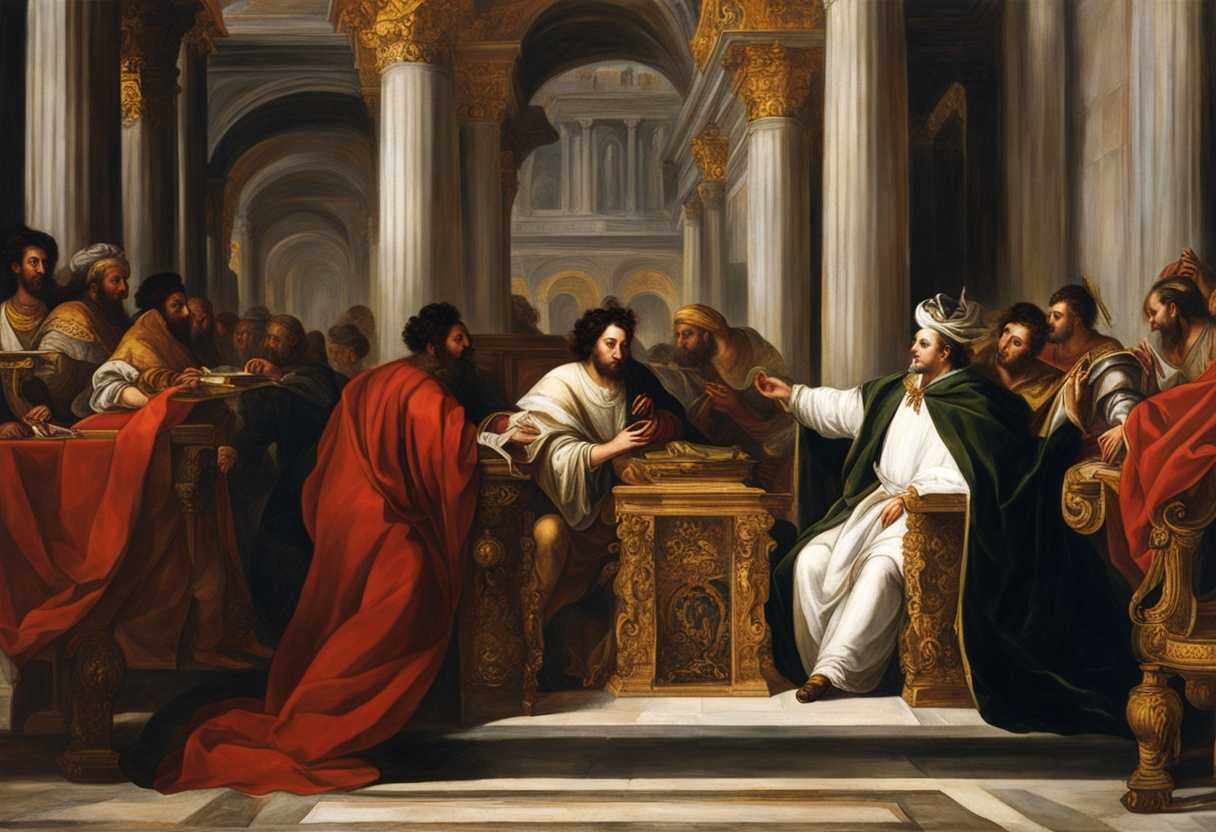
The True Meaning of Nehemiah 2
The book of Nehemiah was written by the prophet Nehemiah, who served as a cupbearer to the Persian king Artaxerxes. Nehemiah was a Jew living in exile, deeply concerned for the state of his homeland, Jerusalem, which had been left in ruins after the Babylonian conquest. Nehemiah receives permission from the king in this chapter to return to Jerusalem and oversee the rebuilding of the city’s walls. This sets the stage for a remarkable story of faith, determination, and the triumph of God’s people in the face of adversity. We will see Nehemiah’s bold request to the king, his perilous journey to Jerusalem, and the beginning of the monumental task of reconstruction, all while facing opposition from hostile neighbors.
Nehemiah’s actions in this chapter echo the sentiments of the psalmist who wrote, “If the Lord does not build the house, the builders labor in vain” (Psalm 127:1). The success of this endeavor will depend on Nehemiah’s reliance on God’s guidance and the unity of the people.
Nehemiah 2:1-5
I took the wine and gave it to the king in the month of Nisan in the twentieth year of King Artaxerxes, as read in Nehemiah 2:1-5. I had not been sad in his presence before, so the king asked me, ‘Why does your face look so sad when you are not ill? This can be nothing but sadness of heart.’ I was very much afraid, but I said to the king, ‘May the king live forever! Why should my face not look sad when the city where my ancestors are buried lies in ruins, and its gates have been destroyed by fire?’ The king said to me, ‘What is it you want?’ Then I prayed to the God of heaven, and I answered the king, ‘If it pleases the king and if your servant has found favor in his sight, let him send me to the city in Judah where my ancestors are buried so that I can rebuild it. Nehemiah, who was cupbearer to the King of Persia, Artaxerxes, is seen in this passage. Nehemiah’s position as cupbearer put him in close proximity to the king, allowing him to have moments of conversation and influence. It’s important to recognize the context in which this conversation takes place. The month of Nisan was significant as it fell during the Jewish month when Passover would have been celebrated, marking a period of renewal and deliverance.
Nehemiah’s demeanor changes when he serves wine to the king, displaying his inner turmoil over the state of Jerusalem. The king notices this change and asks Nehemiah about the reason behind his sadness. This interaction gives us a glimpse into the human side of Nehemiah, showing his compassion for his people and his willingness to step out in faith despite fear. It’s a powerful lesson about the importance of authenticity and speaking up for what is right, even in the presence of authority figures.
When Nehemiah explains the reason for his sadness, he opens the door for the king to inquire further and offer his support. Nehemiah seizes this moment by praying silently to God for guidance before making his bold request to be allowed to go to Jerusalem to help rebuild it. This demonstrates Nehemiah’s faith in God and his belief that the king’s favor could be swayed by divine intervention.
This passage highlights themes of courage, faith, and God’s sovereignty. Nehemiah’s bravery in approaching the king and his dependence on prayer before speaking reveal his trust in God’s plan. It also illustrates how God can work through both ordinary and powerful individuals to accomplish His purposes. This account serves as a reminder to us that, like Nehemiah, we should be bold in our faith, seek guidance through prayer, and trust in God’s timing and provision.
This narrative of Nehemiah’s interaction with the king also echoes the story of Esther, another figure in the Bible who risked her life by approaching the Persian king to save her people. Both Nehemiah and Esther exemplify the principle of stepping out in faith, even when faced with daunting circumstances, to fulfill God’s plans and purposes. This serves as a timeless message for believers today, encouraging us to be courageous and trust in God’s guidance, even when the path ahead seems uncertain.
Nehemiah 2:6-8
Nehemiah’s conversation with King Artaxerxes of Persia in Nehemiah 2:6-8 reveals his request for permission to go to Jerusalem to rebuild the walls of the city. Identify the subject: “Let’s”
Active voice: “Let’s break down these verses into important sections and delve deeper into their meanings.” The king notices that Nehemiah is looking distressed in verse 6. This is significant because Nehemiah, as the cupbearer to the king, would have been expected to remain composed and joyful in the king’s presence. This indicates the depth of Nehemiah’s sorrow over the state of Jerusalem’s walls, which leads him to risk the king’s displeasure by revealing his inner turmoil. This shows us Nehemiah’s genuine care and concern for his people and the city of Jerusalem.
Moving on to verse 7, we see Nehemiah’s request to the king. He asks for letters to the governors of the Trans-Euphrates region, requesting safe passage to Judah, as well as a letter to Asaph, the keeper of the royal park, for timber to rebuild the city gates. Nehemiah shows his careful planning and preparation before embarking on his mission to Jerusalem by asking for these provisions. This demonstrates his faith in God’s provision and his desire to do things properly and in order. It also reminds us of the importance of seeking permission and guidance from those in authority before undertaking significant tasks. King Artaxerxes grants Nehemiah’s requests in the last part of verse 8. The king not only agrees to Nehemiah’s petition but also goes beyond by providing him with letters for safe passage and timber for the gates. This unexpected favor from the king underscores the biblical principle that God can move the hearts of even earthly rulers to accomplish His purposes. It also shows Nehemiah’s favor with the king, which highlights the importance of maintaining good relationships and conducting oneself with wisdom and integrity, as Nehemiah has done throughout his service to the king. This passage in Nehemiah 2:6-8 teaches us about the importance of compassion, careful planning, seeking God’s guidance, and maintaining good relationships as we pursue God’s purposes. It also reminds us of God’s sovereignty in orchestrating events and moving the hearts of people to fulfill His plans, as seen through Nehemiah’s interactions with King Artaxerxes. Through Nehemiah’s example, we are encouraged to trust in God’s provision, step out in faith, and seek to glorify Him in all that we do.
Nehemiah 2:9-10
I went to the governors of Trans-Euphrates and gave them the king’s letters in Nehemiah 2:9-10. The king had also sent army officers and cavalry with me. When Sanballat the Horonite and Tobiah the Ammonite official heard about this, they were very much disturbed that someone had come to promote the welfare of the Israelites. Nehemiah seeks permission and assistance from the governors of Trans-Euphrates by presenting the letters from King Artaxerxes in these verses. It is essential to understand the significance of this moment. The fact that Nehemiah had the support of the Persian king, along with a military escort, highlights the divine favor upon him. This support not only granted Nehemiah safe passage but also provided him with authority and power to carry out the task of rebuilding the walls of Jerusalem. It reminds us that when we are working in alignment with God’s will, He will open doors and provide the necessary provisions for His plans to be fulfilled.
Furthermore, the reaction of Sanballat the Horonite and Tobiah the Ammonite official is worth noting. These two figures represent opposition and enemies of God’s people throughout the book of Nehemiah. Sanballat, in particular, is a recurring adversary who seeks to hinder the work of rebuilding the walls of Jerusalem. Their disturbance at Nehemiah’s arrival serves as a reminder that whenever we are on a mission for God, we can expect resistance from the enemy. This is a timeless message that resonates throughout the Bible, highlighting the spiritual warfare that exists when we are engaged in God’s work. Nehemiah faced opposition from Sanballat and Tobiah in the broader biblical context, which can be compared to the challenges encountered by other faithful servants of God. For example, we can see parallels to the adversaries faced by individuals such as Moses, Elijah, and even Jesus Himself during His ministry on earth. These accounts remind us that serving God may not always be easy, and there will be obstacles to overcome. However, through faith, prayer, and perseverance, God’s purposes will ultimately prevail. The narrative of Nehemiah serves as a powerful example of trusting in God’s provision and remaining steadfast in the face of opposition.
Nehemiah 2:11-16
Nehemiah’s covert journey to inspect the walls of Jerusalem is witnessed in Nehemiah 2:11-16. Nehemiah sets out during the night with a few trusted men in verse 11, not revealing his mission to anyone in Jerusalem. This secrecy was crucial as Nehemiah needed to assess the true extent of the damage to the city walls without drawing attention to his plans. This illustrates Nehemiah’s prudence and wisdom in planning and executing his strategies discreetly. Nehemiah’s careful observation of the destroyed walls and gates is highlighted in verse 12 as he and his men progress around the city. This act of physically inspecting the ruins served to deepen Nehemiah’s emotional connection to the state of Jerusalem and fueled his determination to rebuild it. It underscores the importance of firsthand assessment and understanding of a situation before taking action, teaching us the value of thorough preparation and strategic planning in facing challenges.
The mention of the Valley Gate in verse 13 is significant as it was one of the gates that had been burned down by the Babylonians. Gates in ancient cities were not just entrances but crucial for defense, commerce, and governance. Nehemiah’s inspection of the Valley Gate symbolizes his deliberate effort to comprehend the extent of the destruction and the strategic points that needed attention for the city’s restoration. This gate also reminds us of the spiritual significance of gates in the Bible, representing access points or thresholds. Gates in Psalm 24:7 are called to lift up their heads for the King of glory to come in, signifying the importance of ensuring our lives have gates that welcome the presence of God.
Furthermore, in verses 15 and 16, Nehemiah concludes his inspection and reveals his plans to the people. His assessment empowered him to articulate a clear vision for rebuilding the walls of Jerusalem, rallying the people behind a shared goal. Nehemiah’s transparency and communication skills were crucial in gaining the support and cooperation of the community for this massive endeavor. This demonstrates the importance of effective leadership in casting vision, inspiring others, and fostering unity towards a common purpose. The apostle Paul uses the analogy of the body in 1 Corinthians 12:12-27 to emphasize the unity and interdependence of believers in the church, highlighting the importance of each member functioning together for a common goal. Nehemiah’s strategic leadership, prudence, and effective communication skills are showcased in Nehemiah 2:11-16 as he undertakes the monumental task of rebuilding the walls of Jerusalem. It teaches us the value of thorough planning, firsthand assessment, transparent communication, and rallying people together for a shared purpose. This passage serves as a reminder of the timeless principles of leadership, vision casting, and community engagement that are applicable not only in rebuilding physical structures but also in spiritual renewal and restoration.
Nehemiah 2:17-18
The people responded to Nehemiah’s call to rebuild the walls of Jerusalem in Nehemiah 2:17-18. This passage reads, “Then I said to them, ‘You see the trouble we are in: Jerusalem lies in ruins, and its gates have been burned with fire. Come, let us rebuild the wall of Jerusalem, and we will no longer be in disgrace.’ I also told them about the gracious hand of my God on me and what the king had said to me. ‘We replied, ‘Let us start rebuilding.” So they began this good work.”
Nehemiah had previously received permission from King Artaxerxes to return to Jerusalem and oversee the rebuilding of its walls. When he arrives and sees the state of the city, he feels compelled to rally the people to action. Nehemiah vividly describes the dire situation of Jerusalem to the people in verses 17-18, highlighting the destruction and disgrace they were currently living in. Nehemiah is not just seeking to physically fortify the city but also to restore its honor and glory by emphasizing the need to rebuild the walls.
The key here is Nehemiah’s faith in God. He doesn’t just present a practical plan for rebuilding the walls; he also testifies about God’s favor upon him and shares how the king had been supportive of the project, demonstrating his faith and reliance on God’s guidance. This aspect is essential in understanding Nehemiah’s character and leadership. Nehemiah acknowledges God’s hand in his mission, inspiring confidence in the people and setting an example of how faith can fuel and sustain their efforts.
The response of the people in verse 18 is significant as well. When Nehemiah calls them to action, they immediately agree to start rebuilding. This unity and readiness to work together stand out as a testament to the effectiveness of Nehemiah’s leadership and persuasion. It shows the power of a collective resolve and willingness to act upon a shared vision. This unity among the people mirrors the unity and cooperation that the body of Christ should strive for as mentioned in 1 Corinthians 12:12-27, highlighting the importance of each member doing their part for the greater good. Nehemiah 2:17-18 serves as a powerful example of faith, leadership, unity, and determination in the face of adversity. It teaches us about the importance of relying on God, inspiring others through our actions, and working together towards a common goal. Nehemiah’s story continues to inspire believers to be bold in their faith, to lead with integrity, and to work diligently for the restoration and betterment of their communities.
Nehemiah 2:19-20
Sanballat the Horonite, Tobiah the Ammonite official, and Geshem the Arab scoffed contemptuously when they heard of our plan, as stated in Nehemiah 2:19-20. ‘What are you rebelling against the king?’ they asked. I replied, ‘The God of heaven will give us success. We, His servants, will start rebuilding, but as for you, you have no share, legal right, or claim in Jerusalem.’”
The first section of these verses introduces three notable figures: Sanballat the Horonite, Tobiah the Ammonite official, and Geshem the Arab. Sanballat and Tobiah were enemies of the Jews who opposed the rebuilding of Jerusalem’s walls, while Geshem’s disposition towards Nehemiah’s plan is initially unclear. Sanballat was the governor of Samaria, and Tobiah was an Ammonite who had allied himself with Sanballat to oppose Nehemiah’s efforts. These characters are important as they symbolize the opposition faced by Nehemiah and the Jewish people as they work to rebuild their city and restore their faith.
Nehemiah’s response in this passage is powerful and filled with faith. Despite the ridicule and contempt from these adversaries, Nehemiah is unshaken and confidently declares that the success of their endeavor is not dependent on human support or approval but on the intervention of the God of heaven. Nehemiah’s trust in God’s provision and protection is a recurring theme in the book of Nehemiah. It serves as a reminder to readers that when facing obstacles and opposition, turning to God in faith and seeking His guidance is essential.
Furthermore, Nehemiah’s assertion that Sanballat, Tobiah, and Geshem have no share or claim in Jerusalem emphasizes the spiritual significance of the reconstruction project. Jerusalem holds a special place in Jewish history and religious identity, making it more than just a physical city but a symbol of God’s presence among His people. Nehemiah’s words convey the idea that those who do not align with God’s purposes have no part in the restoration and renewal of Jerusalem. This sentiment echoes throughout the Bible, emphasizing the importance of faith, obedience, and loyalty to God in fulfilling His plans.
This passage in Nehemiah 2:19-20 serves as a powerful example of unwavering faith and resilience in the face of opposition. Nehemiah’s steadfast trust in God, coupled with his determination to carry out God’s work despite resistance, offers a timeless lesson for believers today. It reminds us that when we are called to a task by God, we can confidently face opposition knowing that our success ultimately lies in His hands. We can draw inspiration from Nehemiah’s response and stand firm in our faith, trusting in God’s provision and guidance as we encounter challenges and adversaries in our own lives.
After Nehemiah 2
Nehemiah knew his work was far from over as the sun began to set. The walls of Jerusalem still lay in ruins, a constant reminder of the city’s vulnerability. Yet, with a heart full of determination and a deep trust in God’s plan, Nehemiah resolved to take the next step in his mission. The journey ahead would be arduous, but he knew that with the Lord’s guidance, the restoration of Jerusalem’s defenses would soon become a reality. The time had come to gather the people and begin the monumental task of rebuilding the city’s walls.

Reverend Michael Johnson is an experienced Church Minister with a profound expertise in spirituality and guidance. With a serene presence and a compassionate heart, he has faithfully served his congregation for over 20 years, leading them on a spiritual journey towards inner peace and enlightenment. Reverend Johnson’s extensive knowledge of religious philosophies and profound understanding of human nature have made him a trusted confidant and mentor to many, as he seamlessly weaves his profound wisdom into life teachings. Reverend Johnson’s calming demeanor and empathetic nature continue to uplift and heal souls, nurturing a sense of unity and tranquility within his community.