
Nehemiah 3:17-21 is about the collective effort and collaboration of various individuals from different backgrounds coming together to work on the reconstruction of the city walls of Jerusalem, symbolizing the importance of unity and solidarity in achieving a common goal.
17 After him the Levites repaired, Rehum the son of Bani. Next to him Hashabiah, ruler of half the district of Keilah, repaired for his district.
18 After him their brothers repaired Bavvai the son of Henadad, ruler of half the district of Keilah.
19 Next to him Ezer the son of Jeshua, ruler of Mizpah, repaired another section opposite the ascent to the armory at the buttress.
20 After him Baruch the son of Zabbai repaired another section, from the buttress to the door of the house of Eliashib the high priest.
21 After him Meremoth the son of Uriah, son of Hakkoz repaired another section, from the door of the house of Eliashib to the end of the house of Eliashib.
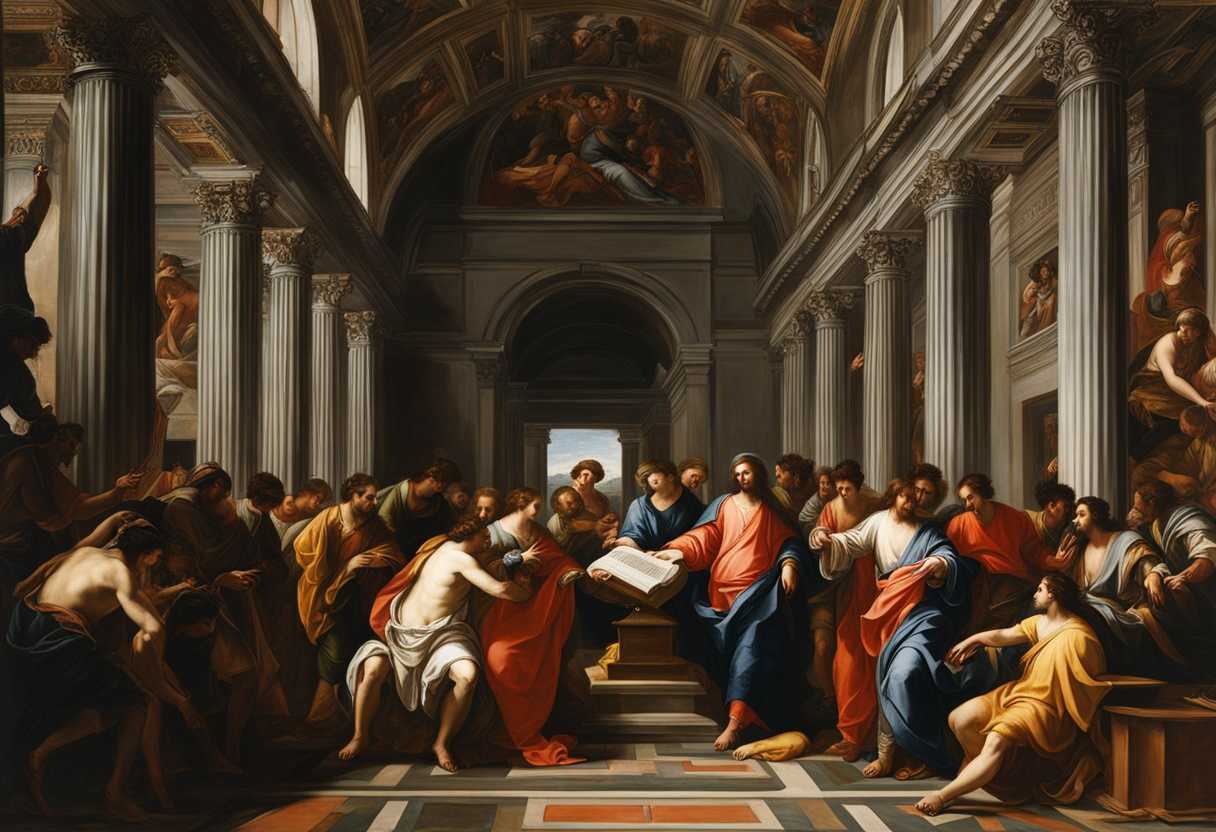
Setting the Scene for Nehemiah 3:17-21
The scene in Nehemiah 3:17-21 takes place in Jerusalem during the time when Nehemiah, a cupbearer to the Persian king, was leading the effort to rebuild the walls of the city. The specific location within the city is the Valley Gate, where a group of individuals were assigned to work on the reconstruction of the walls. Among those mentioned are Shallum, the son of Hallohesh, ruler of a half-district of Jerusalem, and his daughters.
The Valley Gate was one of the gates in the eastern part of Jerusalem, leading to the Kidron Valley. The gate was a crucial entry point into the city and its reconstruction was vital for the security and restoration of Jerusalem. Shallum and his daughters, along with their fellow workers, were likely assigned this section of the wall due to their proximity to the Valley Gate and their commitment to the project. The atmosphere would have been one of unity and determination as the people of Jerusalem came together to rebuild their city despite facing opposition and challenges.
The group working at the Valley Gate would have been surrounded by the rubble of the broken walls, the sounds of construction echoing through the valley, and the sight of their city slowly being restored to its former glory. Their efforts were not just about physical reconstruction but also about reclaiming their identity as a people chosen by God. This scene captures a moment of resilience, faith, and community as the people of Jerusalem worked tirelessly to fulfill Nehemiah’s vision of rebuilding the walls and restoring the city.
What is Nehemiah 3:17-21 about?
Isn’t it amazing how these verses depict a united effort to rebuild something that was once broken and vulnerable? The collaboration of different groups working together to restore the walls of Jerusalem symbolizes unity, resilience, and determination. It showcases the power of teamwork and community coming together to overcome challenges and rebuild what was once destroyed.
Imagine the significance of each group taking responsibility for a specific section of the wall, showing their commitment and dedication to the common goal of rebuilding and protecting their city. This act not only reconstructs the physical walls but also strengthens the bonds and spirit of the community. It reminds us of the importance of working together towards a shared vision, supporting one another through challenges, and rebuilding stronger than before. Just like these groups in the verse, we too can achieve great things when we unite our efforts and talents towards a common purpose.
Understanding what Nehemiah 3:17-21 really means
Nehemiah 3:17-21 unveils a narrative woven with threads of unity, collaboration, and communal effort. As we delve into this passage, we find ourselves amidst the backdrop of Jerusalem’s walls being rebuilt under Nehemiah’s guidance. The meticulous account of individuals and groups assigned to specific sections of the wall underscores the essence of collective responsibility and shared purpose. The repetition of phrases like “next to him” and “after him” serves as a poignant reminder of the interconnectedness and collaborative spirit that permeated this monumental task.
The word “repaired” resonates beyond mere physical restoration; it embodies a deeper connotation of renewal and revitalization. Just as the walls of Jerusalem were being reconstructed, so too were the faith and identity of the community being fortified. This passage transcends mere construction; it symbolizes a spiritual rebuilding and a reaffirmation of communal bonds. The individuals mentioned in Nehemiah 3:17-21 mirror the diverse members of the body of Christ, each playing a unique role in the grand scheme of things, as elucidated in 1 Corinthians 12:12-27.
In a world often characterized by individualism and self-centered pursuits, the timeless message of Nehemiah 3:17-21 beckons us to reevaluate the power and necessity of collective effort. It serves as a beacon, guiding us towards a deeper appreciation for community and the significance of working together towards a shared objective. The analogy of a community garden being cultivated by a diverse group of individuals beautifully encapsulates the essence of this passage. Just as each person’s contribution is vital in nurturing the garden’s growth, so too is every individual’s effort crucial in achieving a common goal, as exemplified in the rebuilding of Jerusalem’s walls.
Reflecting on this scripture prompts introspection and self-examination. It challenges us to acknowledge the unique gifts and talents that each person brings to the table and inspires us to seek out ways to contribute to the collective good. The call to unity and collaboration echoes through the ages, resonating with contemporary society and urging us to foster strong, supportive communities. Nehemiah 3:17-21 stands as a testament to the enduring strength found in unity, cooperation, and the recognition of each person’s indispensable role in the tapestry of communal endeavors.
How can we use our skills for God’s work?
We can use our skills for God’s work by stepping up to fulfill specific roles and responsibilities within our community or church, just as the people did in the Book of Nehemiah. Each person in the passage played a unique role, whether it was repairing a section of the wall, serving as a gatekeeper, or assisting with repairs, demonstrating that all skills and contributions are valuable in the Kingdom of God.
Additionally, we can offer our skills and talents to help build up and strengthen the spiritual walls and foundations of those around us. This can involve using our gifts in teaching, encouraging, serving, or any other way that supports and encourages our fellow believers in their faith journey. We can be part of bringing restoration, unity, and growth to the body of Christ by recognizing and utilizing our God-given skills for His work. We too can collaborate with others in using our skills to further God’s kingdom on earth, just as the workers in Nehemiah diligently worked together to rebuild the walls of Jerusalem.
Application
Let’s draw strength from the unity shown in Nehemiah 3:17-21. Like the people rebuilding Jerusalem’s walls, let’s collaborate and dedicate ourselves to overcoming challenges in our lives. Just as they worked together for a common goal, let’s join forces in our communities to support and uplift each other. Will you answer the call to unity and stand side by side with your fellow beings, spreading love and generosity for a brighter tomorrow?

Reverend Michael Johnson is an experienced Church Minister with a profound expertise in spirituality and guidance. With a serene presence and a compassionate heart, he has faithfully served his congregation for over 20 years, leading them on a spiritual journey towards inner peace and enlightenment. Reverend Johnson’s extensive knowledge of religious philosophies and profound understanding of human nature have made him a trusted confidant and mentor to many, as he seamlessly weaves his profound wisdom into life teachings. Reverend Johnson’s calming demeanor and empathetic nature continue to uplift and heal souls, nurturing a sense of unity and tranquility within his community.