
Nehemiah 7:7 is about the careful selection and recording of the people of Israel who returned to Jerusalem after the Babylonian exile, showcasing the importance of genealogy and community identity.
7 who came with Zerubbabel, Jeshua, Nehemiah, Azariah, Raamiah, Nahamani, Mordecai, Bilshan, Mispereth, Bigvai, Nehum, Baanah.
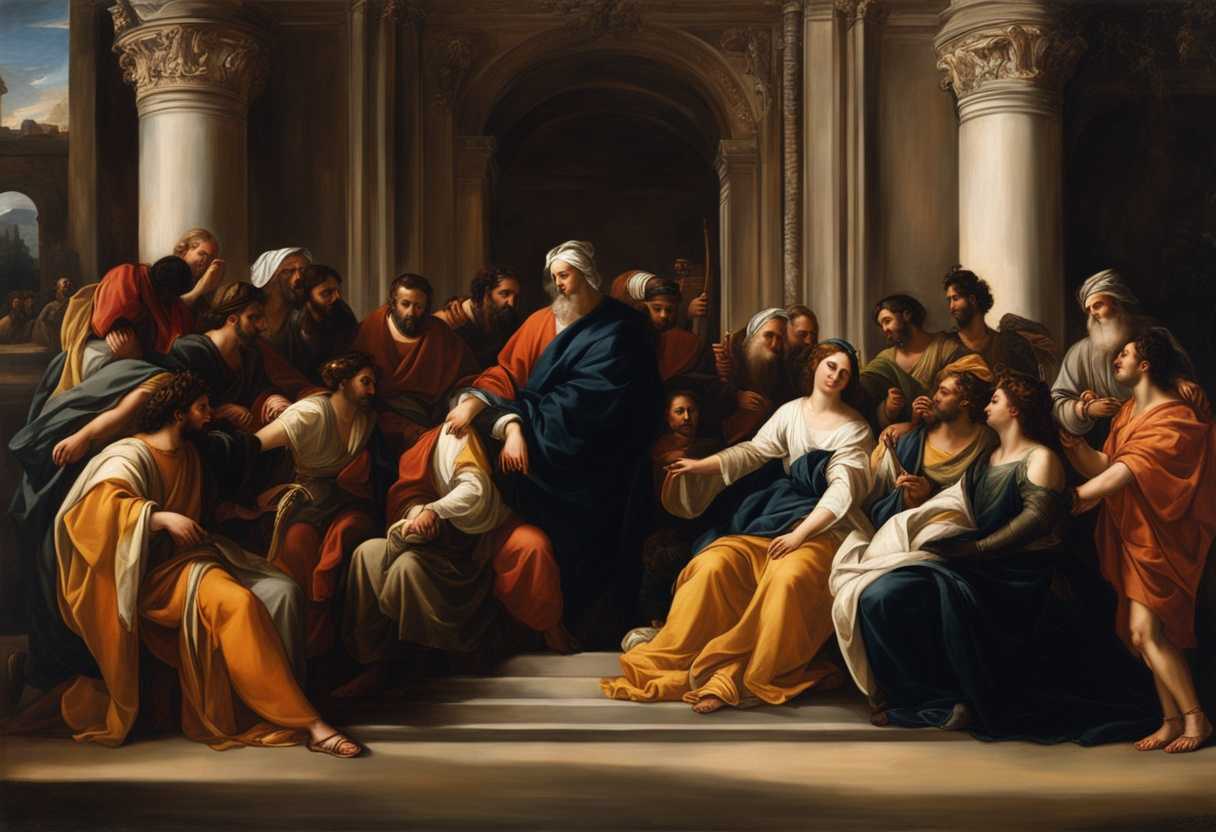
Setting the Scene for Nehemiah 7:7
In Nehemiah chapter 7, we find Nehemiah, a cupbearer to the Persian king Artaxerxes, leading a group of exiled Jews back to Jerusalem to rebuild the city walls. The scene unfolds as Nehemiah and his fellow Israelites have completed the monumental task of rebuilding the walls of Jerusalem. The city is bustling with activity as the people work together to restore their beloved city to its former glory.
Nehemiah gathers the leaders of the community to take a census of the returned exiles. The names of the heads of families are recorded to ensure that the genealogy of the Israelites is preserved. The atmosphere is one of unity and purpose as the people come together to rebuild not only the physical walls of Jerusalem but also the spiritual and communal bonds that bind them as a nation.
Surrounded by the ancient walls of Jerusalem, Nehemiah stands with the leaders of the community, including Ezra the scribe and the priests, as they meticulously document the names of those who have returned from exile. The sun sets over the city, casting a warm glow over the scene, symbolizing the hope and promise of a new beginning for the people of Israel.
What is Nehemiah 7:7 about?
Let’s delve into the significance of Nehemiah 7:7 together. This verse provides us with a detailed list of the exiles who courageously returned to Jerusalem after enduring a period of captivity. It serves as a historical record of those who chose to rebuild and restore their homeland despite the trials they faced. This verse highlights the importance of remembrance and honoring the resilience of those who paved the way for the restoration of Jerusalem by meticulously documenting the names and numbers of the returning exiles. It reminds us of the power of community and unity in overcoming adversity and rebuilding what was once broken.
Furthermore, Nehemiah 7:7 prompts us to reflect on our own journeys of restoration and rebuilding. It challenges us to consider what we are willing to endure and sacrifice in order to rebuild and restore the areas of our lives that may have been affected by captivity or challenges. Let’s read this verse and be inspired by the determination of the exiles, striving to emulate their spirit of perseverance and determination in our own lives.
Understanding what Nehemiah 7:7 really means
In Nehemiah 7:7, we encounter a significant moment in Jewish history as the leaders who returned with Zerubbabel from the Babylonian exile to Jerusalem are listed. This return signifies restoration and renewal, marking a pivotal point in the narrative of rebuilding the city. Nehemiah’s efforts in organizing the people and ensuring the repopulation and fortification of Jerusalem are crucial in this context.
A parallel account in Ezra 2:2 also lists these returning leaders, emphasizing their importance in the restoration of Jerusalem. Nehemiah 2:17-18 further highlights the collective effort and leadership needed to rebuild the walls of Jerusalem. Isaiah 44:28 prophesies the rebuilding of Jerusalem and the temple, showcasing God’s sovereignty and the fulfillment of His promises through leaders like Zerubbabel.
The relevance of Nehemiah 7:7 extends to contemporary society, emphasizing the significance of strong, faithful leadership in guiding communities through challenges. Effective leaders are essential in various spheres today, from religious communities to social and political arenas. The themes of restoration and renewal depicted in the verse resonate with individuals and communities facing the task of rebuilding after periods of hardship or exile.
Consider a small town devastated by a natural disaster, where dedicated leaders rally the community to rebuild, provide hope, and inspire action. This scenario mirrors the return to Jerusalem, where leaders like Zerubbabel played a crucial role in the community’s restoration. Zerubbabel’s name, meaning “seed of Babylon,” symbolizes hope and new beginnings emerging from exile, showcasing God’s faithfulness in bringing His people back to their homeland.
The phrase “the men of the people of Israel” in Nehemiah 7:7 underscores the collective identity and unity of the Israelites. It highlights that the entire community, not just the leaders, played a role in restoration, emphasizing the power of collective effort and shared purpose. Ultimately, Nehemiah 7:7 serves as a poignant reminder of the importance of leadership, community, and faith in times of rebuilding and renewal. It encourages us to look to our leaders, support one another, and trust in God’s plan for restoration, regardless of the challenges we may face.
What treasures are you guarding and protecting?
I am guarding and protecting the treasures of the house of God. These treasures include the silver and gold, as well as the articles that are dedicated to the Lord. They are valuable possessions that are set aside for the service of God and His temple. It is important to safeguard these treasures and ensure that they are used wisely and appropriately in accordance with God’s will. I, as a guardian of these treasures, ensure their safety and proper utilization. These treasures are a symbol of the people’s devotion to God and their commitment to His work. I am also upholding the honor and integrity of the house of God by protecting these treasures, preserving its sanctity and significance in the lives of the believers.
Through my diligent stewardship and faithful protection of these treasures, I am demonstrating my allegiance to God and my dedication to His service. I am contributing to the continuation of God’s work and the advancement of His kingdom by safeguarding these valuable assets. It is a privilege and a solemn duty to be entrusted with such important treasures, and I strive to fulfill this responsibility with reverence and obedience.
Application
In the hustle and bustle of our modern lives, just like Nehemiah, we too have responsibilities to tend to. Our work and family need our diligence and faithfulness for them to thrive. Let’s be like Nehemiah, protecting and organizing our Jerusalem with utmost care. Today, let’s renew our commitment to our tasks, standing strong in our beliefs, and never giving in to complacency. How will you rise to the challenge of being a faithful steward in your own realm?

Reverend Michael Johnson is an experienced Church Minister with a profound expertise in spirituality and guidance. With a serene presence and a compassionate heart, he has faithfully served his congregation for over 20 years, leading them on a spiritual journey towards inner peace and enlightenment. Reverend Johnson’s extensive knowledge of religious philosophies and profound understanding of human nature have made him a trusted confidant and mentor to many, as he seamlessly weaves his profound wisdom into life teachings. Reverend Johnson’s calming demeanor and empathetic nature continue to uplift and heal souls, nurturing a sense of unity and tranquility within his community.