
Numbers 11:16-17 is about Moses sharing God’s burden of leading and caring for the people of Israel by appointing seventy elders to help carry the weight of the responsibility.
16 Then the Lord said to Moses, “Gather for me seventy men of the elders of Israel, whom you know to be the elders of the people and officers over them, and bring them to the tent of meeting, and let them take their stand there with you.
17 And I will come down and talk with you there. And I will take some of the Spirit that is on you and put it on them, and they shall bear the burden of the people with you, so that you may not bear it yourself alone.
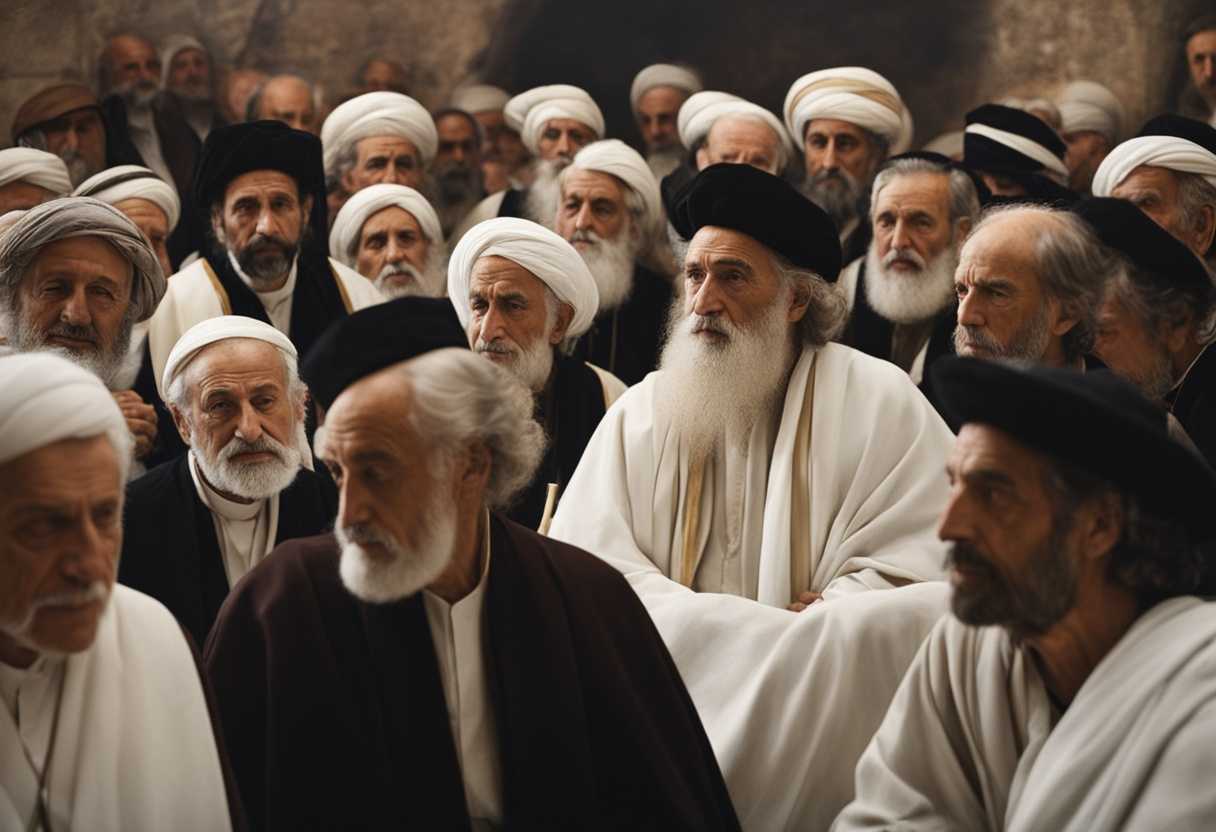
Setting the Scene for Numbers 11:16-17
In Numbers chapter 11, Moses is feeling overwhelmed by the responsibility of leading the Israelites through the wilderness. The scene unfolds in the Israelite camp, with the dusty desert stretching out around them. The sun beats down on the tents and makeshift shelters, creating a sense of discomfort and weariness among the people.
Moses, feeling the weight of the people’s complaints and needs, is joined by his brother Aaron at the entrance of the tabernacle. As they stand there, a group of seventy elders of Israel gathers around them. These elders were chosen by God to assist Moses in leading and governing the people. They come from different tribes, each bringing their own wisdom and experience to the group.
As the elders stand before Moses and Aaron, a sense of anticipation fills the air. Moses is about to share with them the burden of leadership, as God has instructed him to delegate some of his authority to these chosen men. The scene is one of solemnity and significance, as the future of the Israelites’ journey through the wilderness hangs in the balance.
What is Numbers 11:16-17 about?
This verse emphasizes the importance of leadership and how leaders are appointed by God to guide and support the community they serve. It highlights the idea that leaders are not chosen randomly but are selected by a higher power for a specific purpose. This verse also suggests that leaders have a responsibility to bear the burdens of their people, showing compassion, understanding, and empathy towards their struggles.
Have you ever considered the role of leaders in your community and how they can positively impact the lives of those around them? Reflecting on this verse can lead us to think about the qualities we value in leaders and how they can serve as role models for others. It reminds us that leadership is not just about making decisions but also about caring for and supporting the well-being of the community as a whole.
When we look at the world through the lens of this verse, we can appreciate the significance of effective leadership in navigating challenges and promoting unity among people. It prompts us to consider the impact of our own leadership roles, whether in our families, workplaces, or communities, and how we can strive to emulate the qualities of compassionate and responsible leaders chosen by God to help carry the burdens of those around us.
Understanding what Numbers 11:16-17 really means
The Book of Numbers, a part of the Torah, recounts the Israelites’ journey through the wilderness. In Numbers 11, the people grumble about their hardships, longing for the food of Egypt, while Moses, feeling overwhelmed, turns to God for help. The phrase “Gather for me seventy men of the elders of Israel” underscores the significance of shared leadership and the need for multiple leaders to share the burden. It highlights the importance of a community having diverse individuals to shoulder responsibilities together.
“I will take some of the Spirit that is on you and put it on them” signifies that the Spirit of God, which empowers and guides, can be shared among many individuals to accomplish God’s work. This sharing of the Spirit emphasizes that divine guidance is not limited to one person but can be distributed among a group. “They shall bear the burden of the people with you, so that you may not bear it yourself alone” stresses the value of communal support and shared responsibility in leadership. It underscores the idea that no one should carry the weight of leadership in isolation but rather with the assistance of others.
In Exodus 18:17-23, Jethro advises Moses to appoint capable men to assist in judging the people, reflecting the concept of shared leadership. Acts 6:1-7 shows the apostles appointing seven men to aid in food distribution, allowing them to focus on prayer and ministry. Galatians 6:2 reinforces the idea of bearing one another’s burdens to fulfill the law of Christ, emphasizing shared responsibility and support within the community. These passages further illustrate the importance of communal assistance and shared leadership in various contexts.
Today, the principle of shared leadership and communal support remains crucial in family, work, and church communities. Leaders can draw from Moses’ experience, learning that seeking help and delegating tasks are essential to prevent burnout and ensure effective leadership. Consider a small business owner overwhelmed by managing every aspect alone. By delegating tasks and building a team, the owner can focus on strategic decisions, fostering growth and creating a supportive work environment. This anecdote exemplifies how shared responsibilities lead to improved efficiency and well-being.
In conclusion, Numbers 11:16-17 teaches us the significance of shared leadership and the distribution of responsibilities. It emphasizes that communal support is vital for effective leadership and well-being, discouraging individuals from bearing burdens alone. This timeless lesson encourages seeking and providing support within our communities, fostering a culture of shared responsibility and collaboration.
How can we handle overwhelming burdens?
When faced with overwhelming burdens, it is essential to remember that no matter how heavy the load may seem, we are never alone in carrying it. We too can turn to those around us for support and assistance, just as the Lord instructed Moses to seek the help of others in sharing the burden of leading the people. We can find relief from the weight of our troubles by reaching out to the community, friends, family, or professionals. We can lean on our faith and trust in the guidance and provision of God in times of distress. We can find comfort and strength to endure by surrendering our worries and anxieties to Him. Through prayer, meditation, and seeking spiritual guidance, we can find solace and peace in the midst of overwhelming circumstances.
Furthermore, it may be beneficial to reassess our priorities and responsibilities, discerning which burdens are ours to carry and which can be delegated or shared with others. We can prevent becoming overwhelmed and navigate challenges with greater resilience by setting boundaries, practicing self-care, and seeking balance in our lives.
Application
Embrace the wisdom of Numbers 11:16-17. Like Moses, don’t hesitate to ask for help when overwhelmed. Don’t carry the weight of the world alone. Seek assistance and lighten your load. Will you reach out for support when the burden becomes too heavy to bear?

Reverend Michael Johnson is an experienced Church Minister with a profound expertise in spirituality and guidance. With a serene presence and a compassionate heart, he has faithfully served his congregation for over 20 years, leading them on a spiritual journey towards inner peace and enlightenment. Reverend Johnson’s extensive knowledge of religious philosophies and profound understanding of human nature have made him a trusted confidant and mentor to many, as he seamlessly weaves his profound wisdom into life teachings. Reverend Johnson’s calming demeanor and empathetic nature continue to uplift and heal souls, nurturing a sense of unity and tranquility within his community.